
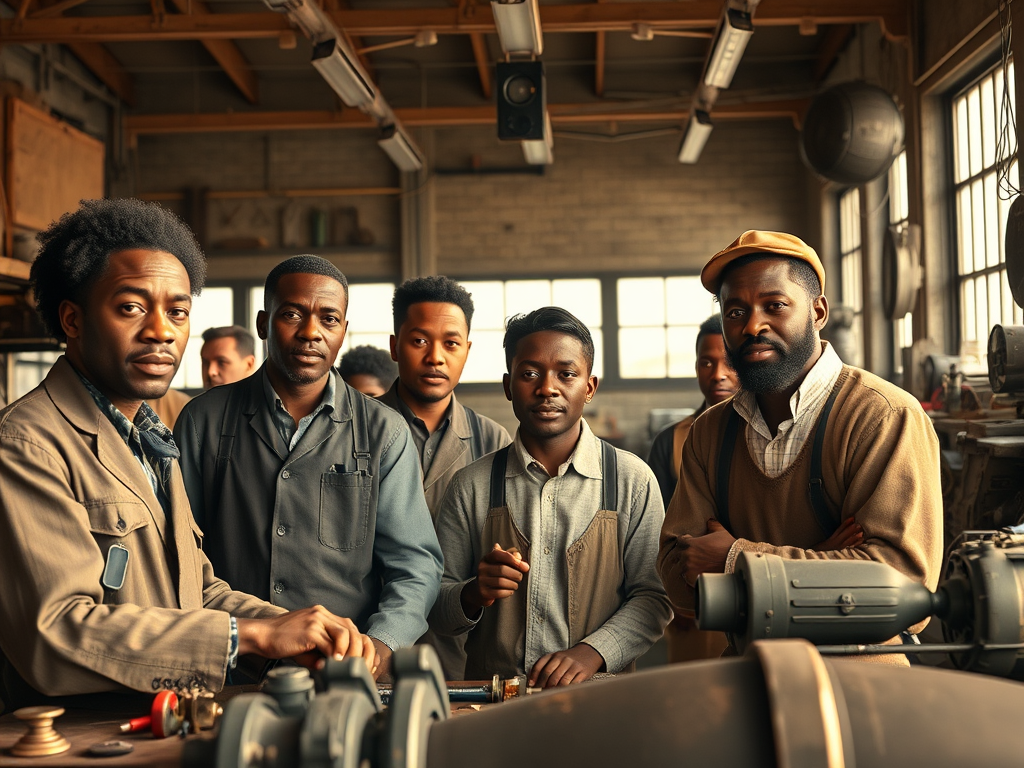
The Age of Refinement and Systemic Challenge: Black Inventions (1900–1949)
The first half of the 20th century was a pivotal era for African American inventors, characterized by the continued integration of their innovations into modern systems, despite the pervasive and intensifying legal and social restrictions of the Jim Crow era and the turbulence of two World Wars.
1. The Apex of Systemic Innovation
African American inventors moved beyond pioneering simple tools to designing complex, integrated systems that addressed the high demands of the industrial, urban, and military sectors:
- Automobile Safety and Convenience: With the rise of the car, inventors focused on utility and maintenance. Garrett Morgan’s three-position traffic signal (patented in 1923, after this period but based on earlier work) revolutionized urban traffic control and safety. Richard Spikes invented the automatic gear shift and improved the turn signal.
- Aviation and Transportation: Inventor Charles H. Drew, though not a patent holder, developed blood plasma preservation techniques that were critical for saving lives during World War II, revolutionizing medical logistics. Frederick McKinley Jones developed automatic refrigeration units for trucks and rail cars, completely transforming food transport and storage.
- Consumer Technology: While still limited, inventions continued to focus on domestic and commercial convenience, refining earlier ideas. For instance, Madame C.J. Walker (Sarah Breedlove) built an empire based on specialized hair care products and manufacturing methods, though the bulk of her innovation was in formulation and business strategy.
2. Economic and Social Landscape
This period saw a peak in both contribution and constraint for Black inventors:
- Peak Patenting: Black patenting rates remained notably high at the turn of the century, largely due to the documentation efforts of figures like Henry E. Baker (U.S. Patent Office examiner), who cataloged thousands of Black-held patents. Baker’s work provided crucial data, counting 461 patents issued to Black Americans between 1870 and 1889, and showing continued activity into the early 20th century.
- The Great Migration: The mass movement of Black citizens from the rural South to industrial Northern cities provided new access to factories, tools, and technical resources, fostering a concentration of mechanical ingenuity.
- Racial and Economic Suppression: Despite technical achievements, inventors still faced immense challenges. Jim Crow laws in the South, combined with rampant de jure and de facto segregation nationwide, severely restricted access to capital, legal services, and the markets needed to sell inventions. As noted by economist Lisa Cook, the environment of racial violence and theft often deterred Black citizens from patenting, as the legal system offered little protection against having their ideas stolen by white competitors.
3. Laying the Groundwork for the Modern Era
The innovations of 1900–1950 often bridged the gap between the purely mechanical solutions of the 19th century and the electrical/electronic age that followed:
- The Intersection of Industries: Inventors like Frederick Jones and Morgan demonstrated how solving a problem in one area (refrigeration) could revolutionize another (transportation), establishing the template for modern logistics.
- World War II Contributions: The period culminated with crucial contributions to the war effort, particularly in medicine (Dr. Drew’s blood banking) and transport stability (Jones’s reliable refrigeration), showcasing Black ingenuity as a direct national asset.
In conclusion, the first half of the 20th century saw African American inventors create sophisticated, market-ready solutions for a rapidly modernizing society, contributing massively to public safety, logistics, and industry, often in the face of maximum legal and social opposition.
(Pages in Progress)
1900 – 1909
- Check row corn planter – James M. Mitchell – 1900 – Patent: US641462A
- Shoe – Selim W. Gunn – 1900 – Patent: US641642A
- Air ship – John F. Pickering – 1900 – Patent: US643975A
- Game – John Winsor Smith – 1900 – Patent: US647887A
- Breech-loading cannon – Eugene Burkins – 1900 – Patent: US649433A
- Incubator – Granville T. Woods – 1900 – Patent: US656760A
- Lever-derrick – James W. Benton – 1900 – Patent: US658939A
- Serving apparatus for dining rooms – James Doyle – 1900 – Patent: US659057A
- Automatic circuit-breaking apparatus – Granville T. Woods – 1900 – Patent: US662049A
- Regulating and controlling electrical translating devices – Granville T. Woods – 1901 – Patent: US681768A
- Combined excavator and elevator – Isaiah D. Hughes – 1901 – Patent: US687312A
- Steam boiler – Benjamin F. Jackson – 1902 – Patent: US690730A
- Apparatus for controlling electric motors – Granville T. Woods – 1902 – Patent: US690809A
- Electric railway – Granville T. Woods – 1902 – Patent: US695988A
- Automatic air brake – Granville T. Woods – 1902 – Patent: US701981A
- Electric railway system – Granville T. Woods – 1903 – Patent: US718183A
- Valve Gear for Steam Engines – Robert Leon Campbell – 1903 – Patent: US728364A
- Electric-railway apparatus – Granville T. Woods – 1904 – Patent: US762792A
- Kitchen table – Henry A. Jackson – 1905 – Patent: US569135A
- Book supporter – Lewis Howard Latimer – 1905 – Patent: US781890A
- Self-binding harvester – William Douglass – 1905 – Patent: US789010A
- Band-twister – William Douglass – 1905 – Patent: US789120A
- Carrier chain – William Douglass – 1905 – Patent: US789122A
- Sand Band for a Wagon – Ned E. Barnes – 1905 – Patent: US792109A
- Reversing-valve – Brinay Smartt – 1905 – Patent: US799498A
- Pasting device – Robert A. Pelham – 1905 – Patent: US807685A
- Hot comb – Walter Sammons – 1905 – Patent: US1362823A
- Improved Whaling harpoon – Lewis Temple – 1905 – (Date is non-standard)
- Rail and Tie Brace – Ned E. Barnes – 1906 – Patent: US815059A
- Safety system for operating railroads – William H. Dammond – 1906 – Patent: US823513A
- Surgical appliance – Clara C. Frye – 1907 – Patent: US847758A
- Cotton picking apparatus – Albert P. Albert – 1907 – Patent: US851475A
- Stove – Lewis B. Dorcas – 1907 – Patent: US868417A
- Paper-rewind mechanism for adding machines – Shelby J. Davidson – 1908 – Patent: US884721A
- Damper regulator – Hugh M. Browne – 1908 – Patent: US886183A
- Hot box cooler and oiler – Ned E. Barnes – 1908 – Patent: US899939A
- Adjustable tracker for pneumatic playing attachments – Joseph Hunter Dickinson – 1909 – Patent: US915942A
- Volume-controlling means for mechanical musical instruments – Joseph Hunter Dickinson – 1909 – Patent: US926178A
- Valve gear – Brinay Smartt – 1909 – Patent: US935169A
- Level – Thomas H. Brittain – 1909 – Patent: US940671A
1910 – 1919
- Lamp fixture – Lewis Howard Latimer – 1910 – Patent: US968787A
- Indicator or Bulletin – Ned E. Barnes – 1910 – Patent: US969592A
- Self-locking rack for billiard cues – Richard Bowie Spikes – 1910 – Patent: US972277A
- Bedstead Extensions – Oscar Robert Cassell – 1911 – Patent: US990107A
- Folding Chair – Nathaniel Alexander – 1911 – Patent: US997108A
- Timing device – Charles Fred White – 1912 – Patent: US1018799A
- Automatic serving system – James Doyle – 1912 – Patent: US1019137A
- Flying Machines – Oscar Robert Cassell – 1912 – Patent: US1024766A
- Player Piano – Joseph Hunter Dickinson – 1912 – Patent: US1028996A
- Sanitary attachment for drinking glasses – Luther McNair – 1912 – Patent: US1034636A
- Angle Indicator – Oscar Robert Cassell – 1912 – Patent: US1038291A
- Device for removing and inserting taps and plugs in water mains – William Hearns – 1912 – Patent: US1040538A
- Flying machine – Walter G. Madison – 1912 – Patent: US1047098A
- Wheel – Brinay Smartt – 1913 – Patent: US1052290A
- Railway Signal Apparatus – David Baker – 1913 – Patent: US1054267A
- Telephone register and lock-out device – Charles V. Richey – 1913 – Patent: US1063599A
- Tallying machine – Robert A. Pelham – 1913 – USUS1079880A
- Envelope moistener – James M. Brooks – 1914 – Patent: US1092688A
- Package-tie – John S. Allen – 1914 – Patent: US1093096A
- Server for automatic serving systems – James Doyle – 1914 – Patent: US1098788A
- Bedstead Extension – Oscar Robert Cassell – 1914 – Patent: US1105487A
- Gas mask – Garrett A. Morgan – 1914 – Patent: US1113675A
- Automatic film mover – Berger Edmond and Ned E. Barnes – 1915 – Patent: US1124879A
- Life preserver – Samuel J. Hines – 1915 – Patent: US1137971A
- Signal Apparatus High Water Indicator for Bridges – David Baker – 1915 – Patent: US1154162A
- Leprosy treatment injection – Alice Augusta Ball – 1915 – (No patent number provided)
- Tie Plate for Railroad – Ned E. Barnes – 1916 – Patent: US1180467A
- Fruit press – Madeline M. Turner – 1916 – Patent: US1180959A
- Gun – William D. Polite – 1917 – Patent: US1218458A
- Automatic stopping and releasing device for mine cars – George M. Johnson – 1917 – Patent: US1249106A
- Phonograph – Joseph Hunter Dickinson – 1918 – Patent: US1252411A
- Machine gun – Clarence Gregg – 1918 – Patent: US1277307A
- Spectrometers – Elmer Samuel Imes – 1918 – (No patent number provided)
- Heating furnace – Alice H. Parker – 1919 – Patent: US1325905A
1920 – 1929
- Automatic railway car door – Walter N. McClennan – 1920 – Patent: US1333430
- Hoisting and loading mechanism – Mary Jane Reynolds – 1920 – Patent: US1337667A
- Float-operated circuit-closer – Mary Toland – 1920 – Patent: US1339239A
- Comb – Sacramenta G. Tankins – 1920 – Patent: US1339632A
- Apparatus for returning water to boilers – David Nelson Crosthwait, Jr – 1920 – Patent: US1353457A
- Propelling means for airplanes – James S. Adams – 1920 – Patent: US1356329A
- Woodworking machine – Simon Vincent – 1920 – Patent: US1361295A
- Comb – Walter H. Sammons – 1920 – Patent: US1362823A
- Hypophyscope – William Harry Barnes – 1920 – (No patent number provided)
- Airplane safety appliance – Hubert Julian – 1921 – Patent: UA1379264A
- Comb – Samuel T. Crawford – 1921 – Patent: US1381804A
- Pneumatic tire – Norman Jackson – 1921 – Patent: US1384134A
- Flying Machine – Oscar Robert Cassell – 1922 – Patent: US1406344A
- Picture projection theater – Arthur L. MacBeth – 1922 – Patent: US1419281A
- Wrench – Jack Johnson – 1922 – Patent: US1413121A
- Car door actuating mechanism – Walter N. McClennan – 1922 – Patent: USRE15338E
- Vehicle wheel – Neal Moore Robinson – 1922 – Patent: US1422479A
- Theft-preventing device for vehicles – Jack Johnson – 1922 – Patent: US1438709A
- Pneumatic – toy pistol – Benedict F. Edelin – 1923 – Patent: US1441975A
- Improvement on the Rail Brace – Ned E. Barnes – 1923 – Patent: US1446957A
- Motor control system for self-serving tables – Essex Delaotch – 1923 – Patent: US1466890A
- Automatic traffic signal – Garrett A. Morgan – 1923 – Patent: US1475024A
- Coin mechanism – Walter N. McClennan – 1924 – Patent: US1518208A
- Cosmetics & Plant Products – George Washington Carver – 1925 – Patent: US1522176A
- Railroad crossing flag signal – Clifton M. Ingram – 1925 – Patent: US1526215A
- Design for a traffic signal casing – Hassel D. Robinson – 1925 – Patent: D 66703
- Paints & Stains – George Washington Carver – 1925 – Patent: US1541478A
- Vehicle parking attachment – Oliver L. Thompson Thompson – 1925 – Patent: US1541670A
- Well drilling tool – Clifton M. Ingram – 1925 – Patent: US1542776A
- Aeroplane – William Hale – 1925 – Patent: US1563278A
- Work cabinet – Ambrose Caliver – 1926 – Patent: US1568498A
- Cap and collar case – James J. Coles – 1926 – Patent: US1577632A
- Traffic signal for automobiles – Hassel D. Robinson – 1926 – Patent: US1580218A
- Automatic Cashier – Bertram F. Baker – 1926 – Patent: US1582659A
- Combination milk bottle opener and cover – Richard Bowie Spikes – 1926 – Patent: US1590557A
- Self-directing headlight – Samuel Moore – 1926 – Patent: US1608903A
- Interliners to Prevent Tire Punctures – David Baker – 1927 – Patent: US1620054A
- Display rack – Richard Warren – 1927 – Patent: US1619900A
- Paints & Stains – George Washington Carver – 1927 – Patent: US1632365A
- Tie Plate and Joint Brace – Ned E. Barnes – 1928 – Patent: US1655305A
- Vehicle-headlight mechanism – Samuel Moore – 1928 – Patent: US1658534A
- Locomotive headlight – Samuel Moore – 1928 – Patent: US1659328A
- Combination cotton thinning and cultivating machine – James King – 1928 – Patent: US1661122A
- Method and apparatus for setting thermostats – David Nelson Crosthwait, Jr – 1928 – Patent: US1661323A
- Motor vehicle – William Hale – 1928 – Patent: US1672212A
- Pole Post and Tree Protector – Ned E. Barnes – 1928 – Patent: US1673729A
- Firearm – Felix B. Jones – 1928 – Patent: US1685673A
- Electric heater – Elbert Stallworth – 1928 – Patent: SU1687521A
- Permanent waving machine – Marjorie Stewart Joyner – 1928 – Patent: US1693515A
- Automobile key and license holder – Edward H. C. Thomas – 1928 – Patent: US1693006A
- Food product and process of producing the same – Jay Montgomery – 1928 – Patent: US1694680A
- Hobby horse – Samuel Moore – 1929 – Patent: US1705991A
- Safety window cleaning device – Virginia Scharschmidt – 1929 – Patent: US1708594A
- Combined sleigh and boat – Clifton M. Ingram – 1929 – Patent: US1716230A
- Self-feeding attachment for furnaces – Firmin Charles Brown – 1929 – Patent: US1719258A
- Electric chamber – Elbert Stallworth – 1929 – Patent: US1727842A
- Vacuum Heating System – David Nelson Crosthwait, Jr – 1929 – Patent: US1727965A
- Iron alloy – James A. Parsons, Jr. – 1929 – Patent: US1728360A
1930 – 1939
- Manicuring device – Sylvester S. Jones – 1930 – Patent: US1742862A
- Airplane appliance – Richard E.S. Toomey, James C. Evans – 1930 – Patent: US1749858A
- Differential vacuum pump – David Nelson Crosthwait, Jr – 1930 – Patent: US1755430A
- Assembled Composition Printing Process – Charles A. Bankhead – 1930 – Patent: US3097594A
- Hydraulic Jack – Charles M. Banks – 1930 – Patent: US1758640A
- Electrical hair treating implement – Solomon Harper – 1930 – Patent: US1772002A
- Jack – Charles M. Banks – 1930 – Patent: US1774693A
- Locomotive headlight – William N. Cobbs – 1930 – Patent: US1780865A
- Colloidal silver iodide compound – Keelan & Harry Sanderlin – 1930 – Patent: US1783334A
- Head lamp rim remover – Paul D. Burgin – 1931 – Patent: US1788507A
- Steam trap – David Nelson Crosthwait, Jr – 1931 – Patent: US1797258A
- Cuff for trousers – Louis W. Freeman – 1931 – Patent: US1805577A
- Lockout for outgoing calls for telephone systems – Charles V. Richey – 1931 – Patent: US1812984A
- Method of making silicon iron compounds – James A. Parsons, Jr. – 1931 – Patent: US1819479A
- Apparatus for automatically recording telephonic messages – Benjamin Thornton – 1931 – Patent: US1831331A
- Signaling device – Benjamin A. Crenshaw – 1931 – Patent: US1836705A
- Therapeutic lamps – Paul E. Johnson – 1932 – Patent: US1842100A
- Apparatus for automatically transmitting messages over a telephone line – Benjamin Thornton – 1932 – Patent: US1843849A
- Combination tooth brush and paste holder – Jesse Harrison – 1932 – Patent: US1844036A
- Method and means for treating human hair – Sacramenta G. Tankins – 1932 – Patent: US1845208A
- Flag staff – Francis D. Crichton – 1932 – Patent: US1855824A
- Advertising apparatus – Harry Jackson – 1932 – Patent: US1865374A
- Automatic discharge valve – David Nelson Crosthwait, Jr – 1932 – Patent: US1871044A
- Freezing temperature indicator – David Nelson Crosthwait, Jr – 1932 – Patent: US1874911A
- Refrigerating method and apparatus – David Nelson Crosthwait, Jr – 1932 – Patent: US1874912A
- Design for a doorcheck – Henry R. Lovell – 1932 – Patent: D 87753
- Asphalt emulsion and manufacture thereof – Lloyd Augustus Hall – 1932 – Patent: US1882834A
- Method and apparatus for obtaining average samples and temperature of tank liquids – Richard Bowie Spikes – 1932 – Patent: US1828753A
- Automatic blow-off – Theophilus Ealey Neal – 1932 – Patent: US1885466A
- Automatic gear shift – Richard Bowie Spikes – 1932 – Patent: US1889814A
- Shower bath spray – Theophilus Ealey Neal – 1933 – Patent: US1893435A
- Release Valve – Charles M. Banks – 1933 – Patent: US1893757A
- Exhausting mechanism – David Nelson Crosthwait, Jr – 1933 – Patent: US1893883A
- Time control system for telephones – Charles V. Richey – 1933 – Patent: US1897533A
- Automobile seat cape – Williams S. Hawkins – 1933 – Patent: US1899327A
- Aeroplane aerofoil wing – Jay H. Montgomery – 1933 – Patent: US1910626A
- Lawn mower attachment – Samuel J. Hines – 1933 – Patent: US1911278A
- Means for receiving mail and other matter on aeroplanes while in motion – Henry F. Stilwell – 1933 – Patent: US1911248A
- Protective coating – Lloyd Augustus Hall – 1933 – Patent: US1914351A
- Bucket trap – David Nelson Crosthwait, Jr – 1933 – Patent: US1930224A
- Guard for downspouts – Ervin G. Greene – 1933 – Patent: US1930354A
- Transmission and shifting means therefor – Richard Bowie Spikes – 1933 – Patent: US1936996A
- Blood bank (Doctoral Thesis “Banked Blood”) – Dr. Charles Richard Drew – 1933 – (No patent number provided)
- Vacuum Pump – David Nelson Crosthwait, Jr – 1934 – Patent: US1946524A
- Refrigerating apparatus and process – David Nelson Crosthwait, Jr – 1934 – Patent: US1972704A
- Refrigerating method and apparatus – David Nelson Crosthwait, Jr – 1934 – Patent: US1972705A
- Design for a card for a chemistry card game – Dennis A. Forbes – 1934 – Patent: D91996S
- Method of steam heating from central station mains – David Nelson Crosthwait, Jr – 1934 – Patent: US1963735A
- Spraying machine – Robert T. Smith – 1934 – Patent: US1970984A
- Process for treating silicon alloy castings – James A. Parsons, Jr. – 1934 – Patent: US1972103A
- Alarm clock electric switch – Elbert Stallworth – 1934 – Patent: US1972634A
- Steam heating system – David Nelson Crosthwait, Jr – 1934 – Patent: US1977303A
- Steam heating apparatus – David Nelson Crosthwait, Jr – 1934 – Patent: US1977304A
- Vacuum heating system – David Nelson Crosthwait, Jr – 1935 – Patent: US1986391A
- Solid seasoning composition containing capsicum and chloride – Carroll L. Griffth, Lloyd Augustus Hall– 1935 – Patent: US1995119A
- Nonbleaching solid seasoning composition – Lloyd Augustus Hall, Carroll L. Griffth – 1935 – Patent: US1995120A
- Stabilized solid seasoning composition – Lloyd Augustus Hall, Carroll L. Griffth – 1935 – Patent: US1995121A
- Toy – Margaret Cheetham – 1935 – Patent: 1998270
- Protective device for automobiles – Curtis L. Bryant – 1935 – Patent: US1999171A
- Fuel-valve lock for motor vehicles – Samuel Moore – 1935 – Patent: US2006027A
- Remote control proportional movement motor – David Nelson Crosthwait, Jr – 1935 – Patent: US2007240A
- Vitamin concentrate – Lloyd Augustus Hall – 1935 – Patent: US2022464A
- Arch and heel support – Earl M. Stewart – 1936 – Patent: US2031510A
- Solid seasoning composition containing lecithin – Carroll L. Griffth , Lloyd Augustus Hall – 1936 – Patent: US2032612A
- Protective appliance – Harry & Mary E. Jackson – 1936 – Patent: US2038491A
- Protective appliance – Harry & Mary E. Jackson – 1936 – Patent: US2053035A
- Method of heating – David Nelson Crosthwait, Jr – 1936 – Patent: US2064197A
- Self propelled toy fish – Arthur Lee – 1936 – Patent: US2065337A
- Burglar alarm switch – Harry & Mary E. Jackson – 1937 – Patent: US2071343A
- Leaf holder – Richard Taylor – 1937 – Patent: D105037
- Remote control apparatus – James Matthew Allen – 1937 – Patent: US2085624A
- Effective temperature thermostat – David Nelson Crosthwait, Jr – 1937 – Patent: US2086258A
- Motor vehicle elevating and parking device – John P. Thompson – 1937 – Patent: US2086142A
- Effective temperature control apparatus – David Nelson Crosthwait, Jr – 1937 – Patent: US2094738A
- Exhausting method and apparatus – David Nelson Crosthwait, Jr – 1937 – Patent: US2096226A
- Dentist apparatus – William B. Jones – 1937 – Patent: US2096375A
- Manufacture of bleached pepper products – Lloyd Augustus Hall – 1937 – Patent: US2097405A
- One pipe heating system regulating plate – David Nelson Crosthwait, Jr – 1937 – Patent: US2102197A
- Carborundum printing process – Dox Thrash – 1937 – (No patent number provided)
- Portable electric light – Cap B. Collins – 1938 – Patent: US2105719A
- Sterilizing foodstuffs – Lloyd Augustus Hall – 1938 – Patent: US2107697A
- Regulating radiator valve – David Nelson Crosthwait, Jr – 1938 – Patent: US2114139A
- Safety attachment for automotive vehicles – Robert Lee – 1938 – Patent: US2132304A
- Airplane – Hermon L. Grimes – 1938 – Patent: US2137486A
- Optical apparatus for indicating the position of a tool – Darnley E. Howard – 1939 – Patent: US2145116A
- Inhibited detergent composition – Lloyd Augustus Hall – 1939 – Patent: US2155045A
- Ticket dispensing machine – Frederick McKinley Jones – 1939 – Patent: US2163754A
- Auxiliary circulating device for automobile heaters – Lionel F. Page – 1939 – Patent: US2170032A
1940 – 1949
- Sterilizing colloid materials – Lloyd Augustus Hall – 1940 – Patent: US2189949
- Corrosion-resisting ferrous alloy – James A. Parsons, Jr. – 1940 – Patent: US2200208
- Recovery of sterols – Percy Lavon Julian – 1940 – Patent: US2218971
- Protein composition of matter – Lloyd Augustus Hall – 1941 – Patent: US2251334
- Design for air conditioning unit – Frederick McKinley Jones – 1942 – Patent: USD132182
- Machine for assembling and/or disassembling the parts of spring tensioned devices – Asa J. Taylor – 1942 – Patent: US2286695
- Denture – Ulysses S. Walton – 1943 – Patent: US2314674
- Bed Rack – Henrietta Bradberry – 1943 – Patent: US2320027
- Yeast food – Lloyd Augustus Hall – 1943 – Patent: US2321673
- Load weighing and totaling device for cranes hoists and the like – Stephen H. Davis – 1943 – Patent: US2324769
- Removable cooling units for compartments – Frederick McKinley Jones – 1943 – Patent: US2336735
- Means for automatically stopping and starting gas engines – Frederick McKinley Jones – 1943 – Patent: US2337164
- Emergency landing runway – Gus Burton – 1944 – Patent: 2351002
- Puncture sealing composition and manufacture thereof – Lloyd Augustus Hall – 1944 – Patent: US2357650
- Manufacture of nitrogen-fortified whey concentrate – Lloyd Augustus Hall – 1944 – Patent: US2363730
- Two-cycle gas engine – Frederick McKinley Jones – 1945 – Patent: US2376968
- Float operated mechanism – James H. Crumble – 1945 – Patent: US2384536
- Capsicum-containing seasoning composition – Lloyd Augustus Hall – 1945 – Patent: US2385412
- Torpedo Discharge Means (Underwater Cannon) – Henrietta Bradberry – 1945 – Patent: US2390688
- Croquignole iron – Jessie T. Pope – 1946 – Patent: US2409791
- Production of protein hydrolysate flavoring material – Lloyd Augustus Hall – 1947 – Patent: US2414299
- Two-cycle gas engine – Frederick McKinley Jones – 1947 – Patent: US2417253
- Fluid joint – Asa J. Taylor – 1948 – Patent: US2434629
- Foot warmer – Joseph Ausbon Thompson – 1948 – Patent: US2442026
- Manufacture of stable dry papain composition – Lloyd Augustus Hall – 1949 – Patent: US2464200
- Antioxidant – Lloyd Augustus Hall – 1949 – Patent: US2464927
- Electric release for toy guns – Clinton Jones – 1949 – Patent: US2474054
- Automatic refrigeration system for long-haul trucks – Frederick McKinley Jones – 1949 – Patent: US2475841
- Starter generator – Frederick McKinley Jones – 1949 – Patent: US2475842
- Means operated by a starter generator for cooling a gas engine – Frederick McKinley Jones – 1949 – Patent: US2475843
- Means for thermostatically operating gas engines – Frederick McKinley Jones – 1949 – Patent: US2477377
- Gelatin-base coating for food and the like – Lloyd Augustus Hall – 1949 – Patent: US2477742
