
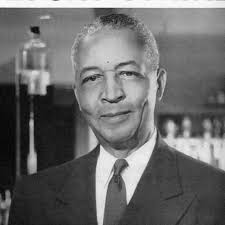
Stable Yeast Food, Lloyd A. Hall, Patent No. 2,321,802
The patent by Lloyd A. Hall of Chicago, Illinois, assignor to The Griffith Laboratories, Inc., describes a method for creating a Stable Yeast Food (Patent No. 2,321,802), filed in 1941 and granted in 1943. This invention solved a critical problem in commercial baking: the chemical instability of dough stimulants. By using an oleaginous (oily) coating to insulate reactive ingredients, Hall prevented the premature decomposition of bromates and iodates, ensuring that bakers could rely on consistent fermentation times regardless of how long the yeast food had been sitting on the shelf.
The “Why”
In high-volume commercial bakeries, timing is everything. Bakers use “yeast foods”—mixtures of ammonium chloride, salts, and bromates—to speed up and control fermentation. However, these mixtures were notoriously unstable. Moisture in the flour or salt would react with the ammonium chloride to create an acidic environment, which then caused the bromates to “disintegrate.” This resulted in the loss of active ingredients through gas volatilization, turning a white powder into a dark, useless straw color. The pain point was that a baker never knew if a 10-pound bag of yeast food would have 100% potency or only 50%, leading to ruined batches of bread.
Inventor Section: Engineering Philosophy
Lloyd A. Hall, the “Master of Food Preservation,” applied a philosophy of Micro-Encapsulation and Targeted Insulation. He realized that you didn’t need to treat the entire mixture; you only needed to “neutralize” the troublemakers. By identifying exactly which ingredients carried moisture (flour and salt) and which created acid (ammonium chloride), he could wrap only those particles in a protective fatty layer. This precise approach allowed him to stabilize the product using the minimum amount of oil, maintaining the dry, flowable powder consistency required for industrial machinery.
Key Systems Section
1. The Selective Fat-Coating Process
Rather than mixing all ingredients and spraying them with oil, Hall’s process is surgical.
- The Formula: He first mixes the “damaging” ingredients—ammonium chloride, sodium chloride (salt), and flour.
- The Insulation: A liquid fat or oil is sprayed into this specific sub-mixture.
- Function: This creates a microscopic moisture barrier around the particles that would otherwise trigger a reaction.
2. The Bromate/Iodate “Safe Zone”
Once the moisture-yielding particles are insulated, the active fermentation controllers are added.
- Mechanical Logic: The potassium bromate (the active stimulant) is mixed with an inert filler like calcium sulfate and then added to the “fatted” mixture.
- Engineering Insight: Because the bromate particles never directly touch the “wet” flour or “acidic” ammonium chloride (thanks to the oil coating), they remain chemically dormant until they are added to the actual bread dough and the fat barrier is broken down by the warmth and mechanical action of mixing.
3. Efficiency via Inert Fillers
Hall purposely excludes the largest ingredient—calcium sulfate—from the initial oil treatment.
- The Reasoning: Since calcium sulfate is inert (non-reactive), coating it would be a waste of oil and would make the final product too greasy.
- Result: The final yeast food remains a dry, free-flowing powder that doesn’t clump in storage or eat through the paper bags and liners, a common problem with older formulas.
Comparison Table: Unstable vs. Hall’s Stabilized Yeast Food
| Feature | Pre-1943 Yeast Food | Hall’s Stabilized Formula |
| Stability | Rapidly disintegrates; loses potency. | Indefinitely stable in storage. |
| Visual Indicator | Discolors to dark straw/brown. | Stays white and fresh. |
| Packaging Impact | Eats through cloth and paper bags. | Non-corrosive to containers. |
| Chemical Action | Premature acid formation. | Delayed reaction (active only in dough). |
| Ingredient Use | Requires alkaline stabilizers (carbonates). | Uses liquid fat (oleaginous) insulation. |
Significance
Lloyd A. Hall’s stable yeast food was a pillar of the Mid-Century Food Revolution:
- The “Time Schedule” Bakery: It allowed for the rigorous, minute-by-minute scheduling of factory bakeries, which was essential for the mass production of bread during and after WWII.
- Chemical Preservation: This patent demonstrated the effectiveness of using edible fats as functional “packaging” at the molecular level, a technique now used in everything from vitamins to “pop-rocks” candy.
- Agricultural Impact: By making soybean and wheat flour based additives more reliable, it strengthened the link between American farmers and the industrial food complex.
