
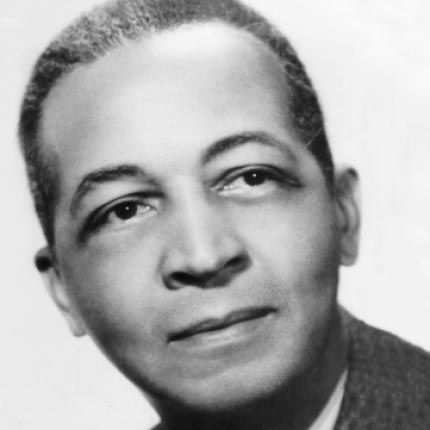
Vitamin Concentrate Emulsification | Lloyd A. Hall | Patent No. 2,014,222
The patent by Lloyd A. Hall of Chicago, Illinois, describes a Vitamin Concentrate (Patent No. 2,014,222), issued on November 26, 1935. This invention is a chemical process for stabilizing oil-based vitamin A and D concentrates into a water-soluble emulsion, allowing for uniform distribution in food products like bread, milk, and ice cream.
The “Why”
In the early 1930s, the discovery of vitamins led to a “gold rush” in food fortification. However, vitamins A and D are fat-soluble (oil-based). When manufacturers tried to add these oils to water-based foods or dough, the vitamins would clump, float to the top, or become rancid, leading to “hot spots” of high potency and “dead zones” with no nutritional value. Hall identified this “pain point” of non-uniform fortification, seeking a way to make oil and water mix permanently so that every bite of bread or sip of milk contained the exact intended dosage.
The Inventor: Lloyd A. Hall
Lloyd Augustus Hall was one of the most brilliant food chemists of the 20th century. Holding over 100 patents, his engineering philosophy was rooted in Molecular Stability. As a Black scientist working in a deeply segregated industrial landscape, Hall revolutionized the meatpacking and preservation industries. This patent demonstrates his mastery of colloidal chemistry—the science of keeping dissimilar substances suspended in a stable state. His work transitioned food science from “trial and error” to rigorous biochemical standards.
Key Systems Section
Synergistic Emulsifying Agents
- The Gum Binary: Hall discovered that a specific ratio (approximately 7:1) of Gum Acacia to Gum Tragacanth created a superior protective colloid.
- Mechanical Function: The Acacia provides the initial suspension, while the Tragacanth acts as a thickener and stabilizer, preventing the oil globules from coalescing (sticking back together).
Precision pH Regulation
- The Hydrogen Ion “Sweet Spot”: Hall determined that the emulsion is most stable at a pH of 5.5 to 6.0.
- Buffering Logic: He utilized mild alkalis (sodium bicarbonate) or weak acids (citric/acetic) to hit this window. This specific acidity prevents the proteins in the emulsifying agents from denaturing, which would otherwise cause the emulsion to “break” or separate.
Colloid Milling & Disintegration
- Intermittent Agitation: The process requires a specific “beating” schedule—7 minutes of high-speed mixing followed by 2 minutes of rest, repeated 4 times. This prevents the mixture from overheating, which could degrade the heat-sensitive vitamins.
- Micronization: The final step involves a Colloid Mill, which uses high-speed shear forces to grind the oil droplets down to a microscopic size (measured in microns).
Comparison: Early Fortification vs. Hall’s Emulsion
| Feature | Pre-1935 Oil-Base Methods | Hall’s Emulsified Concentrate |
| Solubility | Immiscible in water/milk. | Fully dispersible in aqueous fluids. |
| Potency | Variable (20-40x weaker than Hall’s). | Concentrated (up to 2,700 A.D.M.A. units/g). |
| Food Integration | Must be mixed into shortening/fats. | Can be added directly to water or dough. |
| Stability | Rapid oxidation (rancidity). | High viscosity and pH-buffered for shelf life. |
Significance
- Modern Food Fortification: This patent laid the groundwork for the mandatory fortification of milk with Vitamin D, which virtually eliminated rickets in the United States.
- Bread Chemistry: By allowing vitamins to be mixed into the water rather than the shortening, Hall ensured that the “staff of life” could be a reliable vehicle for public health.
- Pharmacology: The use of flavored syrups (orange, lemon) to replace water in the emulsion created the first “palatable” high-potency vitamin supplements for children.
