
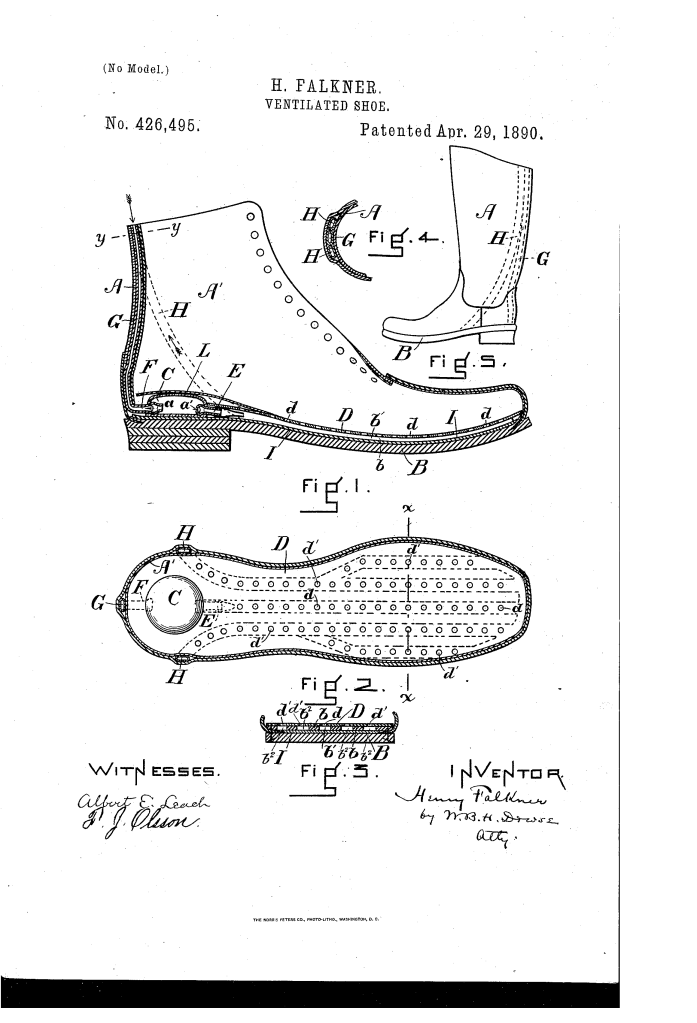
Ventilated Shoe – Patent No. 426,495
Inventor: Henry Falkner, of Cambridge, Massachusetts.
Patent Number: 426,495
Date of Patent: April 29, 1890
Description: Henry Falkner’s patent for a “Ventilated Shoe” was an ingenious design aimed at improving foot health and comfort. The shoe’s core feature was an internal ventilation system that used the wearer’s movement to pump air. The key components included:
- A rubber bulb in the heel: This served as the air pump. When the wearer’s heel lifted, the bulb expanded, sucking in fresh air through a tube at the back of the shoe.
- Internal air passages: When the heel pressed down, the bulb compressed, forcing the fresh air into a central passage under the sole.
- A perforated inner sole: This allowed the fresh air to be pushed into the shoe and around the foot. The moisture-laden air was then expelled through separate passages on the sides of the sole and out through tubes in the shoe’s upper.
This system created a constant circulation of air, keeping the foot dry and cool.
Societal Impact
While Falkner’s ventilated shoe never became a widespread commercial success, his invention was part of a broader trend of consumer-focused patents in the late 19th century that aimed to improve personal comfort and health.
- Addressing a Common Problem: Before modern footwear materials, shoes were often hot, damp, and uncomfortable, leading to foot health issues like “habitually moist or cold feet,” chilblains, and athlete’s foot. Falkner’s patent directly addressed these problems with a practical, though complex, mechanical solution.
- Emphasis on Hygiene and Health: The invention reflects the increasing societal awareness of personal hygiene and its link to health. Just as inventors were patenting better sewer traps and water filters to improve public health, others were creating products to improve personal well-being.
- A Precursor to Modern Innovations: The concept of using movement to power a device in clothing or footwear is a precursor to modern innovations like self-lacing shoes, smart shoes that monitor activity, or even footwear with built-in cooling technology. Falkner’s patent is a fascinating glimpse into the ingenuity of inventors who sought to integrate technology directly into personal items to solve everyday problems.
