
Vacuum Heating System: David N. Crosthwait, Jr. (Patent No. 1,727,965)
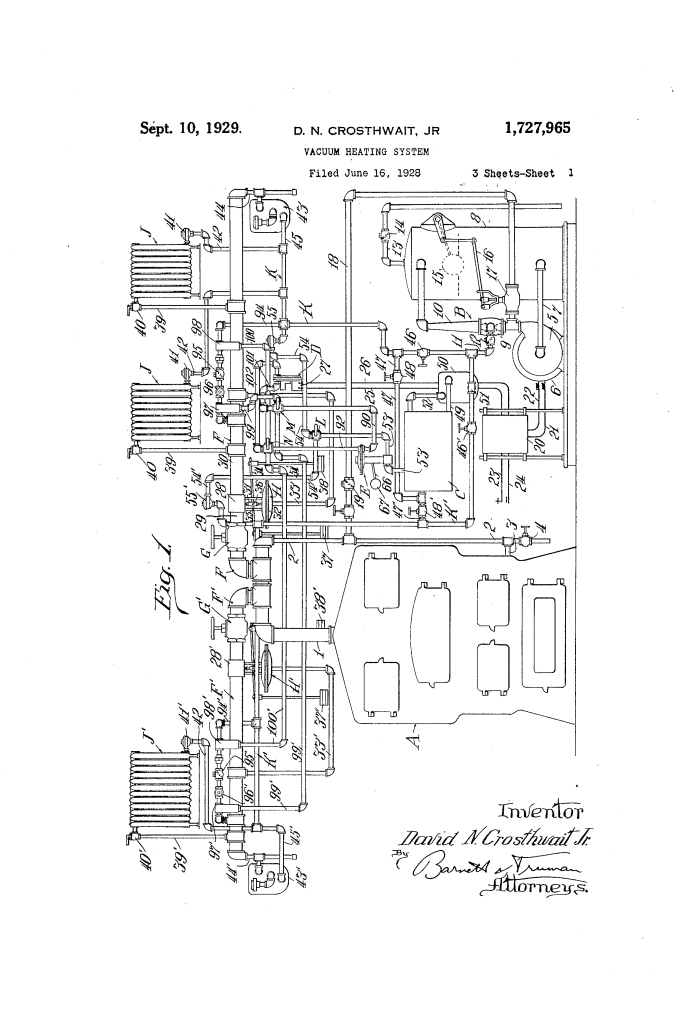
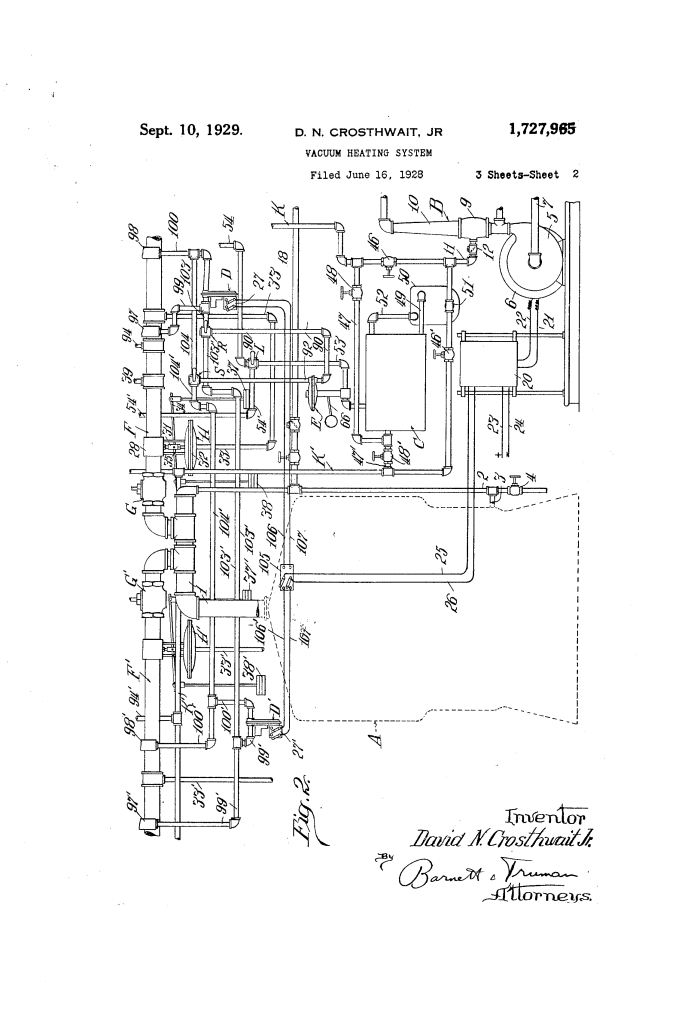
The patent by David N. Crosthwait, Jr. of Marshalltown, Iowa (assigned to C.A. Dunham Company) describes a Vacuum Heating System (Patent No. 1,727,965), issued on September 10, 1929. This invention is a highly advanced sub-atmospheric steam heating architecture designed to heat different zones of a building at varying temperatures using a single central source and exhausting mechanism.
The “Why”
In the 1920s, heating large buildings was a struggle of extremes. If a cold wind hit the north side of a skyscraper, engineers had to crank up the entire boiler to heat those rooms, causing the south side of the building to become swelteringly hot. Duplicating the entire boiler and pump system for different sides of a building was prohibitively expensive. Crosthwait solved this “pain point” by creating a multi-zone differential system. His invention allowed the north side of a building to run at a higher steam temperature (less vacuum) while the sheltered south side ran at a lower temperature (deeper vacuum)—all while sharing the same return pumps and boiler.
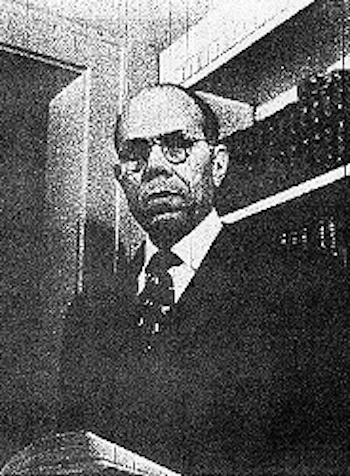
Inventor Section: David N. Crosthwait, Jr.
As the research director for the C.A. Dunham Company, David N. Crosthwait, Jr. was the “architect of the modern climate.” His engineering philosophy was rooted in thermodynamic equilibrium. He understood that heat is not just about fire, but about the precise control of pressure. Operating at the height of the “Skyscraper Age,” Crosthwait’s designs allowed buildings like Rockefeller Center to breathe. This specific patent highlights his ability to integrate complex fluid logic—using “flash tanks” and “differential controllers” to manage energy flows that previously required manual oversight.
Key Systems Section
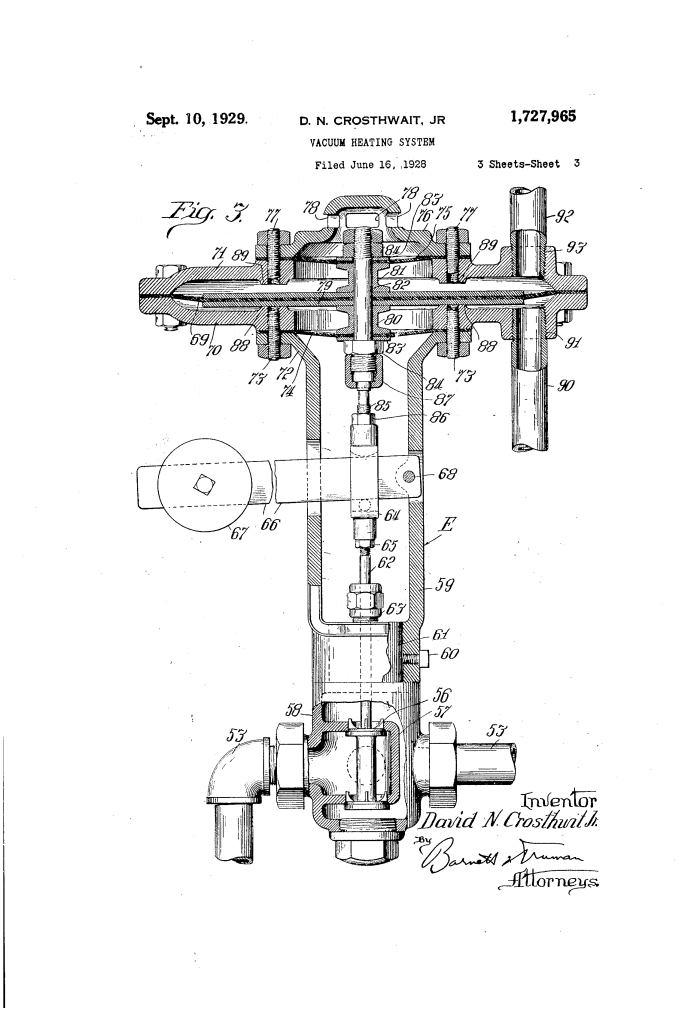
1. The Differential Pressure Controller (D & E)
This is the “brain” of each zone. It consists of a casing divided by a flexible diaphragm that monitors the difference between the supply steam and the return line.
- Modern Translation: A Differential Pressure Transducer/Switch.
- Function: It ensures that even if the steam is at a very low “cool” temperature, there is always enough of a pressure drop to pull the condensate and air out of the radiators, preventing the system from water-logging.
2. The Flash Tank (C)
A specialized vessel used for the “higher pressure” zone of the building.
- Modern Translation: A Phase-Change Expansion Chamber.
- Function: When hot condensate from a high-temperature zone returns, it enters the flash tank. Because the tank is under a deeper vacuum (connected to the colder zone’s return line), the water “flashes” into steam, cooling it down instantly so it can be handled by the single central vacuum pump without damaging it.
3. The Centrifugal Exhausting Mechanism (B)
A central pump system that manages the vacuum for the entire building.
- Modern Translation: A Liquid Ring Vacuum Pump.
- Function: It creates a powerful suction that draws air and water through the return mains. It includes an ejector (9) that uses a high-velocity water stream to “entrain” (trap and pull) the air out of the pipes.
Comparison Table
| Feature | Standard Steam Systems (Pre-1929) | Crosthwait’s Vacuum System |
| Zone Control | “All or nothing”; the whole building is one temperature. | Independent Zoning; different sides of the building vary. |
| Energy Waste | High; overheating one side to satisfy the other. | Minimized; provides only the specific heat needed. |
| Equipment | Required multiple pumps/boilers for zoning. | Consolidated; single exhausting mechanism. |
| Steam Temperature | Fixed at 212°F (100°C) or higher. | Variable; can run as low as 130°F (54°C) under vacuum. |
Significance Section
- Foundation of Modern HVAC Zoning: This patent is the direct ancestor of the “Variable Air Volume” (VAV) and multi-zone systems used in skyscrapers today.
- Fuel Conservation: By allowing buildings to operate at “cool steam” temperatures (sub-atmospheric), it drastically reduced coal and oil consumption.
- Rockefeller Center: The principles in this patent were utilized to heat the massive Rockefeller Center complex, proving the scalability of Crosthwait’s fluid logic.
