
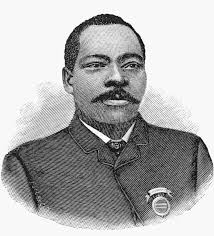
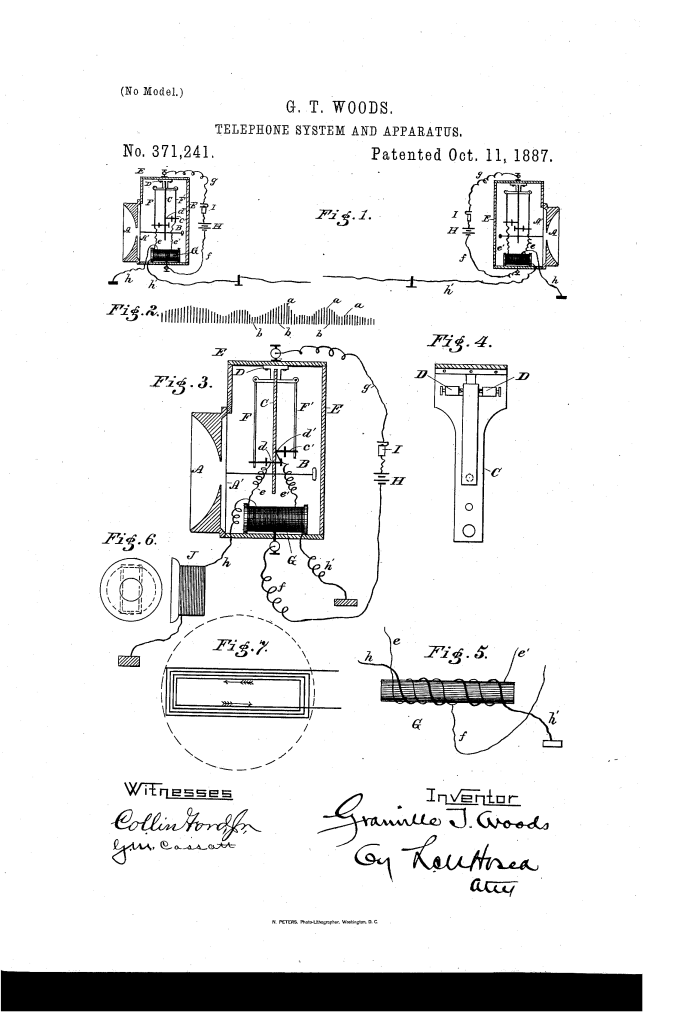
Telephone System and Apparatus (Granville T. Woods, No. 371,241)
The patent by Granville T. Woods of Cincinnati, Ohio, describes a revolutionary Telephone System and Apparatus (Patent No. 371,241, 1887). The invention introduces a method of electrical transmission that significantly increases the distance over which speech can be carried while improving the clarity and volume of the sound. Woods’s system moved beyond the “undulatory” continuous currents of early telephony, utilizing intermittent currents and induction to create a more powerful signal.
Inventor Background: Granville T. Woods
Granville T. Woods (1856–1910) was one of the most prolific African-American inventors, often referred to as the “Black Edison.”1 He held more than 50 patents, many involving complex electrical systems for railways and communication.2 Woods was a self-taught engineer who established the Woods Electric Company to develop and market his innovations.3 His work in telephony was so advanced that it was eventually purchased by the American Bell Telephone Company.4 Woods is best known for inventing the “Induction Telegraph,” which allowed moving trains to communicate with stations, dramatically improving railway safety.5
Invention and Mechanism (Simplified)
Woods’s system differs from traditional telephones in how it processes the local battery current before sending it along the line.
1. The Dual-Electrode Transmitter
- Vibrator (C) and Diaphragm (A’): In the transmitter, a central lever or vibrator (C) is attached to the mouthpiece diaphragm. When a person speaks, the vibrator moves back and forth in unison with the sound waves.
- Carbon Electrodes (c, c’): On either side of the vibrator are pendulous bars containing carbon electrodes.
- Function: As the vibrator swings, it increases pressure on one carbon contact while decreasing it on the other. This acts like a “double-acting” switch, shunting the local battery current alternately in two directions.
2. Induction Coil and Alternating Current (Key Innovation)
- Primary Coil (G): The local current enters the induction coil from both ends and meets in the middle.
- Function: Because the current is shunted back and forth by the transmitter, it produces alternating currents of opposite polarity in the line-wire.
- Push-Pull Reception: In a standard receiver, the diaphragm is only attracted (pulled) by the magnet. In Woods’s system, the alternating polarity causes the receiving diaphragm to be both attracted and repelled. This increases the vibration range, resulting in much louder and clearer sounds.
3. The Rheotome (Circuit Breaker)
- Rheotome (I): Woods included an automatic circuit breaker, or rheotome, in the local circuit.
- Function: This device creates a series of rapid electrical “breaks” or impulses (visualized in Fig. 2 of the patent). This produces a current with much higher inducing strength than a continuous current, allowing the signal to travel much further distances and overcoming the “static effects” that often plagued long-distance lines.
Concepts Influenced by This Invention
Granville T. Woods’s telephone apparatus influenced the fundamental engineering of long-distance communication and signal processing.
- Push-Pull Amplification: The concept of using alternating polarities to both “push” and “pull” a mechanical component (the receiving diaphragm) is a direct ancestor to push-pull amplifiers used in modern audio technology to increase power and reduce distortion.
- Long-Distance Signal Integrity: By using a high-tension intermittent current (via the rheotome), Woods pioneered techniques for signal reinforcement that allowed telecommunications to span greater geographic areas.
- Induction-Based Communication: His mastery of the induction coil laid the groundwork for his most famous invention, the Induction Telegraph, and influenced how electrical signals are isolated and transformed in modern circuitry.
- Static and Noise Mitigation: Woods identified that alternating reversed currents could neutralize static interference, a principle used in modern differential signaling to keep data clean across long cables.
