
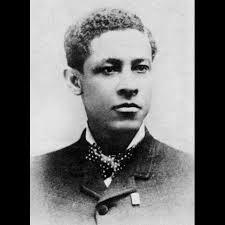
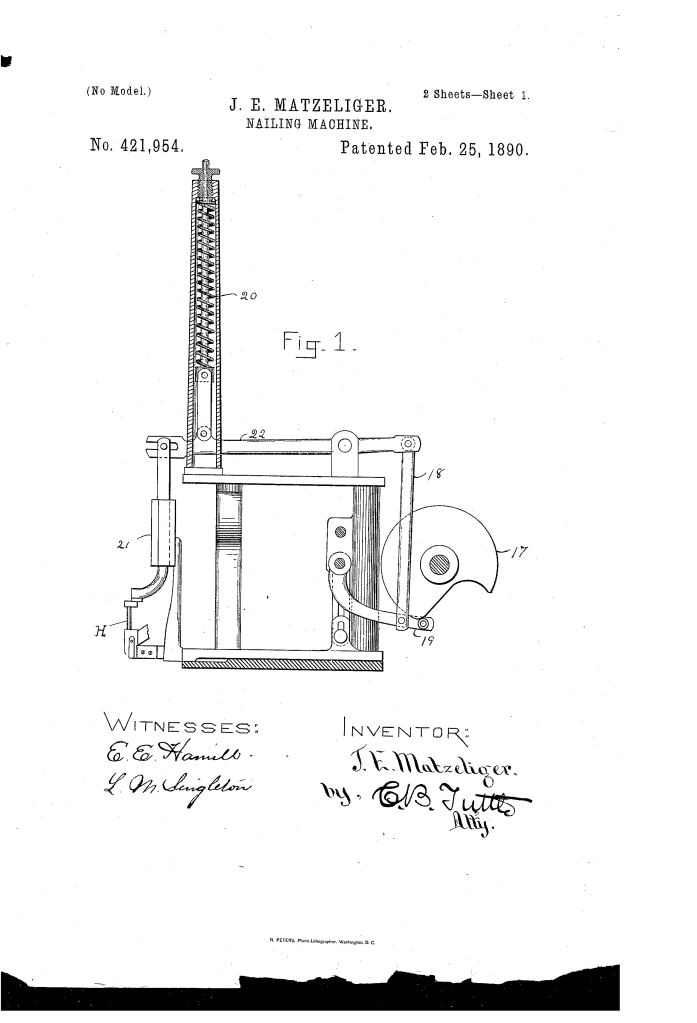
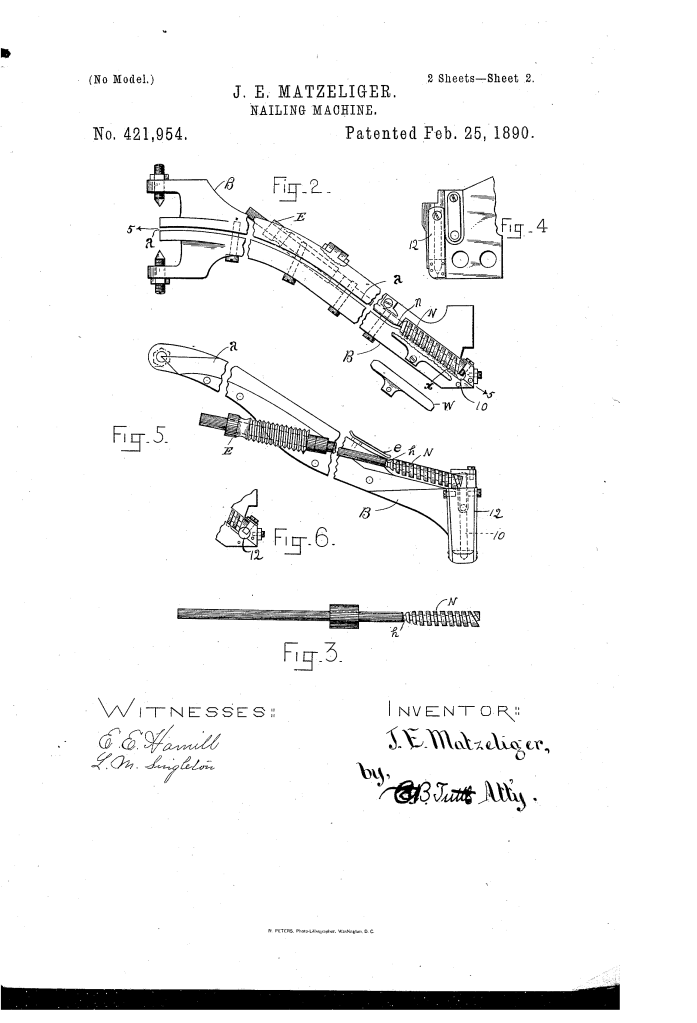
Nailing Machine, Jan Earnst Matzeliger, Patent No. 421,954
The patent by Jan Earnst Matzeliger of Lynn, Massachusetts (born in Paramaribo, Suriname) describes a Nailing Machine (Patent No. 421,954). This invention is a specialized mechanism designed to automatically separate and drive tacks or nails from a bulk hopper into a workpiece one at a time. It serves as a critical subsystem to Matzeliger’s broader “Lasting Machine,” which revolutionized the global footwear industry by automating the complex process of attaching a shoe’s upper to its sole.
The “Why”: Eliminating the Production Bottleneck
Before Matzeliger’s innovation, “lasting” was a manual, artisanal bottleneck that required highly skilled workers—known as hand-lasters—to pull leather over a wooden last and tack it into place. While other parts of shoe-making had been mechanized, the delicate, variable nature of lasting remained human-dependent. Matzeliger’s machine addressed the specific pain point of precision nail distribution: providing a mechanism that could feed, orient, and drive nails at high speed without jamming, effectively breaking the monopoly of the hand-lasters’ guild and making shoes affordable for the masses.
Inventor Section: Engineering against the Odds
Jan Earnst Matzeliger’s engineering philosophy was centered on mechanical mimicry—designing machines that could replicate the complex, nuanced motions of human hands. An immigrant of Surinamese and Dutch descent, Matzeliger worked in a Lynn shoe factory during the height of the Industrial Revolution. Despite facing significant racial prejudice and living in poverty while developing his prototypes, his persistence resulted in one of the most sophisticated pieces of machinery of the 19th century. His work proved that “human-only” tasks could be codified into mechanical logic.
Key Systems Section: Precision Distribution
Spiral Separator Thread
- Modern Term: Variable-Pitch Feed Screw.
- Function: A threaded shaft (N) engages tacks from a gravity-fed chute. The terminal portion of the screw thread changes abruptly to a $45^\circ$ angle. This “timed” geometry ensures that the tack is carried precisely over the receiver well before being dropped, while the beveled end of the shaft clears a path for the driver to descend without colliding with the screw.
Spring-Loaded Receiver Block
- Modern Term: Dual-Jaw Centering Chuck.
- Function: The receiver is comprised of two hinged parts held together by springs (12). This “well” (10) is tapered at the bottom to align the tack vertically. When the driver (H) strikes, the walls are forced open against the spring tension, allowing the tack to pass through while maintaining perfect axial alignment.
Reciprocating Driver Linkage
- Modern Term: Cam-Actuated Linear Actuator.
- Function: The driver is a metallic rod lifted by a cam (17) through a series of intermediate levers (18, 19, 22). It is depressed with high velocity by a heavy spring (20), providing the mechanical force necessary to seat the tack into the shoe material.
Comparison Table: Distribution Efficiency
| Standard Methods of the Time | The Matzeliger Innovation |
| Manual Placement: Lasters held tacks in their mouths or picked them from a tray by hand. | Automatic Feeding: Tacks are processed from bulk “promiscuously” and oriented automatically. |
| Intermittent Driving: Hammering was a separate, manual motion following the stretch. | Integrated Driving: The separator and driver are synchronized by a single power source. |
| High Error Rate: Frequent misalignment of tacks led to wasted material. | Self-Centering Receiver: Tapered walls ensure every nail is driven straight. |
Significance Section: The Foundation of Modern Assembly
- Precursor to Modern Fastening: The logic of the spring-loaded jaw and feed screw is the direct ancestor of modern pneumatic nail guns and automated assembly line screwdrivers.
- High-Speed Industrialization: By allowing for a “continuous” feed of fasteners, Matzeliger’s systems helped transition manufacturing from batch processing to flow processing.
- Standardization: This machine necessitated the production of uniform fasteners, driving quality control standards across the hardware industry.
