
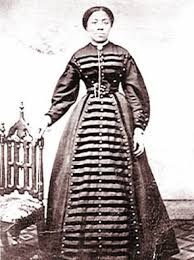

Improved Hair-Brush (1898)
U.S. Patent No. 614,335, granted on November 15, 1898, to Lyda D. Newman, describes a novel, hygienic hair-brush engineered for easy disassembly, cleaning, and superior airflow. Newman, an inventor and hairdresser based in Manhattan, New York, tackled a ubiquitous hygiene issue of the Victorian era: traditional hair-brushes accumulated dirt, dandruff, and product residue that were nearly impossible to clean out from dense bristle beds.
Her invention solved this design flaw by introducing a modular, ventilated bristle assembly that could be unlocked and detached with the push of a button, allowing users to sanitize the brush thoroughly without damaging the handle.
The Innovation: The Ventilated Detachable Holder
Conventional 19th-century brushes embedded natural boar or animal bristles directly into solid wooden or bone backs. Newman re-engineered the brush body into a two-piece modular system: a recessed handle-back and a removable bristle grid.
By separating the bristle carriage from the solid back, Newman eliminated the sealed crevices where bacteria, oils, and debris traditionally collected.
Key Architectural Features
| Component | Patent Callout | Functional Role |
| Brush Back & Handle | A, B | The structural frame, hollowed out on its underside to create an interior ventilation recess (A’). |
| Bristle-Holder Grid | C | A framework of spaced parallel bars (C’) linked by crossbars (C2, C3) carrying discrete bunches of bristles (D). |
| Air Chamber & Slots | A’, C’ | Formed because recess A’ is deeper than holder C; open slots between bars circulate air outward through side vents. |
| Flange & Shoulder Joint | A2, C4 | Secures the outer tip of the bristle plate against the head of the brush back. |
| Sliding Lock Bolt | E, F | A thumb-operated sliding bolt controlled via button F to lock or instantly release the bristle-holder. |
How the Mechanism Functions
- Airflow Dynamics: The bristle-holder bars (C’) have rounded edges, creating wide vertical slots between the bristle rows. These slots vent directly into the interior air chamber (A’), preventing moisture retention and speeding drying time after hair treatments.
- Locking Assembly: The user seats the shoulder (C4) of the bristle-holder into the front flange (A2) of the brush head.
- Engagement: Pressing the holder flush into the recess, the user slides button F forward, driving locking bolt E into the matching slot on rear crossbar C2.
- Disassembly & Cleaning: Sliding button F rearward withdraws the bolt. The bristle assembly falls free, giving unobstructed access to wash the bristles and flush the hollow chamber.
About the Inventor: Lyda D. Newman
Lyda D. Newman was an African American inventor, women’s rights activist, and professional hairdresser in New York City.
- Women’s Suffrage: Beyond her work in personal care innovation, Newman was a prominent community organizer who fought for voting rights. She served as an organizer for the Woman Suffrage Party in Manhattan during the 1910s, canvassing her neighborhood and organizing street meetings.
- Hygiene & Sanitation: Her brush design was decades ahead of its time in prioritizing sanitation, addressing public health concerns during an era when personal hygiene products were transitioning toward modern, sterilizable designs.
Summary of Claims
The patent explicitly claims:
- A brush back with an underside recess paired with a bristle-holder that partly fills the space to leave an active air-chamber.
- Through-slots running between parallel rows of bristles that communicate directly with the rear air chamber for ventilation.
- A detachable bristle-holder seated on a retaining flange and secured at the opposite end by a sliding locking bolt operated from the handle.
