
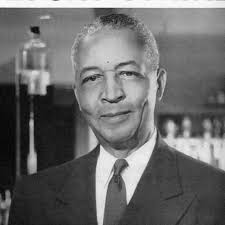
Synergistic Antioxidant Containing Amino Acids, Lloyd A. Hall (1950)
Patented on August 8, 1950, this invention (U.S. Patent No. 2,518,233) represents a landmark achievement in food chemistry by Lloyd A. Hall. It introduced the revolutionary use of amino acids—the building blocks of proteins—to create a powerful, non-toxic “shield” against food spoilage.
Hall discovered that while certain amino acids have modest antioxidant properties on their own, they become exponentially more powerful when combined with other stabilizers. This is the principle of synergy: a team of ingredients working together to achieve a result that no single ingredient could match.
The “Why”
- The Spoilage Problem: Fats and oils (glycerides) in foods like lard, mayonnaise, and milk powder react with oxygen to form peroxides. These peroxides break down into smelly aldehydes and ketones, making the food rancid and unfit for human consumption.
- The Toxicity Barrier: Many effective industrial antioxidants in the 1940s were toxic or required dangerous chemical solvents to remain stable in food.
- The Heat Challenge: Preservatives often “cook off” or decompose during baking (375F), leaving finished products like cookies or crackers vulnerable to spoilage just days after production.
The Solution: Hall utilized common, safe amino acids (like Glycine) mixed with organic acids and gallic esters to create a non-toxic, heat-stable preservative that can be added easily during manufacturing.
Key Systems Section
1. The Synergistic “Triple Threat”
Hall’s invention relies on a specific combination of three chemical classes:
- Amino Acids (The Enhancer): Glycine, Threonine, Methionine, or Tryptophane. These “boost” the performance of the other ingredients.
- Gallic Acid Esters (The Protector): Such as Propyl Gallate. These are the primary line of defense against oxygen.
- Organic Acids (The Synergist): Citric, Fumaric, or Benzoic acid. These help bind trace metals (like iron) that normally speed up oxidation.
2. The Active Oxygen Method (AOM)
To prove his discovery, Hall used the AOM (Swift Stability Test). By bubbling air through heated lard, he measured how many hours it took for peroxides to reach a rancid level.
| Sample | Antioxidant Used | Stability (AOM Hours) |
| Control | Plain Lard | 4 Hours |
| Example A | Glycine alone | 7 Hours |
| Example B | Propyl Gallate alone | 20 Hours |
| Hall’s Invention | Glycine + Propyl Gallate + Citric Acid | 100+ Hours |
Notice: Combining the three ingredients didn’t just add their values (7 + 20 + 0); it multiplied them into a vastly superior result.
Application and Formulations
Liquid vs. Powder Formats
Hall designed his antioxidants to be versatile for different food manufacturing processes:
- Liquid Concentrates: Solubilized in corn or vegetable oil. These are perfect for adding to refined lard or oils at 140F to 150F before they are processed through a Votator (industrial chiller).
- Crystalline Powders: Simple mixtures of amino acids and esters that can be dissolved directly into fats with agitation and heat (210F to 220F).
The Lecithin Connection
Hall found that adding Lecithin (a fatty substance found in soybeans and egg yolks) further stabilized the mixture. Lecithin acts as an emulsifier, ensuring that the water-loving amino acids stay perfectly mixed with the oil-loving fats, preventing the preservative from separating out.
Significance
Lloyd A. Hall was a pioneer who broke barriers in both science and industry. This patent was a cornerstone of his work at The Griffith Laboratories:
- Safe for Humans: By using amino acids (natural components of the human diet), he ensured the preservatives were completely non-toxic.
- Economic Impact: Glycine was inexpensive and readily available, making high-quality food preservation affordable for small rendering plants.
- Legacy of Lloyd A. Hall: Over his career, Hall received over 100 patents. This specific invention allowed for the mass distribution of fatty foods across long distances, supporting the growth of the modern global food supply.
Final Insight: Hall’s work proved that nature’s own building blocks—amino acids—could be repurposed as high-tech industrial stabilizers. His “synergistic” approach remains a fundamental strategy in food science today.
