
Commemorative Frederick Douglass Spoon (1895)
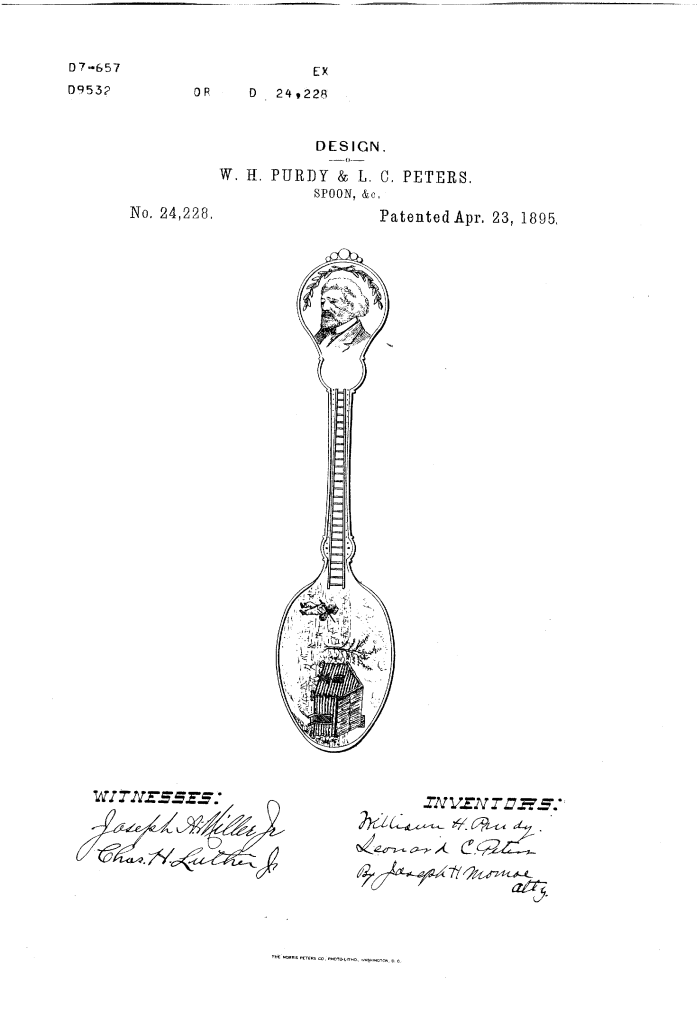
U.S. Patent No. Design 24,228, granted on April 23, 1895, to William H. Purdy and Leonard C. Peters of Providence, Rhode Island, protects a unique and highly detailed ornamental design for a commemorative spoon. Created just two months after the passing of the legendary abolitionist, orator, and statesman Frederick Douglass in February 1895, this design served as a structural tribute to his monumental legacy.
During the late 19th century, commemorative “souvenir spoons” were a massive cultural trend in America, used to honor historic figures, cities, and major events. Purdy and Peters utilized this medium to cement Douglass’s likeness in sterling silver, creating a functional piece of historical remembrance.
The Core Design: A Tribute in Silver
The brilliance of the Purdy and Peters design lies in its explicit integration of political and historical symbolism directly into the anatomy of the spoon. Rather than standard floral or abstract Victorian patterns, every element of this piece was crafted to honor Douglass.
- The Handle (The Portrait Bust): The upper portion of the spoon handle features a distinct portrait bust of Frederick Douglass, capturing his recognizable likeness, hair, and features.
- The Laurel Branches: Surmounting the portrait bust at the very top of the handle are beautifully draped laurel branches—a classical symbol of honor, victory, and timeless achievement.
- The Bowl (The Narrative): The bowl (or ladle) of the spoon contains an engraved or stamped representation of a scene depicting a significant aspect of his life or legacy (noted in historical manufacturing records as a depiction of a typical scene relevant to his journey or a monument).
Key Design Components
The design establishes a perfect harmony between classical commemorative art and functional tableware:
| Component | Decorative Element | Symbolism & Function |
| Upper Handle | Portrait Bust of Frederick Douglass | Honors the individual directly, establishing the spoon as a dedicated piece of historical memorialization. |
| Crown of Handle | Laurel Branches | A traditional motif used since antiquity to denote heroism, intellectual excellence, and high civic honor. |
| Spoon Bowl / Ladle | Historical Context Scene | Provides a visual narrative centerpiece, anchoring the souvenir spoon to a specific cultural or historical milieu. |
Historical and Cultural Impact
The timing and authorship of this patent carry profound historical weight:
- Immediate Memorialization: Frederick Douglass passed away on February 20, 1895. Purdy and Peters filed their application on March 7, 1895—just over two weeks later. This indicates an urgent, deeply felt effort to provide the public with a tangible way to honor his memory.
- Providence Silversmithing Hub: In the 1890s, Providence, Rhode Island, was the jewelry and silverware capital of the United States. Operating out of this manufacturing epicenter allowed the inventors to leverage high-quality casting techniques to distribute these delicate pieces of historical art.
- Early African American Material Culture: Commemorative items honoring Black leadership created during the Jim Crow era are incredibly rare. This design stands as an early and significant example of material culture specifically produced to celebrate Black excellence and civil rights heritage.
About the Inventors: William H. Purdy & Leonard C. Peters
Based in Providence, Rhode Island, William H. Purdy and Leonard C. Peters were skilled designers operating within a competitive industrial landscape. By securing a federal design patent for this spoon, they ensured that their specific artistic tribute to Douglass could not be counterfeited or replicated by larger commercial silver firms, safeguarding both their intellectual property and their cultural narrative.
Summary of Claims
The patent explicitly claims:
- The original and unique ornamental Design for Spoons and other Similar Articles, as visually represented in the accompanying patent drawings.
- The specific combination of a portrait bust of Frederick Douglass surmounted by laurel branches on a utensil handle.
