
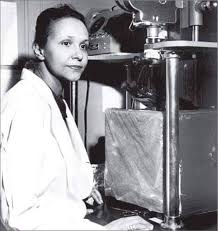
Shifted Chemotherapy from Last-Resort to Proven Option (1951)
Dr. Jane C. Wright, often called the “Mother of Chemotherapy,” revolutionized oncology in 1951 through her clinical research at Harlem Hospital. While Dr. Wright’s work was rooted in clinical trials and medical methodology rather than a single patented mechanical device, her published findings in 1951 (notably in the Journal of the National Medical Association) transformed cancer treatment from a desperate “last resort” into a controlled, effective medical discipline.
Before Wright, chemotherapy was largely experimental and highly toxic. She pioneered the use of patient-specific tissue cultures to test drugs before they were administered to the patient—an early precursor to modern personalized medicine.
The Innovation: Targeted Clinical Evaluation
In 1951, Dr. Wright and her father, Dr. Louis T. Wright, published a landmark study evaluating folic acid antagonists (like methotrexate). Her breakthrough wasn’t just a new drug; it was the scientific rigor applied to how drugs were selected for each specific cancer type.
- Individualized Testing: She grew tumor cells from patients in lab dishes (biopsies) and exposed them to various chemical agents.
- Predictive Modeling: By observing which chemicals killed the tumor cells in the lab, she could predict which chemotherapy would work for that specific person.
- Dosage Refinement: She transitioned the field away from “trial and error” by establishing precise protocols that maximized tumor destruction while minimizing patient harm.
Why This Was Revolutionary
- From Toxic to Therapeutic: Before her work, many viewed chemotherapy as a “poison” that was as dangerous as the disease. Dr. Wright proved that with the right dosage and drug selection, it could lead to significant remission.
- The Methotrexate Standard: Her 1951 research helped establish Methotrexate as a foundational drug for treating breast cancer and skin cancers—a drug that remains in use today.
- Personalized Oncology: She was decades ahead of her time in suggesting that one person’s cancer is chemically different from another’s.
Key Clinical Components
The “Wright Method” focused on a systematic approach to treating blood and solid-tissue cancers:
| Component | Function |
| Triethylene Melamine (TEM) | One of the early drugs she tested extensively for treating Hodgkin’s disease and leukemia. |
| Folic Acid Antagonists | Chemicals that block the “food” (folates) that cancer cells need to multiply. |
| Tissue Culture Testing | A laboratory technique used to screen drugs against a patient’s own tumor cells. |
| Sequential Therapy | The strategy of using multiple drugs in a specific order to prevent the cancer from becoming resistant. |
Performance: Proving Remission is Possible
Dr. Wright’s 1951 findings provided some of the first documented evidence that chemotherapy could induce long-term remission in patients with advanced cancers.
Impact on Survival Rates:
- Pre-1951: Patients with advanced leukemia or lymphatic cancers were often given only weeks or months to live, with no active treatment available.
- Post-1951 (The Wright Approach): Remission periods were extended significantly, and the “cure” for certain childhood leukemias became a tangible goal for the medical community.
About the Researcher: Dr. Jane Cooke Wright
Jane C. Wright was a trailblazing physician and researcher whose family had a long history of medical “firsts.”
- Academic Excellence: She graduated with honors from New York Medical College and eventually became its Associate Dean—the highest-ranking position held by an African American woman in a medical school at the time.
- Presidential Appointment: In 1964, President Lyndon B. Johnson appointed her to the President’s Commission on Heart Disease, Cancer, and Stroke.
- ASCO Co-Founder: She was the only woman among the seven founders of the American Society of Clinical Oncology (ASCO) in 1964.
- Legacy: Her work laid the foundation for the specialized field of medical oncology, shifting the focus from just “cutting out” cancer to “treating it” at the molecular level.
Summary of Impact
While Dr. Wright did not “patent” her methods (as medical procedures and research findings are generally not patentable in the same way industrial tools are), her work established:
- The use of Methotrexate for treating solid tumors.
- The protocol for pre-screening drugs using patient tissue samples.
- The legitimacy of chemotherapy as a pillar of cancer care alongside surgery and radiation.
