
Sanitary Belt (1956)
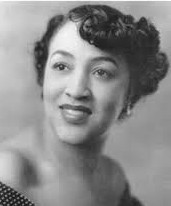
Patented on May 15, 1956 (U.S. Patent No. 2,745,406), this invention by Beatrice Kenner (born Mary Beatrice Davidson Kenner) was a pioneering advancement in women’s personal hygiene. Despite inventing the belt in the 1920s, Kenner faced significant racial discrimination that prevented her from patenting and marketing it for thirty years.
Her design addressed the persistent problem of the era: how to securely and comfortably hold a sanitary napkin (catamenial pad) in place before the invention of modern “stay-free” adhesive strips found on today’s pads.
The Innovation: Adjustable Comfort and Accessibility
Kenner’s primary goal was to eliminate the shifting, bulkiness, and chafing caused by the safety pins and heavy elastics used in previous designs.
1. The Moisture-Proof Pocket and Strap
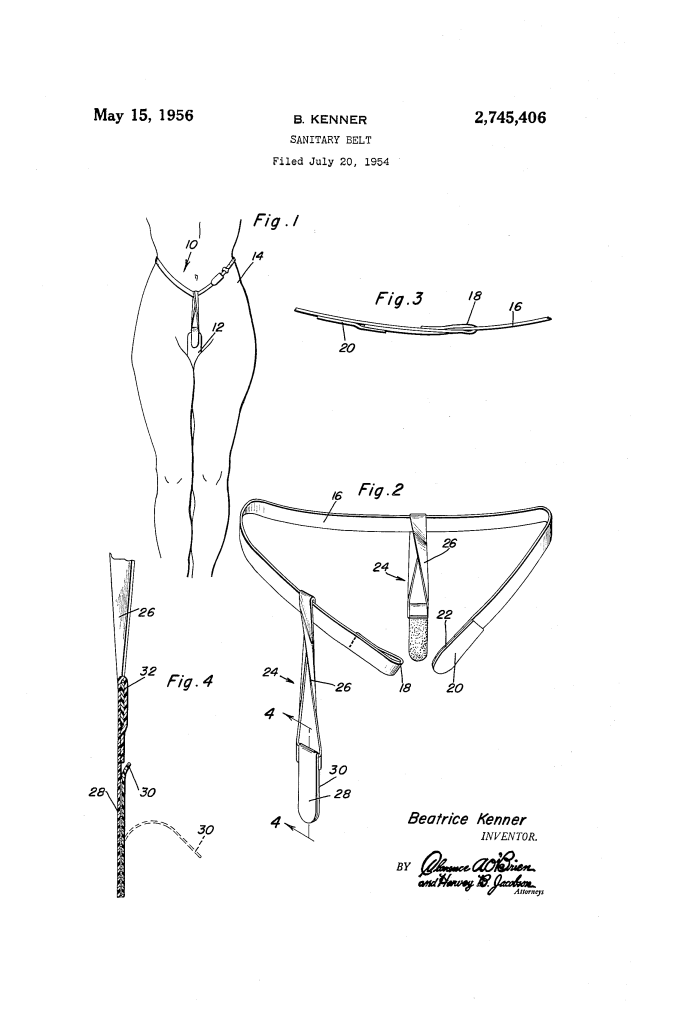
The belt consisted of an elongated strap (16) made of flexible, often plastic-based, material.
- The Loop Closure (18, 20): One end of the strap featured a loop. The other end had an adhesive coating protected by a strip of paper. To put it on, the wearer threaded the adhesive end through the loop and pressed it down, allowing for a custom, adjustable fit for any body size.
2. Slidable Supporting Elements (24)
This was the most critical mechanical feature of the patent.
- Adjustability: Two supporting elements were attached to the main belt. These were designed to slide freely along the waist strap.
- Custom Positioning: This allowed the wearer to move the attachment points forward or backward to perfectly align with the pad, preventing the “bunching” that caused skin irritation and ruined the silhouette of clothing.
Key Technical Features
| Component | Number | Functional Role |
| Elongated Strap | 16 | The main waist belt; adjustable and flexible. |
| Adhesive Member | 20 | Used to secure the belt ends together after threading through the loop. |
| Supporting Loops | 26 | Enlarged rings that slide along the belt to position the pad. |
| Adhesive Tabs | 28 | Tabs at the bottom of the sliders that gripped the napkin/pad. |
| Protective Covers | 22, 30 | Peel-off strips that kept the adhesive fresh until use. |
Historical Significance: Beatrice Kenner
Beatrice Kenner was a prolific African American inventor who held five patents, more than any other Black woman in history during her time.
- The 30-Year Delay: Kenner originally invented the belt in the late 1920s. A company expressed interest in 1957 but retracted their offer upon discovering she was Black.
- Affordability: Kenner specifically designed this belt to be inexpensive. Her patent explicitly mentions that it was cheap enough to be included inside the small boxes of pads found in public dispensing machines, ensuring women had a belt even during an “unexpected onset.”
- Universal Design: By using sliding loops rather than fixed sewing, her design was one of the first truly “one size fits all” hygiene products.
How it Worked
- Secure the Waist: The user adjusted the belt around their waist using the adhesive end and the loop.
- Position the Sliders: The two sliders were moved to the front and back center of the body.
- Attach the Pad: The protective coverings (30) were peeled off the slider tabs, and the ends of the sanitary napkin were pressed against the adhesive to hold it firmly in place without the need for sharp safety pins.
Legacy
While the “sanitary belt” eventually became obsolete in the 1970s with the invention of self-adhesive pads, Kenner’s patent was the gold standard for decades. Her focus on user-adjustable positioning and low-cost manufacturing paved the way for modern ergonomic designs in feminine care.
