
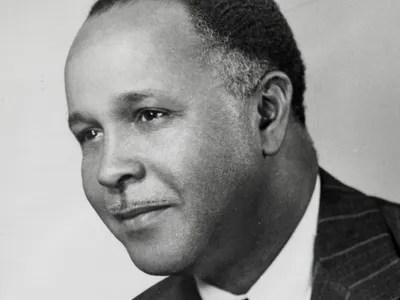
Recovery of Sterols (Percy L. Julian, et al., No. 2,218,971)
Patented on October 22, 1940, this invention describes a revolutionary industrial process for extracting sterols (such as stigmasterol and sitosterol) from plant and animal sources. The lead inventor, Percy L. Julian, was a world-renowned African American chemist whose work in soybean research paved the way for the affordable mass production of hormones like cortisone and birth control pills.
This patent addresses a major manufacturing bottleneck: the difficulty of separating tiny amounts of sterols from the thick, gummy “soaps” created during the extraction process.
1. The Problem: The “Gummy Soap” Barrier
Sterols are found in small quantities in substances like soybean oil, tall oil (from wood pulp), and yeast. To get them out, the oil is typically saponified—turned into soap using an alkali like caustic soda.
- Traditional Failure: Standard methods involved shaking this soap with a solvent (like ether). However, the soap would form a heavy, “stiff emulsion” (like a thick, unmanageable foam) that trapped the sterols and required massive, expensive amounts of solvent to clean.
- Drying Issues: Attempting to dry the soap resulted in violent foaming and bubbling, making commercial production nearly impossible.
2. The Innovation: The “Quick Lime” Puffing Method
Julian and his team discovered that adding quick lime (calcium oxide) to the wet soap mixture created a chemical reaction that transformed the texture of the material.
- The Reaction: When quick lime reacts with the water in the soap, it generates intense heat (CaO + H_2O –> Ca(OH)_2 + {Heat}).
- The “Puffing” Effect: This heat turns the remaining water into steam inside the soap. The steam forces the soap to swell and “puff up,” much like bread rising or popcorn kernels exploding.
- The Result: The gummy soap is converted into a dry, porous, crumbly granular mass.
3. Efficient Extraction
Because the resulting mass is porous and granular rather than a solid gum, it is incredibly easy to process.
- Easy Percolation: Solvents can now flow freely through the granules (like water through coffee grounds) to dissolve the sterols.
- Continuous Processing: This allows for “Soxhlet” extraction or counter-current extraction, which uses much less solvent and is far faster than previous methods.
- Purification: The solvent extract is evaporated, and the sterols are crystallized from alcohol, resulting in a product of nearly 100% purity.
4. Step-by-Step Process Summary
| Stage | Action | Result |
| Saponification | Mix soybean oil with caustic soda. | Turns oil into a semi-plastic soap containing sterols. |
| Activation | Add Quick Lime. | Triggers an exothermic (heat-releasing) reaction. |
| Granulation | Steam generates in situ. | The soap “puffs” into a dry, permeable, crumbly mass. |
| Extraction | Wash with solvent (Ether/Benzene). | Sterols are dissolved and removed from the soap granules. |
| Refinement | Crystallize from alcohol. | Pure sterols (Stigmasterol/Sitosterol) are recovered. |
5. Historical Significance: Dr. Percy L. Julian
This patent was a cornerstone of Dr. Julian’s career at The Glidden Company. By finding a way to extract sterols efficiently from soybeans, he made these compounds available as raw materials for the synthesis of human steroids.
Before Julian’s work, these chemicals were rare and cost hundreds of dollars per gram. His “soybean sterol” process brought the price down to cents, making life-saving medicine accessible to millions. Dr. Julian was eventually inducted into the National Inventors Hall of Fame for these contributions.
