
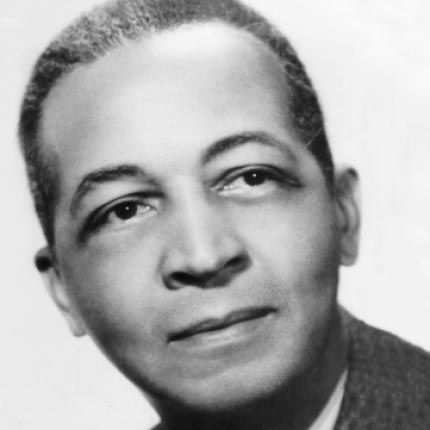
Puncture Sealing Composition, Lloyd A. Hall, Patent No. 2,357,650
Patented in September 1944, this invention by the prolific chemist Lloyd A. Hall (who we previously saw transforming blood and milk proteins) tackled a major automotive headache: tire punctures. During the 1940s, tires were often made of natural rubber that was susceptible to heat degradation and easily pierced by road debris.
Hall’s Puncture Sealing Composition was an early, sophisticated “tire slime.” Injected directly into the inner tube, it used a complex colloidal chemistry to provide a “self-healing” tire. Unlike earlier sealants that were too watery (causing rim corrosion) or too thick (unbalancing the wheel), Hall’s formula remained a stable, free-flowing liquid that could instantly “plug” a hole from the inside using centrifugal force and internal air pressure.
The “Why”
In the mid-20th century, a flat tire wasn’t just an inconvenience; it often led to a “blow-out,” causing the driver to lose control. Existing sealants either dried out, froze in winter, or rotted the rubber and fabric of the tire casing. Hall sought to create a composition that was amphibious in temperature—remaining fluid at sub-freezing temperatures and stable at the high heat generated by highway friction—while actually improving the elasticity of the rubber it touched.
Inventor Section: Engineering Philosophy
Lloyd A. Hall’s philosophy was based on Colloidal Reinforcement. He didn’t just want a “glue”; he wanted a “liquid fabric.” He realized that to seal a hole effectively, you needed three distinct mechanical actions occurring simultaneously:
- Flow: The liquid must reach the hole instantly.
- Filling: Solid particles must jam into the opening.
- Binding: A fibrous “web” must lock the solids in place against the air pressure.
Key Systems Section
1. The Cold Swelling Starch Matrix
The “secret sauce” of this patent is the use of Cold Swelling Starch.
- The Chemistry: Unlike raw starch which requires cooking to become adhesive, this starch is pre-treated so its amylose and amylopectin are consolidated into a homogeneous mass.
- The Effect: When mixed with glycerine, it forms a colloidal suspension with high extensibility—meaning it can stretch like gum rubber without breaking. This allows the sealant to “flex” with the tire as it rolls.
2. The Multi-Stage Plugging System
Hall used a “tiered” approach to solids to ensure that both tiny pinpricks and large gashes were sealed.
- Granulated Rubber (The Plug): Hall used rubber bits of varying sizes (8 to 200 mesh). Because this is the same material as the tire, it bonds naturally and provides a flexible plug.
- Asbestos Fiber (The Rebar): Long-fiber asbestos acts as a structural binder. It creates a “mat” that catches the rubber granules, preventing them from being blown out of the hole by the 30+ PSI of internal air pressure.
3. The Anti-Freeze and Plasticizing Loop
To ensure the sealant didn’t turn into a “brick” in winter or evaporate in summer, Hall utilized Polyhydric Alcohols.
- Glycerine/Ethylene Glycol: These act as “plasticizers,” keeping the starch matrix elastic. They also drastically lower the freezing point.
- Sodium Chloride (The Catalyst): Hall added common salt (NaCl). While primarily an anti-freeze agent, he noted it strangely improved the “fluidity and permanence” of the colloid without causing the starch to “salt out” (clump together).
4. The Thermal Manufacturing Process
The stability of the product came from a specific heating cycle in a steam-jacketed kettle:
- Cold Mix: Starch and glycerine are combined.
- Primary Heat (150°F): Activation of the suspension.
- Sterilization/Stabilization (240°F): Held for 15 minutes to ensure the product won’t undergo further “cooking changes” once inside a hot tire.
- Controlled Cooling: Brought down to 120°F before packaging to set the colloidal structure.
The Formula: Hall’s Preferred Composition
| Ingredient | Parts by Weight | Functional Role |
| Cold Swelling Starch | 12 | Adhesive Base / Colloidal Matrix |
| Glycerine | 65 | Plasticizer / Anti-freeze / Hygroscopic Agent |
| Water | 55 | Fluid Phase / Solvent |
| Asbestos Fiber | 3 | Structural Binder (The “Web”) |
| Salt (NaCl) | 8 | Freezing Point Depressant / Fluidity Booster |
| Granulated Rubber | 27 | Mechanical Filler (The “Plug”) |
Significance
Lloyd A. Hall’s tire sealant was a masterclass in Functional Chemistry:
- Non-Corrosive: Unlike contemporary formulas, it did not attack the rubber or the metal wheel rims, preserving the “life” of the tire.
- Balance: Because it stayed free-flowing and distributed itself uniformly via centrifugal force, it didn’t cause the “wobble” or “thumping” associated with poor-quality sealants.
- Safety: By preventing rapid air loss (blow-outs), this invention was a significant contribution to automotive safety during the high-speed expansion of the American highway system.
