
Protective Coating for Foodstuffs
Inventors: Lloyd A. Hall and Enoch L. Griffith
Patent Number: U.S. 1,914,351
The patent by Lloyd A. Hall and Enoch L. Griffith of Chicago, Illinois, describes a Protective Coating (Patent No. 1,914,351). This invention is a multi-layered, gelatin-based “synthetic skin” designed to encapsulate meats and produce, providing an airtight, elastic, and transparent barrier that prevents spoilage, insect infestation, and moisture loss during long-term storage and tropical transport.
The “Why”
In the early 20th century, the global food trade faced a massive “pain point”: perishability. Standard preservation methods like paraffin wax were brittle and cracked during transport, while heavy dehydration (salting/smoking) ruined the texture and weight of the meat. There was a desperate need for a coating that could survive “abusive commercial handling,” resist the humid conditions of the tropics, and remain flexible enough to stay attached to the meat even as it moved or shifted.
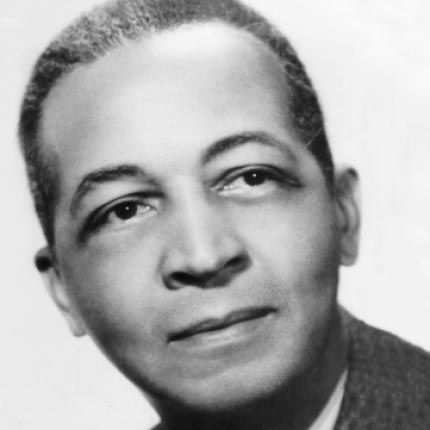
Inventor Section: Lloyd A. Hall
Lloyd Augustus Hall was a titan of industrial food chemistry. His engineering philosophy was rooted in precision molecular control. Unlike many of his contemporaries who relied on trial and error, Hall applied rigorous organic chemistry to solve the physical problems of the meatpacking industry. As a Black pioneer practicing during the height of the Jim Crow era, Hall faced systemic exclusion from many laboratories, yet he rose to become a chief chemist and a consultant for major firms. He understood that the “mechanics” of food preservation required a balance of antiseptic properties and physical durability—a philosophy that led to over 100 patents in food technology.
Key Systems Section
The Laminated Film Structure
The core innovation is a dual-layer mechanical barrier. Instead of a single homogeneous coat, the inventors engineered a “gradient” of physical properties.
- The Inner Layer: A high-purity gelatin mixed with an emollient (glycerin) to ensure a high modulus of elasticity. This allows the film to “clasp” the meat without forming air pockets, even when the meat deforms.
- The Outer Layer: A technical-grade gelatin that is “horny” and rigid, acting as a structural exoskeleton to resist punctures and fly-stings.
Chemical Hardening System
To transform water-soluble gelatin into a “husk” that won’t melt or dissolve, Hall and Griffith utilized a chemical cross-linking process.
- They introduced Potassium Alum ($KAl(SO_4)_2 \cdot 12H_2O$) as a hardening agent.
- In modern engineering terms, this acts as a cross-linking catalyst, tying the protein chains of the gelatin together to render the film insoluble after it sets, effectively “vulcanizing” the protein.
Shutterstock Explore
Thermal Viscosity Control
The patent outlines a strict thermal protocol to prevent the mechanical failure of the coating.
- The mixture must not exceed 150°F ($65.5^\circ C$).
- Exceeding this threshold causes hydrolysis, breaking down long protein chains into shorter peptides and proteoses. This degradation reduces the viscosity and prevents the film from forming the “tough, elastic” characteristics required for a protective shell.
Comparison Table
| Feature | Standard Methods (Paraffin/Dehydration) | The Hall-Griffith Innovation |
| Durability | Brittle; prone to “checking” and cracking. | Tough and elastic; handles “abusive” transport. |
| Adhesion | Poor; air gaps allow mold growth. | High; “clings” to the surface like a second skin. |
| Moisture | Requires drying out the meat (weight loss). | Preserves internal moisture (higher profit/quality). |
| Removal | Hard to scrape off; leaves residue. | Peels away cleanly “like a husk.” |
Significance
- Foundational Food Science: Hall’s work on antioxidants and preservatives (including this coating) revolutionized how protein is shipped globally.
- Precursor to Plastic Wrap: This biopolymer coating is a direct mechanical ancestor to modern vacuum-sealing and polymer “shrink-wrap” technologies.
- Antiseptic Packaging: The use of alum as an “antibody” within the coating layer prefigured modern active packaging where the container itself inhibits bacterial growth.
- Economic Impact: By eliminating the need for partial dehydration, this allowed the meat industry to sell products by their natural weight, significantly increasing margins.
