
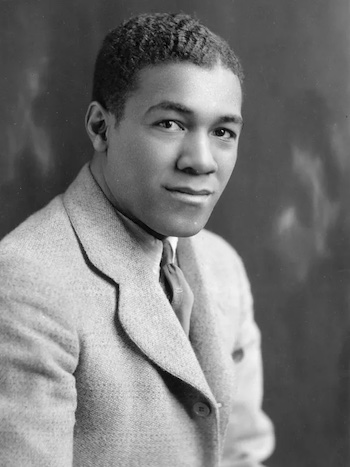
Production of Arecoline, Lawrence Howland Knox (1950)
Patented on May 2, 1950, this invention (U.S. Patent No. 2,506,944) by Lawrence Howland Knox established a commercially viable, synthetic route to Arecoline.
Arecoline is an alkaloid naturally found in the betel nut (Areca catechu). In the mid-20th century, it was in high demand for veterinary medicine as an anthelmintic (a drug used to expel parasitic worms). Before Knox’s breakthrough, arecoline was expensive to produce because it had to be extracted from natural sources or synthesized through complex, low-yield laboratory methods that often destroyed the chemical’s delicate ring structure.
The “Why”
- The Extraction Problem: Relying on betel nut harvests made the supply of arecoline unstable and expensive.
- The Synthesis Barrier: Previous synthetic methods (like those by Mannich) were “involved and yielded low results.” If chemists tried to oxidize the intermediate “aracaidine aldehyde” to the required acid, the entire molecular ring would collapse.
- The By-Product Solution: Knox discovered he could use a cheap by-product from the synthesis of beta-alanine (an amino acid) called bis-(beta-cyanoethyl) amine to build the arecoline molecule from the ground up.
Key Systems Section
1. The Building Block: Reductive Methylation
The process begins with bis-(beta-cyanoethyl) amine. Knox converts this into a tertiary amine by reacting it with formaldehyde and formic acid.
- The Result: This produces bis-(beta-cyanoethyl) methylamine.
- Chemical Strategy: This step adds the necessary methyl group (CH_3) to the nitrogen atom, which is a core feature of the final arecoline molecule.
2. Alcoholysis and Dieckmann Condensation
Next, the cyano groups (nitriles) must be converted into esters.
- Conversion: The molecule is treated with acidified methanol to turn the cyano groups into carbomethoxy groups.
- The Ring Closure: Knox then uses an alkaline condensing agent (like sodium methoxide) in a solvent like naphtha. This triggers a Dieckmann Condensation, which pulls the linear molecule into a six-membered piperidine ring.
- The Innovation: Knox found that using naphtha (a hydrocarbon solvent) instead of aromatic solvents like benzene prevented the formation of “resinous products” (chemical sludge) and significantly boosted the yield.
3. Optimized Hydrogenation (The “Base Boost”)
The resulting cyclic keto-ester must be reduced to a hydroxy-piperidine.
- The Catalyst: Knox uses Adams’ platinum oxide catalyst (PtO_2 H_2O).
- The Breakthrough: Normally, this reduction took 30 hours and required large amounts of expensive platinum. Knox discovered that adding a tiny amount of a free organic base (like a small amount of the piperidone itself) reduced the reaction time from 30 hours to just 6 hours and used 1/20th of the platinum.
4. Solvent-Free Dehydration
The final step is removing a water molecule to create the double bond found in arecoline.
- The Reagent: Thionyl chloride (SOCl_2) or phosphorus oxychloride (POCl_3) is added.
- The Departure from Tradition: Chemists previously believed this had to be done in a solvent. Knox proved that doing it in the complete absence of a solvent produced far superior results and prevented the ester group from accidentally turning back into an acid.
Process Flow: From By-product to Alkaloid
| Step | Reactants | Intermediate Created |
| 1. Methylation | Bis-($\beta$-cyanoethyl) amine + Formic Acid | Bis-(beta-cyanoethyl) methylamine |
| 2. Alcoholysis | Methanol + HCl | Bis-(beta-carbomethoxyethyl) methylamine |
| 3. Condensation | Sodium Methoxide + Naphtha | 1-methyl-3-carbomethoxy-4-piperidone |
| 4. Reduction | Hydrogen + Platinum Oxide + Base | 1-methyl-3-carbomethoxy-4-hydroxypiperidine |
| 5. Dehydration | Thionyl Chloride (No Solvent) | Arecoline (Final Product) |
Technical Components: The “Adams Catalyst”
Knox relied heavily on the Adams Platinum Oxide Catalyst, a state-of-the-art tool in 1950s organic chemistry. By identifying a way to make this expensive catalyst work 500% faster with a simple base additive, he moved the synthesis of arecoline from a laboratory curiosity to a profitable industrial process.
Significance
Lawrence Howland Knox’s patent was a landmark for Nopco Chemical Company and the pharmaceutical industry:
- Economic Impact: It turned a low-value chemical by-product into a high-value medicinal alkaloid.
- Veterinary Medicine: It ensured a steady, cheap supply of arecoline hydrobromide for treating livestock and pets.
- Chemical Achievement: Knox was a prominent African American chemist; his work on this patent demonstrated sophisticated mastery over heterocyclic chemistry and reaction kinetics.
Final Insight: Knox’s genius lay in his “omissions.” By removing the solvent in the dehydration step and identifying the “base boost” for the catalyst, he simplified a complex natural architecture into a streamlined manufacturing routine.
