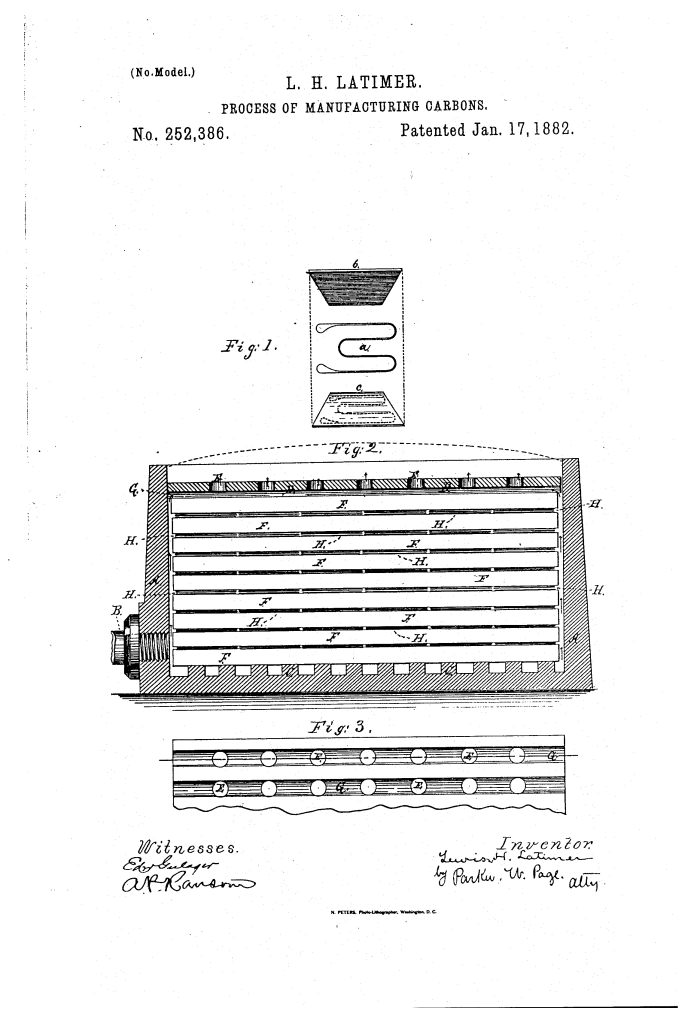
Process 0f Manufacturing Carbons – Lewis H. Latimer – 1882 – Patent: US252386A
Carbon Filament for Light Bulb – Patent No. 252,386
Issued: January 17, 1882
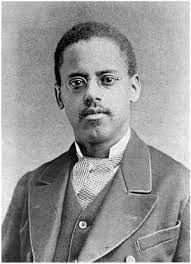
Inventor: Lewis H. Latimer
Title: “Process of Manufacturing Carbons”
Purpose: This was Latimer’s most significant independent invention in lighting. It detailed a new and improved process for manufacturing carbon filaments, making them more durable and longer-lasting than previous designs, including Edison’s early paper or bamboo filaments.
Details of the Invention:
Edison’s early bulbs, while groundbreaking, had a significant flaw: their filaments burned out quickly, often lasting only a few days. This made electric lighting impractical and expensive.
Latimer’s innovation involved a method for carbonizing bamboo fibers (or other fibrous materials) and, critically, enclosing them in a cardboard envelope during the carbonization process.
This protective cardboard casing prevented the fragile filaments from breaking during the intense heating process, a common problem at the time. This ensured the integrity of the carbon structure.
The process made the carbon filaments stronger, more uniform, and significantly more durable, extending the lifespan of the incandescent light bulb.
Impact: Latimer’s improved carbon filament was a game-changer. It allowed light bulbs to burn for extended periods (hundreds, even over a thousand hours), making electric lighting commercially viable and affordable for widespread use in homes and businesses.