
Preparation of Cortisone (1956)
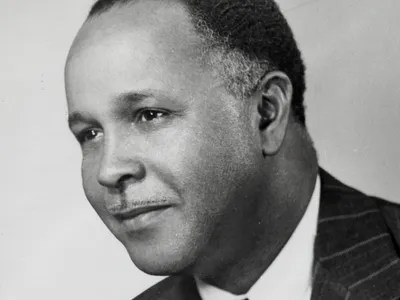
U.S. Patent No. 2,752,339, granted on June 26, 1956, details a breakthrough in the synthesis of Cortisone (specifically cortisone acetate). This patent was the work of a team led by the legendary Percy L. Julian, one of the most influential chemists of the 20th century.
At the time, Cortisone was hailed as a “miracle drug” for treating rheumatoid arthritis, but it was incredibly difficult and expensive to produce. Julian’s team at The Glidden Company discovered a way to manufacture it using steroids from soybeans (plant sterols) rather than the traditional, scarce supply of ox bile.
The Chemical “Roadmap” to Cortisone
Synthesizing Cortisone is an exercise in complex molecular architecture. Julian’s patent outlines a series of steps to transform a base steroid molecule (16,17-oxido-pregnan-3α-ol-11,20-dione) into the final drug.
1. The 17α-Hydroxy Group (The “Julian Strategy”)
A defining feature of Cortisone is the hydroxyl group (-OH) at the 17th carbon position.
- The Method: Julian used a “bromhydrin” intermediate. He treated an oxido (epoxide) compound with Hydrogen Bromide (HBr) to open the ring, then used Raney nickel to remove the bromine, leaving the essential hydroxy group behind.
2. Introducing the 21-Acyloxy Group
To make the compound biologically active and stable (as an acetate), a side chain must be added at the 21st carbon.
- Bromination: Bromine is introduced at the 21st position.
- Substitution: The bromine is then “swapped” for an acetate group by reacting it with potassium or sodium acetate.
3. Oxidation of the 3-Hydroxy Group
The molecule must have a ketone (=O) at the 3rd carbon.
- Percy Julian’s Innovation: He discovered that the 3α-hydroxy group could be oxidized with chromic acid much more easily than the 3β-hydroxy group found in other sterols.
- To prevent the acid from destroying the delicate side chains, he used a two-phase system, where the product was pulled away from the oxidizing agent as soon as it was formed.
The Final Step: The 4,5-Double Bond
The difference between a precursor and active Cortisone is a double bond between the 4th and 5th carbon atoms in the “A” ring of the steroid.
- Julian achieved this by brominating the 4-position and then using a dehydrobrominating agent (like 2,4-dinitrophenylhydrazine) to “strip” the bromine and a hydrogen atom away, creating the double bond.
Key Technical Advantages
| Innovation | Impact |
| Soy-Based Raw Materials | Moved production away from animal byproducts, making the drug mass-producible. |
| Preferential Oxidation | Allowed for higher yields by protecting the molecule’s side chains during chemical “burning.” |
| Oxido-Intermediate | Provided a high-melting, stable crystalline form that was easy to purify in a lab. |
About the Inventor: Percy L. Julian
Percy Julian was a grandson of enslaved people who became a giant of organic chemistry.
- Overcoming Barriers: Despite being denied entry to many laboratories due to Jim Crow-era racism, he became the first Black chemist elected to the National Academy of Sciences.
- The “Soy Bean” Chemist: Before his work on Cortisone, he synthesized physostigmine (for glaucoma) and invented Aero-Foam (used to extinguish oil fires in WWII).
- Affordability: His methods dropped the price of Cortisone from $200 per gram to roughly 2 per gram, making it accessible to millions of patients.
Summary of the “Flow Sheet”
The patent describes a flexible “flow”:
- Start: 16-pregnen-3α-ol-11,20-dione (derived from plants).
- Epoxidation: Create the 16,17-oxido ring.
- Side-chaining: Add the hydroxy and acetate groups at positions 17 and 21.
- Ketone formation: Oxidize the 3-position.
- Activation: Add the double bond to create Cortisone Acetate.
