
Preparation of Anhydrous Alkaline Earth Halides (1958)
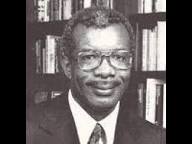
U.S. Patent No. 2,829,947, granted on April 8, 1958, to Louis R. Grant and Moddie D. Taylor, describes a highly efficient chemical method for producing pure, water-free (anhydrous) alkaline earth metal halides. This research, conducted at Howard University and assigned to the Callery Chemical Company, addressed a critical need in high-energy chemistry and industrial synthesis.
This specific invention solved a long-standing obstacle in chemistry: how to obtain pure alkaline earth iodides and chlorides without the interference of water. Traditionally, these compounds were difficult to dry without decomposing or becoming contaminated with impurities, making them useless for reactions requiring non-aqueous solvents.
The Innovation: The “Hydride-Ammonium Exchange”
Previous methods required using pure metals (which were expensive and hard to find) or heating hydroxides to extreme temperatures, resulting in low yields. Grant and Taylor discovered that by reacting an alkaline earth hydride with a dry ammonium halide in a specific liquid solvent, they could trigger a reaction that produces a 100% pure product at room temperature.
Why this method works?
- Room Temperature Reaction: Unlike earlier methods that required intense heat, this process occurs safely at room temperature.
- Self-Cleaning: The byproducts of the reaction are hydrogen gas ($H_2$) and ammonia ($NH_3$), both of which simply bubble away, leaving no solid contaminants behind.
- Quantitative Yields: The process is so efficient that it captures nearly 100% of the theoretical amount of product possible.
The Core Design: The “Pyridine Suspension”
The success of the method relies on the use of pyridine, a non-aqueous solvent.
- Solubility: The solvent is chosen specifically because the final halide product is soluble in it, while the starting hydride is not.
- Ease of Separation: Because the excess hydride remains a solid in the liquid, it can be easily filtered out once the reaction is complete.
- Vacuum Recovery: The solvent is then pulled away using a vacuum, leaving behind the white, crystalline anhydrous solid.
How the Process Functions
The experiment for preparing barium iodide follows a precise laboratory sequence:
Shutterstock
| Step | Action | Purpose |
| 1. Suspension | Barium hydride is placed in a flask with anhydrous pyridine. | Creates a liquid medium for the reaction to occur. |
| 2. Addition | Ammonium iodide dissolved in pyridine is added dropwise while stirring. | Triggers the chemical exchange and the evolution of hydrogen gas. |
| 3. Filtration | The mixture is filtered once hydrogen stops bubbling. | Removes the unreacted excess hydride solids. |
| 4. Distillation | Pyridine is removed from the filtrate via vacuum distillation. | Recovers the liquid solvent and leaves the solid product. |
| 5. Dehydration | The solid is heated to 150–160°C in a vacuum oven. | Removes the final traces of pyridine to ensure 100% purity. |
Technical Components and Chemistry
The reaction follows a specific chemical equation:
MH_2 + 2NH_4X \rightarrow MX_2 + 2NH_3 \uparrow + H_2 \uparrow
- M: Represents an alkaline earth metal (Calcium, Magnesium, Barium, Strontium, or Beryllium).
- X: Represents a halogen (specifically Iodine, Chlorine, or Bromine).
- Alkaline Earth Hydride: Used in slight excess to ensure all ammonium halide is consumed.
- Gravimetric Purity: The resulting barium iodide analyzed at 100% pure, a level of precision rarely achieved with older dehydration methods.
About the Inventors: Louis R. Grant and Moddie D. Taylor
The inventors were prominent scientists at Howard University, a historically Black university (HBCU) in Washington, D.C.
- Moddie Daniel Taylor: A legendary chemist and member of the Manhattan Project. He was one of the few African American scientists involved in the secret research that led to the atomic bomb, specifically working on the chemistry of rare earth metals.
- Louis R. Grant: A research chemist whose work with Taylor focused on inorganic synthesis.
- Impact: Their collaboration provided the aerospace and nuclear industries with the pure materials needed for high-energy fuels and non-aqueous electrolytes.
- Legacy: Moddie Taylor was later named one of the “Outstanding Educators in America” and authored the influential textbook First Principles of Chemistry.
Summary of Claims
The patent explicitly claims:
- A method for preparing anhydrous alkaline earth halides by reacting a hydride with an ammonium halide in a non-aqueous solvent.
- The specific use of pyridine as the solvent of choice.
- The application of this method across the entire range of alkaline earth metals, including barium, calcium, magnesium, strontium, and beryllium.
- The recovery process involving vacuum distillation and drying at temperatures between 150–160°C.
