
Preparation of 1,2-Di-Primary Amines (1951)
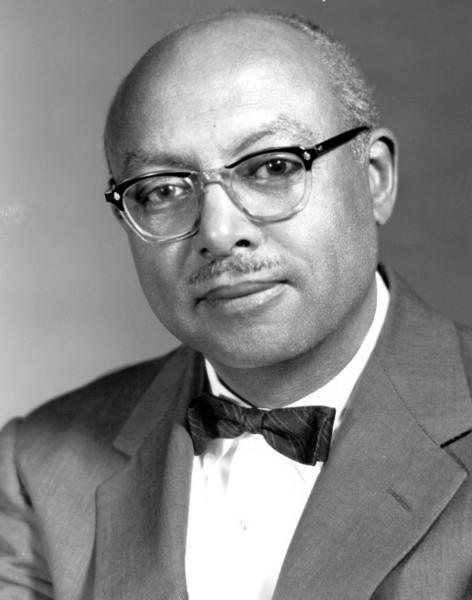
Patented on February 26, 1951 (U.S. Patent No. 2,542,315), this invention was authored by Walter Lincoln Hawkins. At the time, Hawkins was a research chemist at Bell Telephone Laboratories. While he is famously known for his later work in polymer stabilization that made modern telecommunications possible, this early patent showcases his mastery of organic synthesis.
The patent describes a novel chemical route for creating 1,2-diamines—organic compounds where two amino groups (-NH_2) are attached to adjacent carbon atoms. Before Hawkins’ invention, it was notoriously difficult to produce “di-primary” diamines (where both nitrogens are primary amines) with high efficiency. Hawkins discovered that by “protecting” the starting material through acylation, he could achieve yields as high as 83%.
The “Why”
- Piezoelectric Crystals: The primary application mentioned in the patent is the reaction of these diamines with tartaric acid to form crystals used in telecommunications equipment.
- Pharmaceuticals: These diamines serve as critical intermediates for antihistamines and other medicinal drugs.
- Overcoming Technical Hurdles: Previous methods only worked well if the starting nitrogen already had bulky alkyl groups attached. Hawkins’ method allowed for the use of simpler, “un-substituted” starting materials to create more versatile products.
The Chemical Process
The synthesis follows a sophisticated four-step “relay” mechanism. Hawkins realized that if you try to reduce an alpha-amino nitrile directly, the molecule often falls apart or reacts with itself. His solution was to temporarily transform it into a ring structure.
1. Formation of the Alpha-Amino Nitrile
The process begins with a ketone (like methyl ethyl ketone) reacting with potassium cyanide and ammonia. This creates the starting block: 2-methyl-2-aminobutyronitrile.
2. Acylation (The Protection Step)
This is the “secret sauce” of the patent. Hawkins treats the amino nitrile with acetic anhydride.
- The Goal: Attach an acetyl group to the nitrogen.
- The Result: The nitrogen is now “armored” against side reactions during the next high-pressure stage.
3. Catalytic Hydrogenation (Ring Formation)
The acylated nitrile is placed in a high-pressure “bomb” with Raney nickel catalyst and hydrogen at 2,000 psi and 90°C.
- The Transformation: Instead of turning directly into a diamine, the molecule curls up into a five-membered ring called a dihydroimidazole.
- Efficiency: In Hawkins’ example, this step achieved an 88% yield.
4. Hydrolysis (The Final Unlocking)
The ring is then “cracked open” using a strong base like potassium hydroxide (KOH) and heat (refluxing at 100°C).
- The Final Product: The ring breaks, the protective acetyl group is stripped away, and the final 1,2-di-primary diamine (2-methyl-1,2-diaminobutane) is isolated as an oily layer.
Summary of the Reaction Pathway
The general chemical equation provided by Hawkins for this process is:
Ketone/Aldehyde–KCN/NH_3–>Amino Nitrile –Acetic Anhydride–>Acylated Nitrile–H_2 /Raney Ni–>Dihydroimidazole–KOH / Delta–>1,2-Diamine
Technical Conditions Table
| Variable | Recommended Value | Purpose |
| Catalyst | Raney Nickel | To facilitate the addition of hydrogen to the carbon-nitrogen triple bond. |
| Hydrogen Pressure | 500 – 2,500 psi | High pressure is required to force the reaction to completion in a reasonable timeframe. |
| Temperature | 90°C – 120°C | The “sweet spot” for hydrogenation without destroying the molecule. |
| Hydrolytic Agent | 30% KOH or HCl | To break the imidazole ring and release the final diamine. |
Significance of Walter Lincoln Hawkins
While this patent is highly technical, it is part of the legacy of a pioneer. W. Lincoln Hawkins was the first African American to be named a Fellow of the technical staff at Bell Labs. He later received the National Medal of Technology for his invention of “plastic cable sheath,” which saved billions of dollars and revolutionized global wiring. This 1951 patent represents his early foundational work in specialized organic chemistry.
Final Insight: Hawkins’ brilliance was in realizing that to move forward, he had to go “around.” By temporarily turning the molecule into a ring (the dihydroimidazole), he protected the delicate nitrogens long enough to reach the final, useful diamine stage.
