
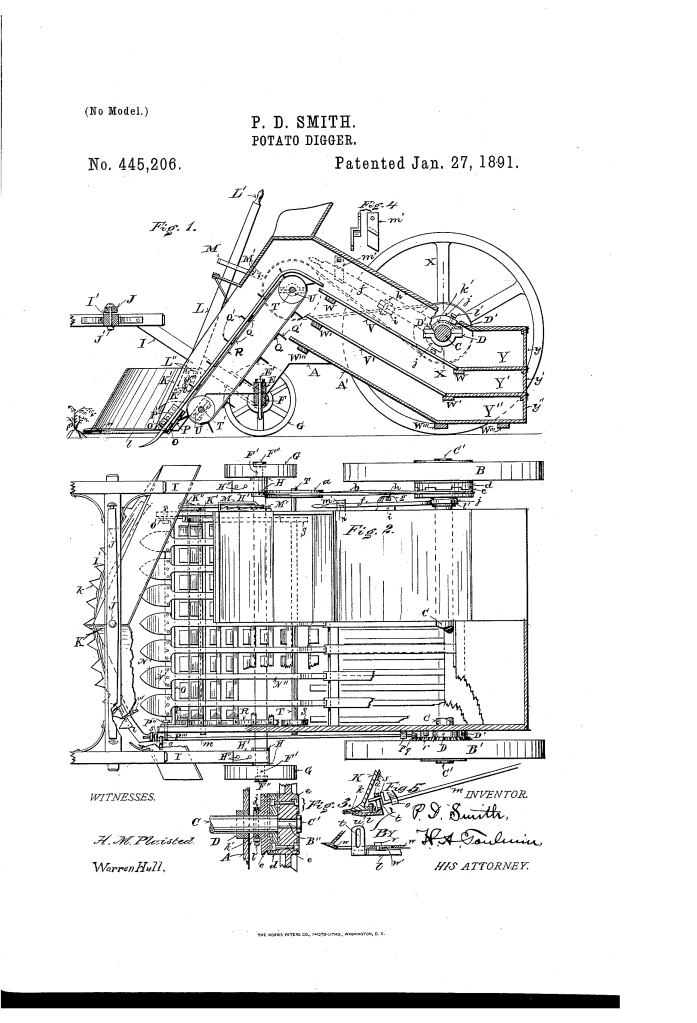
Potato Digger – Patent No. 445,206
Inventor: Peter D. Smith, of Springfield, Ohio.
Patent Number: 445,206
Date of Patent: January 27, 1891
Description: Peter D. Smith’s patent for a “Potato-Digger” was an advanced agricultural machine designed to automate the process of harvesting and sorting potatoes. The horse-drawn device performed several functions in a single pass:
- A scraper and reciprocating cutter-bar at the front would clear away potato vines.
- A series of inclined shovels would lift the potatoes from the ground.
- A conveyor belt with floats would then carry the potatoes up and separate them from the soil.
- Finally, the potatoes were dropped onto a series of inclined screens with progressively smaller openings, which sorted them into different grades based on size. The sorted potatoes would then fall into a partitioned compartment box at the back of the machine for easy removal.
Societal Impact
Smith’s invention was part of a major shift towards the mechanization of agriculture in the late 19th century, which had a profound impact on rural economies and the food supply.
- Increased Agricultural Efficiency: By automating the labor-intensive processes of digging and sorting, the potato digger drastically reduced the time and manual effort required for harvesting. This allowed farmers to manage larger fields and brought down the cost of production.
- Commercial Advantage: The machine’s ability to sort potatoes by size was a significant innovation. It allowed farmers to grade their crop directly in the field, which was crucial for selling to different markets. Uniformly sized potatoes could command higher prices and were more appealing to large commercial buyers. This increased the profitability of potato farming.
- The Inventor’s Legacy: The patent record for Peter D. Smith does not provide additional information about his life beyond his invention. However, his work stands as an example of the thousands of practical inventors who helped modernize American farming. These innovations, though less famous than major industrial inventions, were fundamental to creating the abundant and efficient food supply that fueled the growth of American cities and industries.
