
Photochemical Preparation of Tropilidenes (1953)
Patented on July 28, 1953 (U.S. Patent No. 2,647,151), this invention by William von E. Doering and Lawrence H. Knox represents a landmark achievement in theoretical and synthetic organic chemistry. Doering and Knox, working at the Research Corporation, discovered a way to transform simple six-membered aromatic rings (like benzene) into seven-membered rings called tropilidenes (cycloheptatrienes) using light and a highly reactive molecule called diazomethane.
This process is a classic example of a carbene insertion reaction, a concept that was still being pioneered in the early 1950s.
The “Why”
- Breaking Aromaticity: Benzene is famously stable due to its aromatic “ring of electrons.” Doering and Knox found a way to force a carbon atom into that ring, breaking the aromaticity to create a larger, non-aromatic seven-membered ring.
- Tropolone Synthesis: Tropilidenes are essential precursors to tropolones and thujaplicins—compounds found in nature (like in heartwood of cedar trees) that have potent antifungal and antibacterial properties.
- Theoretical Chemistry: This patent helped prove the existence of “norcaradiene” as a transient intermediate, a topic of intense debate among chemists at the time.
The Chemical Process: The “Carbene” Attack
The reaction relies on diazomethane (CH_2N_2), a yellow, explosive gas that acts as a source of “methylene” (CH_2).
1. Preparation of the Solution
Because diazomethane is dangerous to handle as a pure gas, it is generated in situ from nitrosomethylurea and potassium hydroxide, then dissolved directly into the aromatic solvent (like benzene or cumene).
2. Irradiation (The Photochemical Step)
The mixture is exposed to actinic light (standard sunlamps). The light energy hits the diazomethane molecule, causing it to eject a molecule of nitrogen gas (N_2).
- What remains is an incredibly reactive intermediate called a carbene (CH_2).
3. Ring Expansion
The carbene is so “hungry” for electrons that it attacks the double bonds of the benzene ring.
- It first forms a tiny three-membered ring fused to the six-membered ring (an intermediate called norcaradiene).
- This intermediate is unstable and immediately “unzippers” its internal bond, expanding the six-membered ring into a seven-membered tropilidene ring.
4. Recovery
The solvent is distilled off, and the resulting tropilidene is collected. In the case of benzene, the product (tropilidene) boils at 112–115°C, with a yield of roughly 33–38%.
Examples of Substituted Tropilidenes
The beauty of the Doering-Knox method is its versatility. By changing the starting “host” molecule, they created various derivatives:
| Starting Material | Product | Boiling Point | Application |
| Benzene | Tropilidene | 112–115°C | Basic chemical building block. |
| Cumene (Isopropylbenzene) | Isopropyltropilidene | 171–175°C | Precursor to beta-thujaplicin (Hinokitiol). |
| Anisole (Methoxybenzene) | Methoxytropilidene | 89–91°C (at 50mm) | Used for synthesizing specialized ethers. |
Key Components & Conditions
| Variable | Requirement | Reason |
| Reagent | Nitrosomethylurea | The safest precursor for generating diazomethane in the lab. |
| Light Source | Reflector Sunlamps | Provides the specific wavelength needed to break the C-N bonds in diazomethane. |
| Temperature | 5°C (Initial) | Keeps the volatile diazomethane in solution during preparation. |
| Atmosphere | Nitrogen | Prevents oxidation of the highly reactive intermediates. |
Historical Significance: The Knox Connection
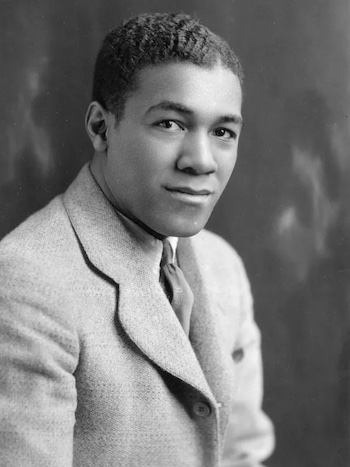
While William von E. Doering is a giant of 20th-century chemistry, this patent is also a testament to Lawrence H. Knox. Knox was a brilliant African American chemist who faced significant systemic barriers but became a key collaborator at Bell Labs and later at the Research Corporation. His work on this specific reaction provided the first practical synthesis of the tropilidene ring system, which paved the way for the study of non-benzenoid aromaticity.
Final Insight
Before this patent, creating a seven-membered ring from a six-membered one was a multi-step, grueling process. Doering and Knox turned it into a “one-pot” photochemical reaction. By using light to create a carbene “bullet,” they could effectively “shoot” an extra carbon into a benzene ring.
