
Permanent Waving Machine (Marjorie S. Joyner, No. 1,688,833)
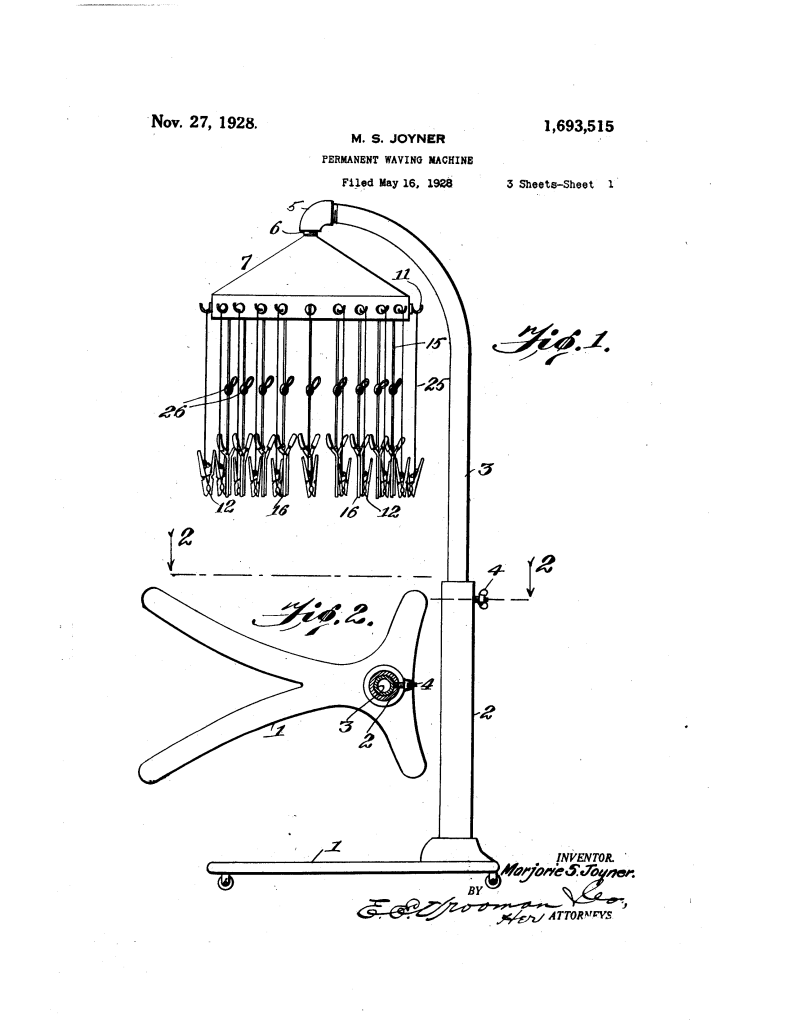
The patent by Marjorie S. Joyner of Chicago, Illinois, describes an innovative Permanent Waving Machine (Patent No. 1,688,833, 1928). This invention is a comprehensive hair-styling apparatus designed to provide long-lasting “permanent” waves for both Black and white patrons. Joyner’s primary objective was to create a more efficient, comfortable, and inclusive method for hairstyling that could handle various hair textures. Her innovation features a centralized overhead dome that suspends multiple electric curling irons, a weight-distribution system to protect the patron’s scalp, and specialized scalp protectors.
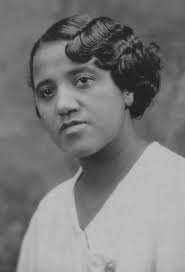
Inventor Background: Marjorie S. Joyner
Marjorie Stewart Joyner (1896–1994) was a visionary African American inventor, educator, and activist. She was the first Black woman to graduate from the A.B. Molar Beauty School and eventually became a national supervisor for Madame C. J. Walker’s beauty empire. Her 1928 patent was a landmark in the beauty industry; she famously conceived the idea for the machine while looking at a pot roast held together by heated metal rods. Joyner dedicated her career to professionalizing Black hair care and was a founding member of the National Council of Negro Women.
Key Mechanical & Safety Systems
The machine is designed as a vertical station that organizes electrical and mechanical components to safely apply heat to the hair.
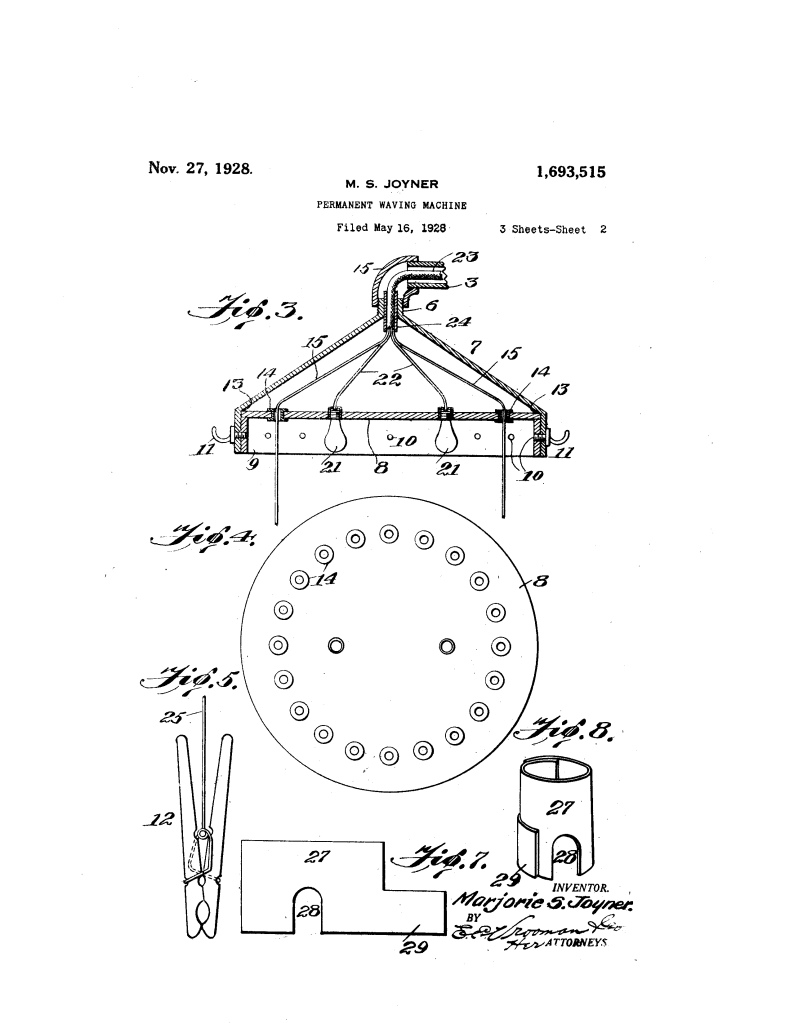
1. The Suspended Dome and Spacing Plate (7, 8)
- The Dome (7): A large, bell-shaped housing is mounted on an adjustable standard (3).
- Spacing Plate (8): Inside the dome sits a disc-like plate held by a locking ring (9).
- Function: The plate acts as a “switchboard” for the machine’s wiring. It organizes the insulating sleeves (14) through which electrical wires (15) are fed, preventing tangling and ensuring each curling iron receives consistent power.
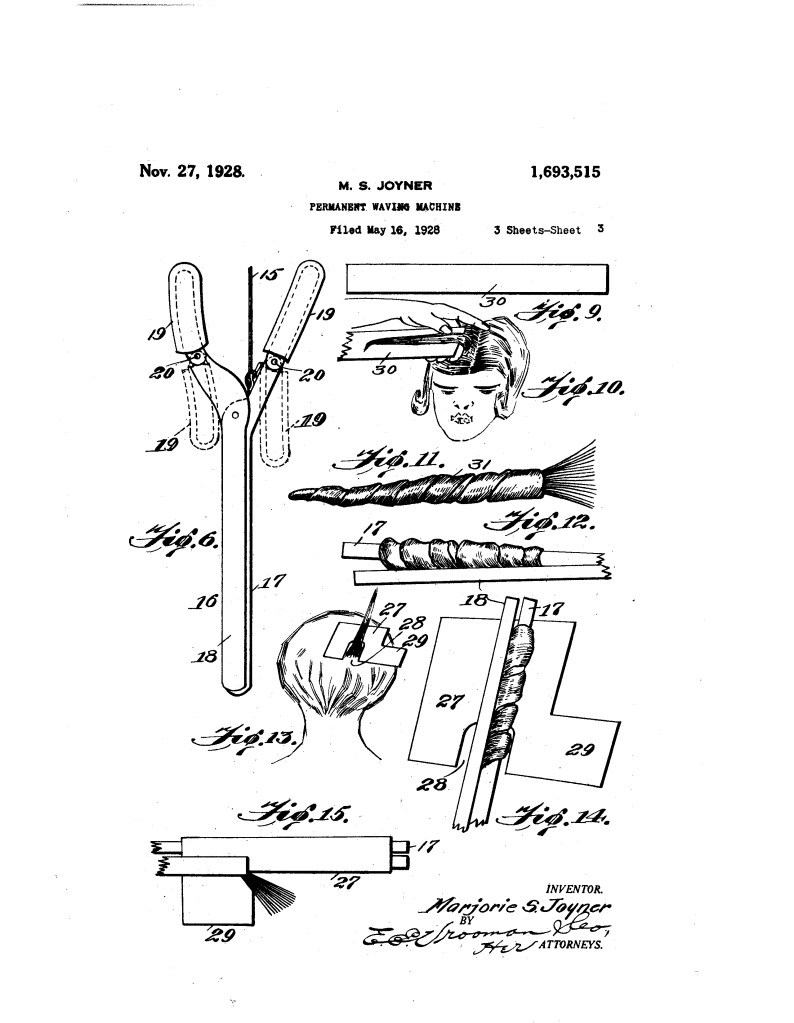
2. Foldable Electric Curling Irons (16, 17, 19)
- The Irons: Multiple electrical curling irons are suspended from the dome.
- Foldable Grips (19): The handles or grips are pivotally mounted at point 20.
- Innovation: When not in use, the grips can be turned down into a folded position. This makes the machine more compact and prevents the handles from obstructing the stylist or the patron during the setup process.
3. Clamping Devices and Weight Relief (11, 12, 25) (Key Innovation)
- Hooks (11): Threaded hooks extend through the dome to support cables or cords (25).
- Clamping Devices (12): These are attached to the cords and clamped onto the curling irons once they are in the patron’s hair.
- Action: Because a full set of heated irons is heavy, Joyner’s system uses the dome’s structural integrity to “take the weight” off the patron’s head. This prevented the strain and potential scalp burns that were common with earlier, unsupported waving methods.
4. Scalp Protectors and Wrapping (Figs. 7-15)
- Protective Blank: A specialized sheet of material is folded to encircle sections of hair at the base.
- Flannel Strips: Hair is placed on a flannel strip (Fig. 10) and wrapped before being applied to the iron.
- Function: These layers act as a thermal barrier, allowing the heat to wave the hair effectively without burning the skin of the scalp.
Improvements Over Standard Hair Waving
| Feature | Early Waving Methods | Joyner’s Permanent Waving Machine |
| Comfort | Massive weight of irons rested on the scalp. | Clamping devices (12) suspend the weight from the dome. |
| Efficiency | Irons had to be heated and applied one by one. | Simultaneous heating of multiple irons for a full-head wave. |
| Safety | High risk of forehead and scalp burns. | Scalp protectors and insulated dome wiring. |
| Versatility | Often failed on coarser hair textures. | Designed specifically to be effective for all hair types. |
Significance to Engineering and the Beauty Industry
Marjorie S. Joyner’s machine influenced the development of modern salon equipment and ergonomic hair-care tools.
- Ergonomic Suspension: The logic of suspending heavy tools from an overhead frame to reduce user and patron fatigue is a principle now used in industrial workstations and medical surgery suites.
- Integrated Safety Interlocks: By combining electrical insulation with mechanical weight relief, Joyner practiced early Product Safety Engineering, ensuring that the high heat required for the procedure did not compromise the user’s physical well-being.
- Inclusive Design: Joyner’s commitment to making the machine work for “both white and colored people” was a pioneering step toward inclusive technology, acknowledging that engineering solutions must account for diverse human physical traits.
- Massive Industrial Impact: Her machine was used in thousands of Madame C. J. Walker salons, helping to build an economic powerhouse that empowered Black women through entrepreneurship and standardized vocational training.
