
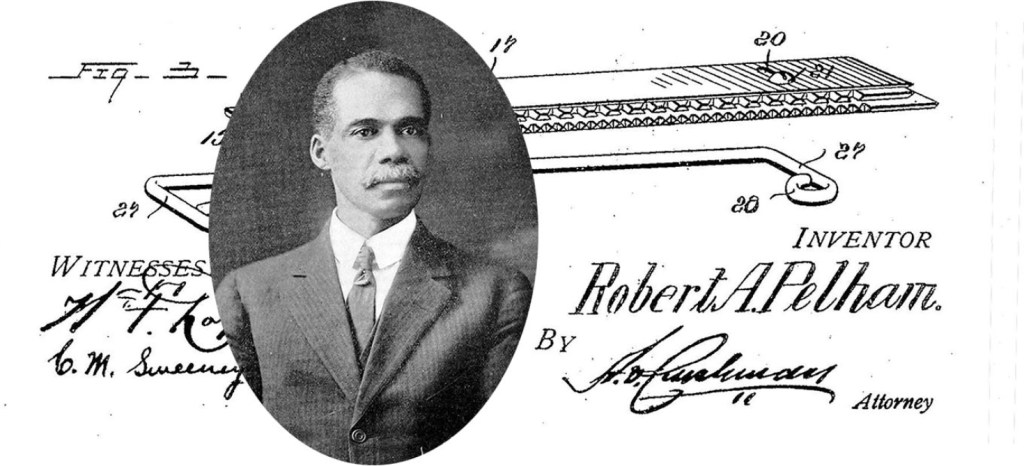
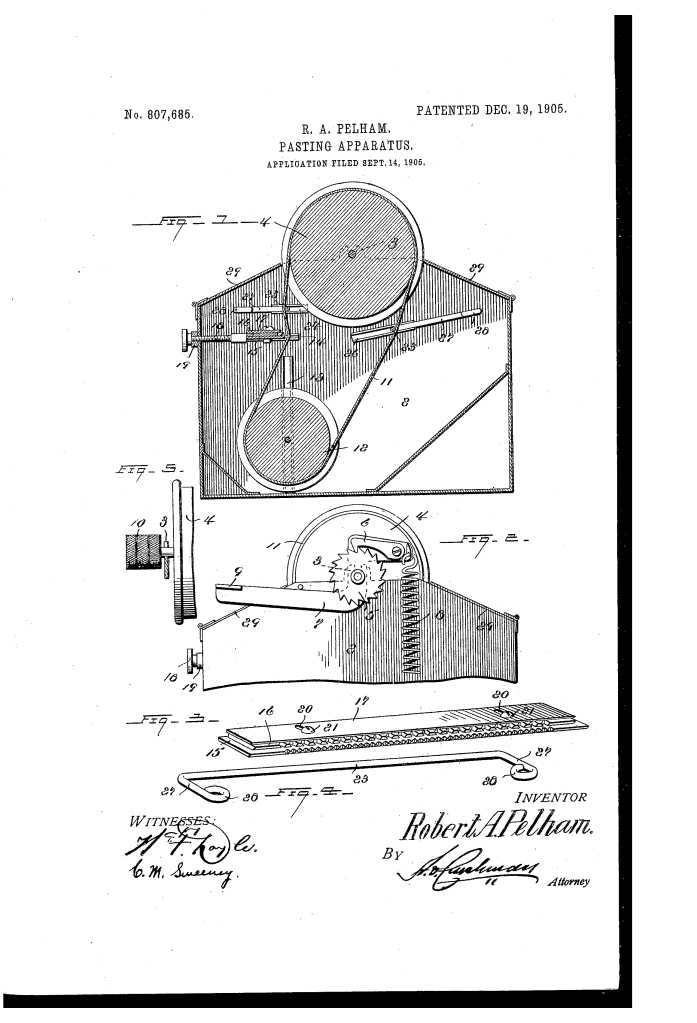
Pasting Apparatus (Robert A. Pelham, No. 807,685)
The patent by Robert A. Pelham of Detroit, Michigan, describes new and useful Improvements in Pasting Apparatus (Patent No. 807,685, 1905). The apparatus is designed specifically for applying adhesive to strips of paper which are to be transferred to a book or sheet (likely for accounting or ledger work). The objectives are to expedite the work, be economical in paste use, and ensure the process is cleanly and rapid.
Inventor Background: Robert A. Pelham
Robert A. Pelham (1855–1943) was an incredibly important African-American inventor and government clerk in Washington, D.C. He held several patents, many related to printing, binding, and industrial machinery. This invention reflects his experience in administration and his focus on improving office and commercial efficiency through automation and precise material application.
Invention and Mechanism (Simplified)
The apparatus is a hand-operated, self-feeding dispenser that uses an endless web to carry paste and features a scraper with interchangeable edges for thickness control.
1. Paste Application and Self-Feed
- Paste Box (2): A receptacle for the adhesive, with an inclined bottom to direct paste to a central well.
- Supporting Roller (4): Journaled in the box, rotatable by a lever-and-ratchet mechanism (5, 6, 7).
- Endless Web (11): A band that depends from the roller (4) into the paste well.
- Idler Roll (12): A floating idler roll sits within the bight of the web, held by guides (13), which keeps the web submerged in the paste.
- Function: The operator rotates the roller (4), bringing a freshly coated section of the endless web (11) up from the paste well. The user then draws a paper strip across the web surface to coat it.
2. Paste Regulation and Scraper (Key Innovation)
- Multiple-Blade Scraper (15, 16, 17): A scraper device is mounted in adjustable guideways (14) adjacent to the web. It is made of multiple, superposed blades (15, 16, 17), each with a different type of edge (e.g., fine serrations, coarse serrations, smooth).
- Function: The blades are interchangeable by loosening screws (21) and sliding the desired blade forward. The selected blade scrapes the web to control the thickness and evenness of the adhesive film.
- Tensioning/Stretcher Rods (23): U-shaped rods are mounted to press against both the inner and outer runs of the web.
- Function: These rods keep the web tight and smooth for uniform paste application, prevent the web from adhering to the rollers after it’s been coated, and scrape off any excess paste from the inner surface.
Concepts Influenced by This Invention
Pelham’s apparatus influenced subsequent industrial and office machinery by pioneering metered adhesive application using an endless belt and interchangeable regulators.
- Endless-Web Metered Application: The core concept of using an endless web (11) dipping into a reservoir to carry and apply a thin, uniform film of adhesive influenced the design of modern labeling machines, industrial gluing equipment, and mail-sealing machinery
.
- Interchangeable Thickness Regulation: The innovation of the multiple-blade scraper (15, 16, 17) with interchangeable faces (serrated/smooth) influenced the design of industrial coaters, printers, and precision adhesive dispensers that require rapid, mechanical switching between metering edges to control the application thickness for different materials or adhesives.
- Floating Tensioning System: The design using a floating idler roll (12) to maintain constant tension and engagement with the paste, combined with external stretcher-rods (23) to maintain a flat surface and prevent sticking, influenced the engineering of all continuous-belt systems that handle viscous materials.
- Clean and Rapid Office Utility: The invention contributed to the trend of automating tedious, messy office tasks (like hand-pasting), setting standards for clean, efficient operation in the commercial environment.
For full details of the patent go to patent.google.com
