
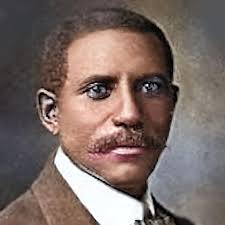

Paper-Bag Machine (William B. Purvis, No. 293,353)
The patent by William B. Purvis describes an improved Paper-Bag Machine (Patent No. 293,353, 1884). The machine is adapted to make satchel-bottom bags. The invention focuses on using air suction to form the bottoms of the bags, dramatically reducing the amount of complex mechanical linkage traditionally required for this step.
Inventor Background: William B. Purvis
William B. Purvis (1844–1929) was an exceptionally prolific African-American inventor and engineer known for his vast number of patents across diverse fields, including electric railways and security devices. This patent demonstrates his ingenuity in simplifying high-speed industrial manufacturing, solving the complex mechanical problem of forming a satchel (square) bag bottom with fluid dynamics (suction).
Key aspects of his machine’s operation and design included:
- Forming Satchel Square Bottoms: The primary objective was to efficiently fold the ends of a paper tube into the precise “square box shape” required for satchel bottoms.
- Reciprocating Sectional Suction Formers: The machine utilized two suction formers with perforated surfaces that moved back and forth (reciprocated). The paper tube sections were fed between these formers. The suction would draw the paper against the perforated faces, helping to break it into the desired box shape.
- Positively Acting Mechanical Folders: To ensure accuracy and precision in shaping the square bottom, Purvis’s invention incorporated mechanical folders that actively assisted the suction formers in creating the “diamond folds” necessary for the bag’s bottom.
- Automated and High-Volume Production: The design allowed for a greater degree of automation and increased volume in manufacturing these improved satchel bottom shopping bags compared to previous machinery.
- Pasting Devices: After the bottom was formed and flattened, the machine would then transfer the formed tube sections to pasting devices where the flaps would be secured in the usual manner.
This invention was a step towards modern bag manufacturing, enabling the production of more functional and consumer-friendly paper bags.
Personal Significance (William B. Purvis): William B. Purvis (1838-1914) was a highly prolific and entrepreneurial African American inventor and businessman from Philadelphia, Pennsylvania. Born into a prominent abolitionist family, he was the grandson of James Forten. Purvis was largely self-taught and demonstrated remarkable mechanical ingenuity.
His “Paper Bag Machine” patent from 1884 was one of at least six patents he received for paper bag technology between 1884 and 1897, highlighting his deep interest and continuous efforts to revolutionize paper bag manufacturing. Beyond paper bags, Purvis held numerous other significant patents, including:
- An “Improvement to the Hand Stamp” (1883), which allowed it to replenish its own ink.
- An updated “Fountain Pen” design (1890) intended for simpler, more durable, and cheaper construction.
- Several groundbreaking inventions in electric railway systems, including a “Close-Conduit Electric Railway System” (1893) and a “Magnetic Car Balancing Device.”
Despite forming his own business, the Sterling Paper Bag Company, which eventually went bankrupt in 1894 (with debts reportedly covered by his uncle), Purvis continued to invent and successfully sold some of his paper bag patents to major companies like the Eastern Paper Bag Company and the Union Bag Company. His life’s work is a testament to his extraordinary talent, perseverance, and significant contributions to various industries despite the pervasive racial discrimination of his era.
Historical Significance: William B. Purvis’s “Paper Bag Machine” holds considerable historical importance within the evolution of packaging, industrial automation, and African American innovation:
- Advancement in Paper Bag Technology: Prior to inventors like Purvis, paper bags were often simple, flat, and not well-suited for carrying groceries or multiple items. The invention of machines that could produce flat-bottomed and then pleated/satchel-bottomed bags (like Purvis’s) was critical for the growing retail and grocery industries of the late 19th century.
- Impact on Mass Production: His machine contributed to the overall mechanization of manufacturing processes, enabling higher volumes of paper bag production at lower costs. This made paper bags more accessible and affordable for businesses and consumers alike.
- Consumer Convenience: The “satchel square bottom” bag, which Purvis’s machine was designed to create, significantly improved convenience for shoppers as it allowed bags to stand upright, making them easier to fill and carry. This design laid groundwork for the modern shopping bag.
- African American Contribution to Industrial Innovation: This patent is another crucial example of an African American inventor making profound contributions to industrial processes. Purvis’s work in paper bag manufacturing directly impacted commerce and daily life, showcasing the significant, often overlooked, role of Black innovators in America’s industrial development.
His inventions in paper bag technology demonstrate his commitment to practical improvements that addressed the needs of a rapidly modernizing society.
