
Oil Stove by John Standard (Patent No. 413,689)
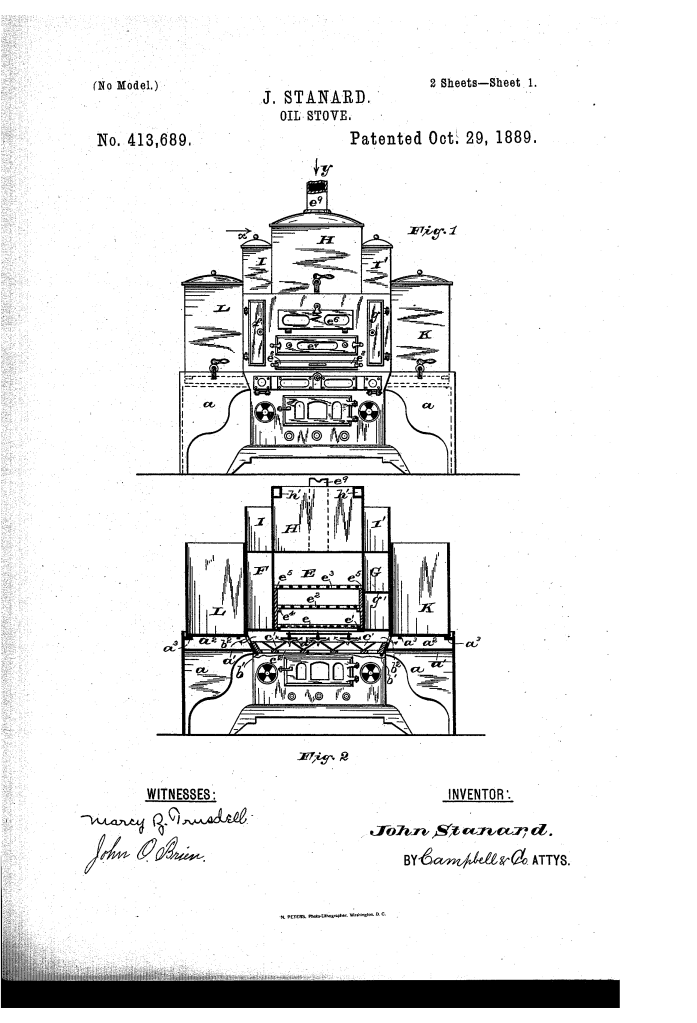
The patent by John Standard of Newark, New Jersey describes an Oil Stove (Patent No. 413,689). This invention is a compact, multi-functional modular cooking system designed to maximize thermal efficiency and culinary versatility within highly constrained spatial environments.
The “Why”
In the late 19th century, the expansion of the American railroad led to the rise of buffet cars and small-scale urban dwellings where traditional, bulky coal or wood-burning ranges were impractical. The “pain point” Standard addressed was two-fold: the danger of grease-induced flare-ups in cramped quarters and the inefficiency of single-burner oil lamps. Standard stoves of the era could typically perform only one function at a time (e.g., boiling), whereas Standard’s design allowed for simultaneous broiling, steaming, baking, and plate warming.
Inventor Section: John Standard
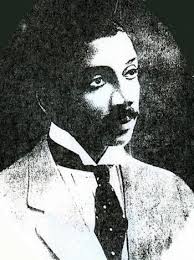
John Standard was a prolific Black inventor whose engineering philosophy centered on spatial optimization and safety integration. Operating in the post-Reconstruction era, Standard faced a manufacturing landscape often hostile to Black intellectual property. Despite this, his designs for the oil stove and his later improvements to the refrigerator (1891) demonstrate a sophisticated understanding of thermodynamics. He viewed the stove not just as a heat source, but as a “managed thermal ecosystem,” where every cubic inch of heat was recycled to perform a secondary task.
Key Systems Section
Integrated Flame-Spreading & Shielding System
- Modern Translation: This is a thermal diffuser combined with a debris-management baffle.
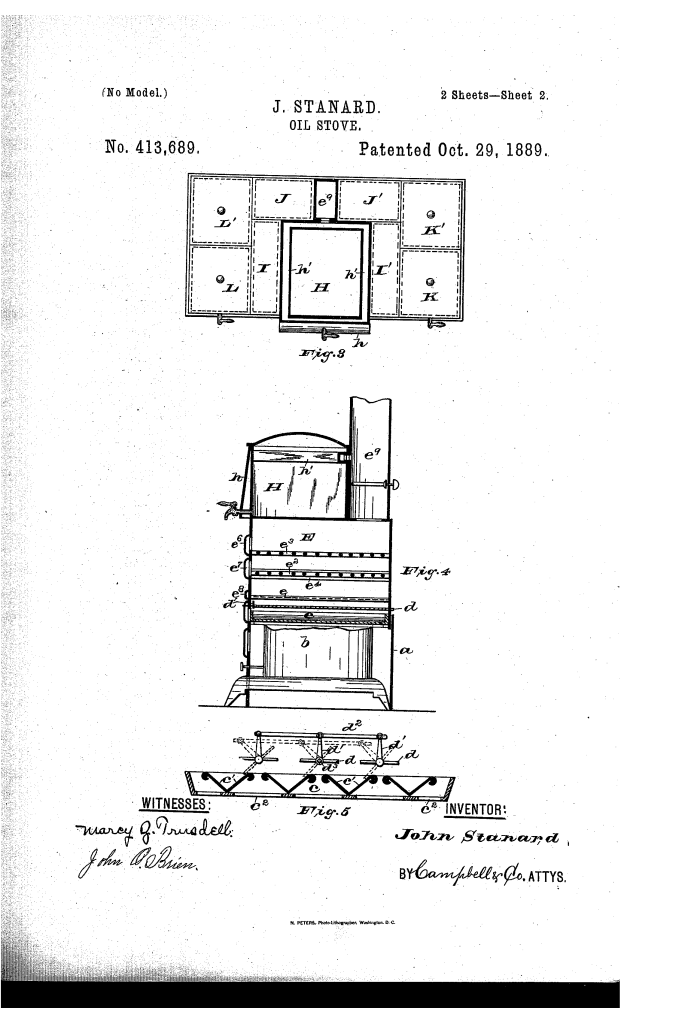
- The system uses V-shaped bars (c’) and pivotable shields (d). This prevents meat drippings (lipids) from reaching the open flame, which would otherwise cause dangerous smoke or grease fires—a critical feature in the wooden interiors of 19th-century rail cars.
Modular Multi-Chamber Heat Distribution
- Modern Translation: Convection-based multi-zone cooking.
- Standard designed three distinct vertical compartments (E, F, G). The central chamber (E) utilizes a charcoal-receptacle and wire-netting to provide infrared-like heat for broiling, while the flanking chambers utilize radiant heat for warming plates or baking.
Synergistic Fluid Heating & Exhaust
- Modern Translation: Waste heat recovery system.
- The stove features a central chimney (c) flanked by specialized canisters (J, J). As hot air and smoke escape, they are forced to pass between these canisters, transferring latent heat to boil water or soups without requiring additional fuel.
(Note: While the linkage here operates the rocker-arms d’ to tilt the shields, the principle ensures mechanical synchronization of the baffles.)
Comparison Table
| Feature | Standard Methods (1880s) | Stanard’s Innovation |
| Fuel Efficiency | Single-use heat; much energy lost to the room. | Recuperative heating; uses chimney exhaust to warm peripheral pots. |
| Safety | High risk of grease fires from dripping fats. | V-shaped drip guards and flame spreaders to isolate fuel from food. |
| Versatility | One pot per burner; limited cooking styles. | Modular manifold allowing boiling, broiling, and baking simultaneously. |
| Air Quality | Smoked filled the room during broiling. | Internal flue system (h’) that draws smoke directly into the chimney. |
Significance Section
- Precursor to Modern Compact Kitchens: The “all-in-one” modular approach is the direct ancestor of the kitchenettes found in modern studio apartments and RVs.
- Fire Safety Engineering: His use of baffles to separate combustibles from heat sources is a foundational principle in modern commercial broiler design.
- Human-Centric Design: By integrating a plate-warming chamber, Stanard acknowledged the professional needs of the hospitality industry (buffet cars), moving beyond mere survival cooking to “service” cooking.
