
Novel Reductones and Methods of Making Them (1960)
U.S. Patent No. 2,936,308, granted on May 10, 1960, to John E. Hodge, introduces a new class of chemical compounds known as amino-glycose-reductones. Working for the U.S. Department of Agriculture (USDA) in Peoria, Illinois, Hodge discovered how to transform simple reducing sugars (like glucose) into powerful antioxidants and oxygen scavengers.
This invention addressed a major need in the food and chemical industries: the creation of stable, crystalline reducing agents that could prevent oxidation—the process that causes food to spoil, rubber to degrade, and metals to corrode.
The Innovation: The “Amadori” Conversion
Hodge’s breakthrough was a direct synthesis method that bypassed complex intermediate steps. He discovered that by heating a hexose sugar (like glucose) with a secondary amine (such as piperidine or morpholine) in a water-free environment, the molecules would undergo a specific rearrangement—the Amadori rearrangement—and then dehydrate to form a “reductone.”
The resulting compounds possess exceptional “reducing power,” meaning they are highly effective at neutralizing free radicals and donating electrons to stabilize other molecules.
Why Are These Reductones Special?
- Strong Reducing Power: They can reduce metallic ions (silver, mercury, iron) even in acidic solutions, a rare and valuable chemical trait.
- Stability: Unlike many natural antioxidants (like Vitamin C), these nitrogen-containing reductones are stable, crystalline solids that are easy to store and measure.
- Versatility: They can be used as food antioxidants, photographic developers, and medicinals.
- Nitrogen-Free Option: While stored as nitrogenous compounds, they can be “unlocked” via hydrolysis to release a nitrogen-free reductone ($C_6H_8O_3$) that carries the actual antioxidant weight.
Key Chemical Components and Variants
The composition varies based on the “amine” used to stabilize the sugar molecule. Each variant offers slightly different physical properties:
| Component | Function |
| Piperidino-hexose-reductone | The primary example; a tan-colored crystal with high stability and a melting point of 230–232°C. |
| Morpholino-hexose-reductone | Derived from morpholine; a more cost-effective variant that maintains identical reducing behavior. |
| Dimethylamino-hexose-reductone | A variant optimized for different solubility profiles, typically forming orange crystals. |
| Anhydro-reductones | Created by removing an additional molecule of water; these have an entirely different chemical structure but retain antioxidant functions. |
Performance: Oxygen Scavenging
Hodge’s patent demonstrates the compound’s efficiency through iodine titration and ultraviolet absorption spectra. These tests prove that the compounds act as oxygen scavengers—they effectively “hunt” and neutralize oxygen molecules that would otherwise cause decay.
The Manufacturing Process
Hodge outlined a streamlined “one-pot” synthesis to create these compounds without needing to separate intermediate chemicals:
- Preheat the secondary amine (e.g., piperidine) to approximately 65°C.
- Add anhydrous glucose and stir until the mixture becomes a homogeneous amber solution (forming N-glucosylpiperidine).
- Catalyze the reaction by adding an acidic agent (like malonic acid or glacial acetic acid).
- Heat at 75–80°C for 10 to 24 hours.
- Crystallize the final reductone by cooling the mixture, then wash with ethanol or acetone to purify.
About the Inventor: John E. Hodge
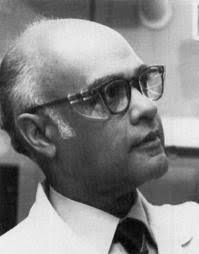
John Edward Hodge was a distinguished chemist at the Northern Regional Research Center of the USDA.
- The Hodge Scheme: He is internationally famous in food science for the “Hodge Scheme,” a diagram he published in 1953 that explains the Maillard Reaction (the chemical reaction that gives browned food its distinctive flavor).
- Patents: He held numerous patents related to carbohydrate chemistry and food preservation.
- Legacy: As one of the most prominent African American scientists in the USDA, his work provided the foundational roadmap for understanding how food changes color, scent, and nutritional value during cooking and storage.
Summary of Claims
The patent explicitly claims:
- A method for producing aminohexose reductones by heating a hexose reducing sugar with specific secondary amines (piperidine, morpholine, etc.).
- The use of acidic catalysts (like citric acid or phosphoric acid) to hasten the formation of the reductone.
- The creation of Anhydro-amino-hexose-reductones, a dehydrated derivative with distinct light-absorption properties.
- The specific chemical structures for Piperidino, Di-n-butylamino, and Morpholino hexose reductones.
