

Tack Separating and Distributing Mechanism: Jan Earnst Matzeliger (Patent No. 423,937)
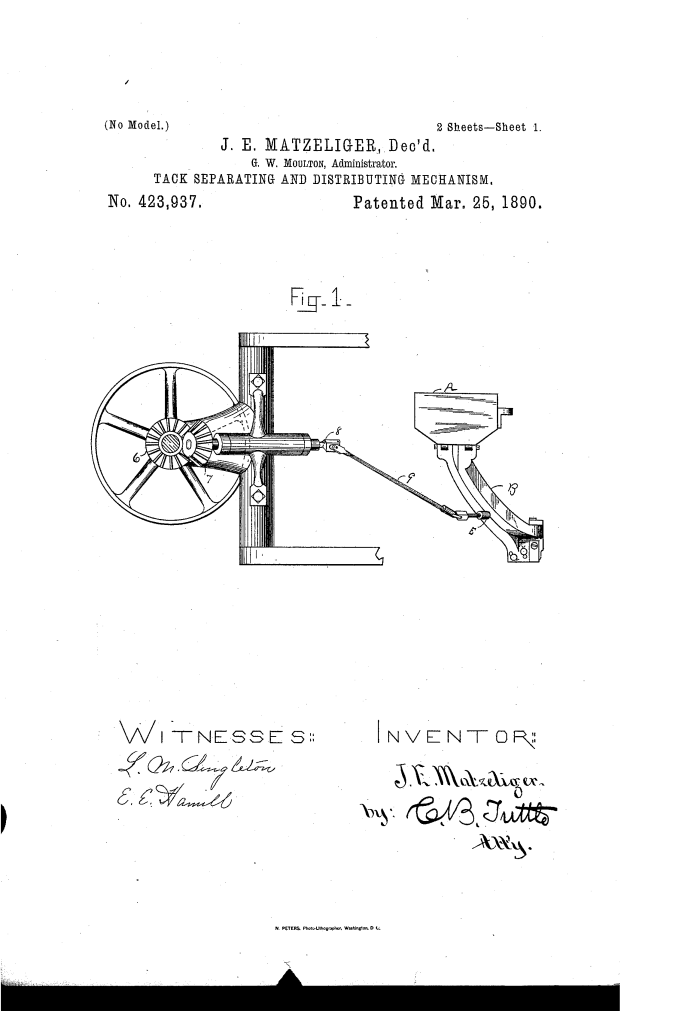
The patent by Jan Earnst Matzeliger of Lynn, Massachusetts, describes a Tack Separating and Distributing Mechanism (Patent No. 423,937). This invention is a sophisticated mechanical assembly designed to automate the isolation and delivery of individual tacks from a bulk reservoir. Specifically, it functions as a critical subsystem for automated shoe-lasting machines, ensuring that fasteners are fed at precise intervals without jamming.
The “Why”
Before Matzeliger’s intervention, the “lasting” of a shoe—the process of stretching the leather upper over a wooden mold (the last) and nailing it to the sole—was a grueling manual bottleneck. While machines existed to sew soles, the delicate work of tacking required human fingers to pick, align, and drive each nail. This manual process limited production and kept shoe costs high. Matzeliger sought to solve the “singularization problem”: how to take a chaotic jumble of metal tacks and deliver exactly one, head-up and point-down, into a driver at the exact moment the machine was ready to strike.
Inventor Section
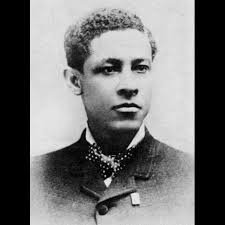
Jan Earnst Matzeliger was a brilliant engineer born in Dutch Guiana (now Suriname) to a Dutch father and a Black mother. After immigrating to the United States and settling in Lynn, the “Shoe Capital of the World,” he faced intense racial prejudice that initially barred him from skilled positions. His engineering philosophy was rooted in mechanical synchronization and spatial geometry. Despite working in a period defined by Jim Crow restrictions, Matzeliger’s persistence led him to spend years secretly developing his prototypes from scrap wood and cigar boxes. His work revolutionized the industry, making high-quality footwear affordable for the masses and cementing his legacy as one of the most significant inventors of the Industrial Revolution.
Key Systems Section
Spiral Separator & Feed Screw
- The heart of the mechanism is a rotary screw-thread separator. In modern terms, this is an Archimedean screw-fed singularizer.
- The thread starts at a minute point and gradually increases in diameter. This allows the screw to “wedge” itself between the heads of the first and second tacks in the line without crushing them.
The Inclined Raceway & Chute
- Utilizing gravitational potential energy, the tacks are suspended by their heads in a polished, inclined channel.
- The chute features a lateral curve at the exit point—a clever bit of engineering that uses centrifugal force and geometry to “present” the tack head to the separator screw at the optimal angle.
Pressure-Yielding Foot
- A spring-loaded presser foot acts as a vertical constraint. It holds the tack firmly against the chute to prevent “kickback” or lifting when the screw engages.
- In modern engineering, this is a compliant mechanism that accommodates slight variations in tack size while maintaining constant downward force.
Geared Drive Train
- The separator is synchronized via a series of spur gears and rods connected to the main drive shaft.
- This ensures a 1:1 ratio between the machine’s “strike” cycle and the separator’s rotation, guaranteeing that for every revolution, exactly one tack is discharged.
Shutterstock Explore
Comparison Table
| Feature | Standard Methods (Pre-1890) | Matzeliger’s Innovation |
| Selection Method | Hand-picked from a pouch or “spit” by a human laster. | Automated spiral separation using a rotary screw. |
| Consistency | Highly variable; prone to human error and injury. | Positive intervals; exactly one tack per revolution. |
| Speed | Limited by human dexterity (approx. 50 pairs/day). | Mechanically paced (enabled 700+ pairs/day). |
| Tack Orientation | Manual alignment. | Gravity-fed raceway with “head-bearing” suspension. |
Significance Section
- Foundation of Modern Automation: This mechanism is a direct ancestor to the vibratory bowl feeders used in modern electronics and automotive assembly lines.
- Economic Revolution: By breaking the “hand-lasting” bottleneck, Matzeliger’s technology reduced the price of shoes by over 50% across the United States.
- Mechanical Precision: The use of a variable-diameter screw for delicate object handling remains a standard principle in high-speed packaging (e.g., bottling plants).
- Social Impact: Matzeliger’s success challenged the prevailing racist ideologies of the 19th century, proving that complex industrial engineering was not the exclusive domain of any one race.
