
Method for Preparing 16a-Hydroxypregnenes and Intermediates (1966)
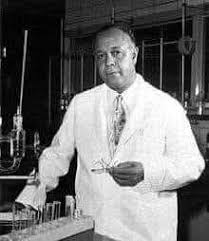
U.S. Patent No. 3,275,623, granted on September 27, 1966, to Percy L. Julian and Arthur Magnani, describes an efficient chemical synthesis route for producing 16a-hydroxypregnenes—critical intermediate compounds used to manufacture high-potency anti-inflammatory corticoid medications such as triamcinolone and triamcinolone acetonide. Percy Julian, an eminent steroid chemist and founder of Julian Laboratories, assigned the patent to Smith Kline & French Laboratories.
This invention solved a persistent chemical challenge in steroid pharmacology: how to functionalize and protect delicate positions on the steroid ring system—specifically introducing the 16a-hydroxy group and side-chain configurations—without triggering devastating structural rearrangements, such as ring degradation (D-homoannulation), which frequently ruined yields in earlier synthetic pathways.
The Innovation: Selective Halogenation and In Situ Protection
Creating 16-hydroxycorticoids typically required complex chemical transformations at both ends of the molecule: the steroid core rings and the C-20/C-21 side chain. Prior pathways that utilized acyloxy protecting groups at C-16 encountered a fatal problem: the harsh, strongly basic conditions required to remove these protecting groups caused extensive D-homoannulation (the five-membered D-ring erroneously expands into a six-membered ring, rendering the hormone medically inactive).
Julian and Magnani devised an elegant multi-step pathway starting from 5-pregnene-3b,16a,17a-triol-20-one:
- Stepwise Controlled Bromination: They selectively protected the reactive 5,6 double bond while precisely functionalizing the C-21 position by forming a novel intermediate: 5,6,21-tribromopregnane-3b,16a,17a-triol-20-one.
- Direct Nucleophilic Halogen Exchange: Treating the tribromide with an alkali metal iodide cleanly eliminated the protective 5,6 bromines to restore the double bond, while converting the C-21 bromine into a reactive 21-iodo group.
- Unhindered Diol Displacement: The inventors discovered that substitution at C-21 must occur on the unhindered 16a,17a-diol rather than on a bulky acetonide derivative, avoiding steric hindrance while displacing the 21-iodo group with an acetate group.
- Acetonide Masking Before Oxidation: Once the C-21 acetate was secured, the 16a,17a diol system was masked as an acetonide, allowing the 3-hydroxy position to undergo Jones oxidation to a ketone without destroying the rest of the molecule.
Key Chemical Components
The synthetic route relies on a sequence of selective transformations where each reagent executes a precise modification:
| Component | Function |
| 5-Pregnene-3b,16a,17a-triol-20-one (I) | The primary steroid starting material (triolone) providing the basic carbon backbone. |
| Bromine in Methylene Chloride/Pyridine | Selectively brominates the 5,6 position to shield the double bond against unwanted side reactions during subsequent operations. |
| Hydrogen Chloride Gas Catalyst | Activates the C-21 position to allow controlled bromination, forming the novel 5,6,21-tribromo intermediate (II). |
| Alkali Metal Iodide (Sodium/Potassium Iodide) | Simultaneously regenerates the 5,6 double bond (debromination) and converts the C-21 bromo group into an active 21-iodo group (III). |
| Potassium Acetate in Acetone | Introduces the 21-acetate ester via nucleophilic substitution at the unhindered C-21 position. |
| Acetone with Iodine or Perchloric Acid | Condenses with the 16a,17a-diol to form a protective cyclic 16,17-acetonide (IV). |
| Modified Jones Reagent (Chromic/Sulfuric Acid) | Oxidizes the 3-hydroxyl group to a 3-keto group after temporary 5,6-bromine shielding, yielding the final stabilized corticoid intermediate. |
Performance: Synthetic Efficiency and Recyclability
Julian and Magnani’s process demonstrated remarkable commercial utility through high crystalline yields, stable crystalline intermediates, and efficient solvent recycling.
Operational Advantages:
- Avoidance of D-Homoannulation: Bypassing the need for basic hydrolysis of C-16 esters preserved the integrity of the five-membered D-ring throughout the entire synthesis.
- Reagent and Intermediate Recovery: Mother liquors from both initial bromination steps could be reduced using zinc dust and acetic acid or chromous chloride, cleanly regenerating pure starting triolone for immediate recycling into the next production cycle.
- Multi-Gram to Kilogram Scalability: As demonstrated in Example 2, the procedure successfully scaled to kilogram batches, converting 1,000 g of starting triolone into 690 g of high-purity 5-pregnene-3b,16a,17a,21-tetrol-20-one 21-acetate (melting point 180–185°C).
The Manufacturing Process
The chemical conversion proceeds through an eight-stage sequence:
- Dissolve 5-pregnene-3b,16a,17a-triol-20-one in methylene chloride-pyridine and add one molar equivalent of bromine to form the 5,6-dibromo compound.
- Add a second mole of bromine with catalytic hydrogen chloride gas in methanol to brominate position C-21, isolating the 5,6,21-tribromo intermediate.
- React the tribromide with sodium iodide in methanol at 35–40°C to debrominate positions 5 and 6 while generating 21-iodo-5-pregnene-3b,16a,17a-triol-20-one.
- Reflux the 21-iodo compound with potassium acetate in acetone to produce 5-pregnene-3b,16a,17a,21-tetrol-20-one 21-acetate.
- Reflux with acetone and catalytic iodine to protect the cis-hydroxyls as a 16,17-acetonide.
- Re-brominate at C-5,6 to protect the unsaturation, then treat with Jones reagent (chromic acid/sulfuric acid) at 0–5°C to oxidize the 3-hydroxy group to a ketone.
- Debrominate with zinc dust and acetic acid to restore the double bond.
- Isomerize under dilute hydrochloric acid to shift the double bond into conjugation, completing the formation of 4-pregnene-16a,17a,21-triol-3,20-dione 21-acetate 16,17-acetonide.
Historical and Scientific Impact
This patent represents a vital milestone in modern pharmaceutical chemistry:
- Corticosteroid Manufacturing: It provided an economical, high-yield pathway to manufacture triamcinolone and triamcinolone acetonide—breakthrough synthetic glucocorticoids widely prescribed for severe rheumatoid arthritis, dermatoses, asthma, and inflammatory disorders.
- Synthesis Ingenuity: Julian’s demonstration that steric constraints prevented substitution on 16,17-acetonides clarified key stereochemical mechanisms in pregnane chemistry.
- Commercial Drug Availability: By eliminating complex fractional purifications and preventing side-chain loss, this synthesis made life-saving anti-inflammatory steroids significantly more accessible and affordable for patients worldwide.
About the Inventor: Percy L. Julian
Dr. Percy Lavon Julian was a pioneering African American research chemist and entrepreneur whose discoveries transformed medicinal chemistry.
- Groundbreaking Discoveries: Julian achieved the first total synthesis of physostigmine (used to treat glaucoma) and pioneered the industrial-scale synthesis of human steroid hormones (including progesterone, testosterone, and cortisone) from abundant plant sterols found in soybeans and Mexican yams.
- Entrepreneurship: After serving as Director of Research at the Glidden Company, he founded Julian Laboratories in 1953, creating one of the foremost steroid research facilities in the world before selling it to Smith Kline & French.
- Honors and Legacy: Holding more than 130 chemical patents, Julian was the second African American scientist inducted into the National Academy of Sciences and was posthumously inducted into the National Inventors Hall of Fame.
Summary of Claims
The patent explicitly claims:
- The overall eight-step chemical method for synthesizing 4-pregnene-16a,17a,21-triol-3,20-dione 21-acetate 16,17-acetonide from 5-pregnene-3b,16a,17a-triol-20-one.
- Specific novel intermediate compounds, including 21-iodo-5-pregnene-3b,16a,17a-triol-20-one, 5,6,21-tribromopregnane-3b,16a,17a-triol-20-one, and 5,6-dibromopregnane-3b,16a,17a-triol-20-one.
- The method of preparing 5,6,21-tribromopregnane-3b,16a,17a-triol-20-one via a two-stage controlled bromination catalyzed by hydrogen chloride.
- The general steroid intermediate compound structure encompassing the defined C-21 halogenated pregnane and pregnene derivatives.
