
Means for Automatically Starting and Stopping Gas Engines, J. A. Numero & F. M. Jones (1943)
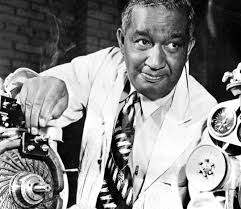
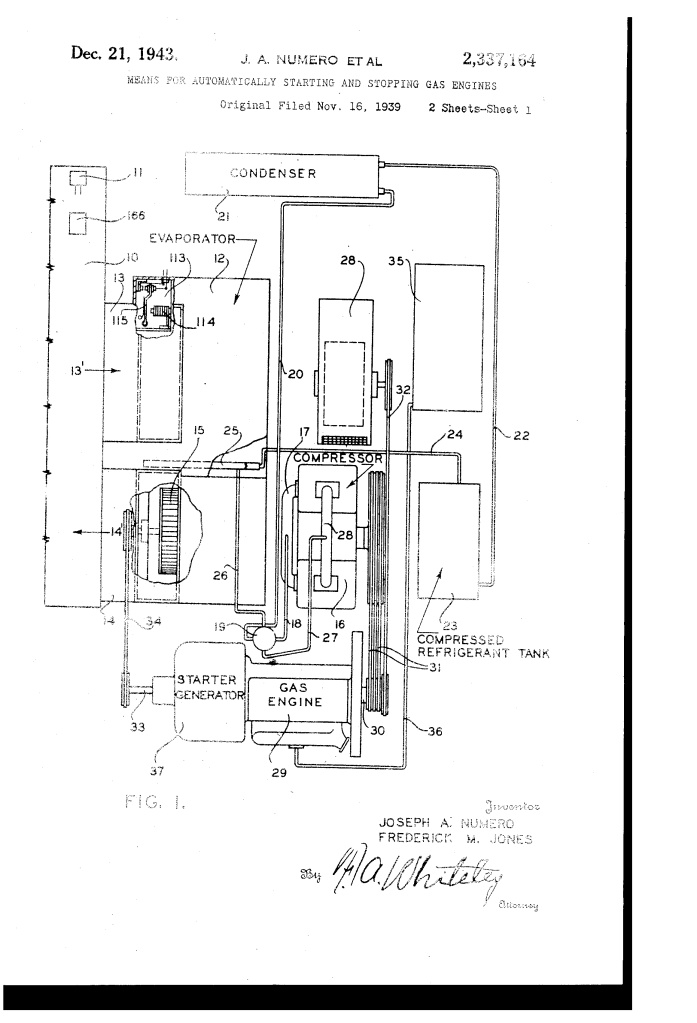
This patent (U.S. Patent No. 2,337,164), granted to Joseph A. Numero and Frederick McKinley Jones, represents the “brain” behind the first successful mobile refrigeration units. While their previous patents focused on the cooling hardware, this invention solved the critical electrical problem: How do you make a gasoline engine act like an electric motor?
In a stationary warehouse, an electric cooling system simply clicks on and off based on a thermostat. In a 1940s truck, there was no plug-in power. Jones and Numero engineered a sophisticated relay system that allowed a gas engine to autonomously start itself when the cargo got too warm, engage a “choke” for cold starts, and then turn itself into a battery charger once running—all without the driver ever leaving the cab.
The “Why”
In the early days of transport refrigeration, an operator had to manually crank the engine and leave it running for the entire trip. This wasted massive amounts of fuel, caused excessive engine wear, and led to “top-thawing” if the engine stalled unnoticed. The pain point was that gas engines were “dumb”—they couldn’t respond to the needs of the cargo. The inventors sought to create an automated cycle that mimicked the convenience of a home refrigerator but survived the vibrations of a moving truck.
Inventor Section: Engineering Philosophy
The Numero-Jones philosophy was Systems Integration through Electromagnetics. They didn’t just see a battery, an engine, and a compressor; they saw a single, symbiotic loop. Their breakthrough was the Starter-Generator concept: using one electrical machine to both “push” the engine to start and “pull” energy back once the engine took over. This eliminated the weight of separate starters and generators, which was vital for truck payloads.
Key Systems Section
1. The Master Relay and Secondary Circuit
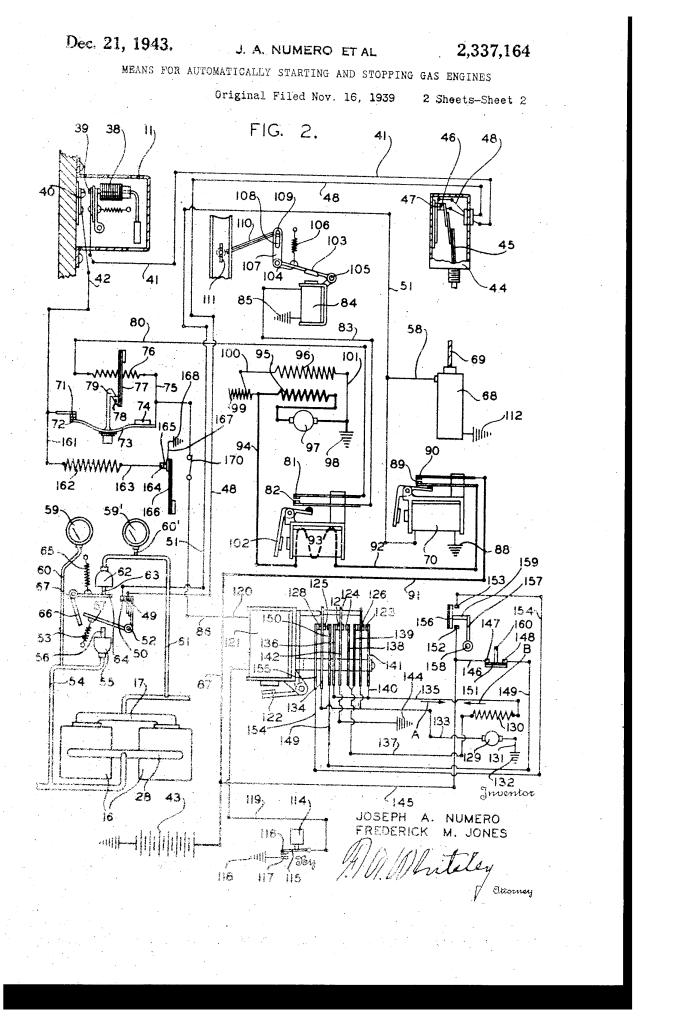
The “nerve center” of the patent is a dual-circuit system that manages the heavy lifting of engine ignition.
- The Condition Sensor: A thermostat (11) inside the food compartment acts as a gatekeeper.
- The Logic: When the temperature rises, the thermostat closes a Secondary Circuit. This circuit carries a light current to a Master Relay (70).
- The Heavy Lift: Once energized, the Master Relay snaps shut a pair of heavy-duty contacts (89, 90), allowing a massive surge of current from the battery (43) to hit the starter motor.
2. The Current-Sensing “Smart” Choke
Starting a cold gas engine automatically is difficult because it requires a “choke” (restricting air to richen the fuel mix).
- The Challenge: The choke must be ON to start but OFF the instant the engine fires to prevent stalling.
- The Solution: Jones designed a relay (93) with very few, heavy windings.
- The Physics: When the battery is struggling to turn over the engine, the current is very high. This high current is strong enough to trigger the choke relay. Once the engine starts, the current flow reverses and weakens as the generator begins charging the battery. This weaker current isn’t strong enough to hold the relay, so the choke automatically snaps open.
3. The Starter-Generator Hybrid
The patent utilizes a single unit (37) that changes its identity based on the direction of electricity.
- Mode A (Starter): Battery current flows to the unit, turning the engine’s crankshaft.
- Mode B (Generator): Once the engine is running faster than the starter, it “overdrives” the unit. The unit now sends current back through the same Master Relay contacts to recharge the battery.
- Benefit: This “two-way street” ensures the battery is always topped up for the next cooling cycle.
4. Safety and “Fail-Safe” Protections
Jones and Numero included several “watchdog” features to prevent the system from destroying itself:
- High-Pressure Cutout (55): If the refrigerant pressure gets too high (threatening to burst a pipe), a plunger (56) physically breaks the ignition circuit, killing the engine instantly.
- Cranking Timer (77): If the engine fails to start after a certain period, a heat-responsive element (76) “trips” the system to prevent the battery from being completely drained by the starter.
Comparison Table: Manual vs. Automated Gas Engine Control
| Feature | Manual Truck Refrigeration | Numero-Jones Automated System |
| Start/Stop | Manual hand-crank or button. | Thermostatic (Automatic). |
| Choke Operation | Manual cable in the cab. | Automatic (Current-sensing relay). |
| Fuel Efficiency | Poor (runs 100% of the time). | High (runs only when cooling is needed). |
| Battery Life | Risk of discharge if left on. | Self-charging via starter-generator. |
| Cargo Safety | Requires driver monitoring. | Autonomous monitoring 24/7. |
Significance
This patent was the “Operating System” for the modern refrigerated transport industry:
- True Autonomy: It allowed for “unattended” refrigeration. A truck could be parked over a weekend, and the engine would wake up, cool the meat, and go back to sleep as needed.
- Standardization: The wiring logic established here (using the starter as a generator) became a standard in small-engine automation for decades.
- Commercial Success: This technology transformed U.S. Thermo Control (later Thermo King) into a global leader, as it offered the only system reliable enough for the rigorous demands of WWII military logistics and post-war consumerism.
Final Insight: Frederick Jones had to solve “The Spark Problem”—the battery providing the spark for the engine was the same one powering the heavy starter. He balanced these voltages so perfectly that the engine wouldn’t “starve” for spark while it was cranking.
