
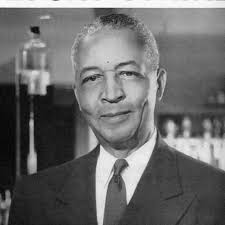
Manufacture of Stable Dry Papain Composition, Lloyd A. Hall (1949)
Patented in March 1949, this invention by Lloyd A. Hall (U.S. Patent No. 2,464,754) solved a major stability problem in the food industry: how to create a dry, long-lasting meat tenderizer using the enzyme papain.
Papain, derived from the papaya fruit, is a powerful proteolytic enzyme that breaks down tough muscle fibers in meat. However, before Hall’s intervention, dry papain mixed with common table salt (sodium chloride) would rapidly lose its potency. Hall discovered the chemical “hidden enemy” causing this decay and developed a method to shield the enzyme, leading to the convenient shaker-bottle tenderizers we use today.
The “Why”
Liquid papain was stable but difficult to ship and store for household use. When manufacturers tried to create a dry version using salt as a base, the papain became “inactive” within a short time.
- The Problem: Salt is generally stable, and dry papain is generally stable—but together, they failed. Hall suspected that trace amounts of hydrochloric acid were being generated from the sodium chloride, which “killed” the enzyme’s ability to tenderize meat.
- The Solution: pH Buffering. By adding agents to keep the mixture at a specific acidity level (pH 5.5 to 7.0), Hall prevented the acid damage and kept the papain “alive” and active for years on a shelf.
Inventor Section: Engineering Philosophy
Lloyd A. Hall’s philosophy was Protective Micro-Encapsulation. He didn’t just toss the ingredients into a mixer. He realized that the enzyme needed a physical and chemical barrier against the salt crystals. His process involved wetting the salt with a “film-forming” starch that dried into a thin skin or coat over each salt crystal. This skin housed the papain and the buffering agents, keeping the reactive components physically separated until the moment they hit the moist surface of a steak.
Key Systems Section
1. The pH Buffer Shield
Papain is highly sensitive to acidity. If the environment becomes too acidic, the enzyme denatures and stops working.
- The Buffering Agents: Hall utilized substances like Sodium Citrate, Sodium Bicarbonate, or Calcium Carbonate.
- The Range: He locked the composition to a pH between 5.5 and 7.0. This matches the natural pH of meat (usually around 5.8 to 6.5), ensuring that when the powder is applied, the enzyme is in its peak “strike zone” for breaking down proteins.
2. The Film-Coating Process
To ensure every grain of salt carried the right amount of protection, Hall developed a homogenization technique.
- Corn Starch Binder: Starch was used as a “glue” to create a microscopic film.
- The Slurry: The papain, beef extract (for flavor), and buffers were dissolved in a small amount of water to create a liquid “pre-mix.”
- Coating: This liquid was sprayed over “Flake Salt” (1331 lbs in his primary example). As the water evaporated, it left a permanent, dry coating on every single salt flake.
3. Low-Temperature Vacuum Drying
Heat is the second “killer” of enzymes. Hall had to remove the water used in the coating process without “cooking” the papain.
- The 140°F Limit: Hall found that any temperature over 140°F began to destroy the enzyme’s activity.
- Vacuum Evaporation: By using a vacuum pan drier (drawing up to 29 inches of mercury), he could boil off the water at much lower temperatures—often as low as 77°F to 115°F.
- The Result: The composition dried quickly (about 2 hours) without ever reaching a temperature that would damage the delicate papain molecules.
The Ingredients of a “Stable” Tenderizer (Example 1)
| Ingredient | Amount | Purpose |
| Flake Salt | 1331 lbs | The vehicular base and seasoning. |
| Papain | 67.5 lbs | The active “meat-melting” enzyme. |
| Corn Starch | 60 lbs | The film-forming binder/skin. |
| Normal Sodium Citrate | 30 lbs | The pH buffer (stabilizer). |
| Beef Extract | 11.25 lbs | Psychological/Sensory “meaty” aroma. |
Significance
This patent is a cornerstone of modern Food Chemistry:
- Household Accessibility: Hall’s work made it possible for “the home” to have access to professional-grade tenderizing tools that were previously only available to high-end institutions.
- Shelf-Life Revolution: Before Hall, dry tenderizers were a gamble. After Hall, they were a guaranteed, stable product.
- Enzyme Technology: This provided a blueprint for how to stabilize other delicate enzymes in dry pharmaceutical or food products by using vehicular salt bases and protective coatings.
Final Insight: Hall’s use of Beef Extract for “psychological effect” shows his genius as both a chemist and a product designer. He knew that if a tenderizer smelled like meat, the cook would trust it more, even though the beef extract provided no actual tenderizing power—that was all the papain’s job.
