
Lubricator for Multiple-Expansion Engines (1898)
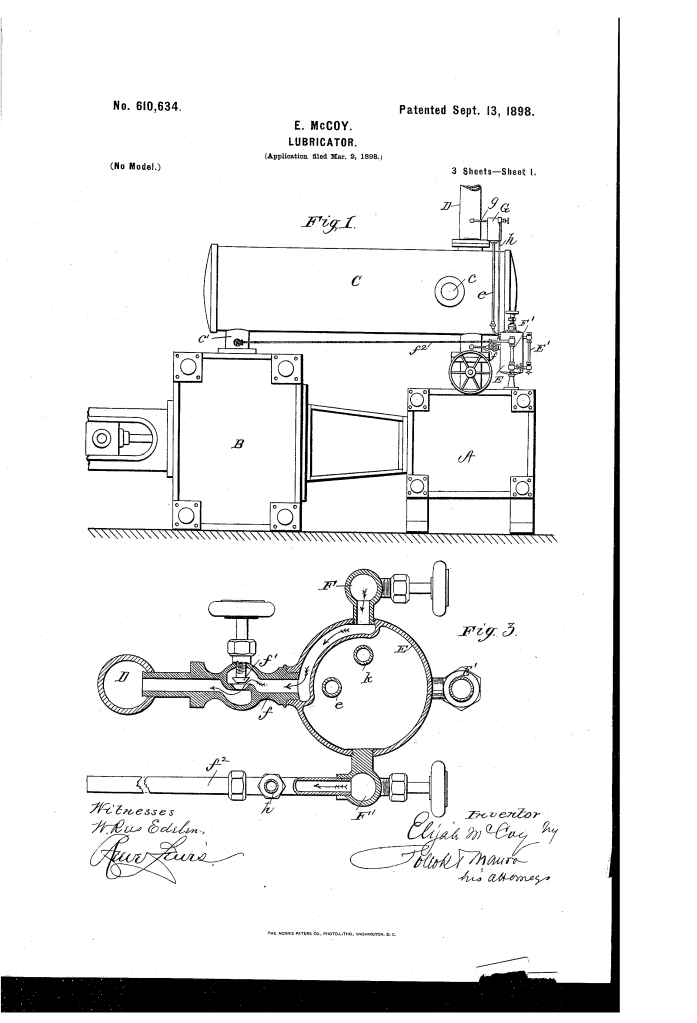
U.S. Patent No. 610,634, granted on September 13, 1898, to Elijah McCoy, describes an advanced condensation-displacement lubricating system engineered specifically for multi-cylinder compound and triple-expansion steam engines. Elijah McCoy, operating in Detroit, Michigan, and assigning the patent to the Detroit Sheet Metal and Brass Works, was the preeminent pioneer of automated engine lubrication.
While McCoy had revolutionized the railroad and shipping industries decades earlier with his baseline continuous displacement lubricators (beginning with his landmark 1872 invention) and subsequent multi-feed designs, the rapid industrial adoption of high-efficiency, multi-stage expansion engines exposed a critical operational hurdle. This specific patent represents a major structural advancement over his own earlier lubricators, directly resolving the uneven distribution of oil across cylinders operating under sharply differing pressures.
The Innovation: The “Independent Auxiliary Steam Jet”
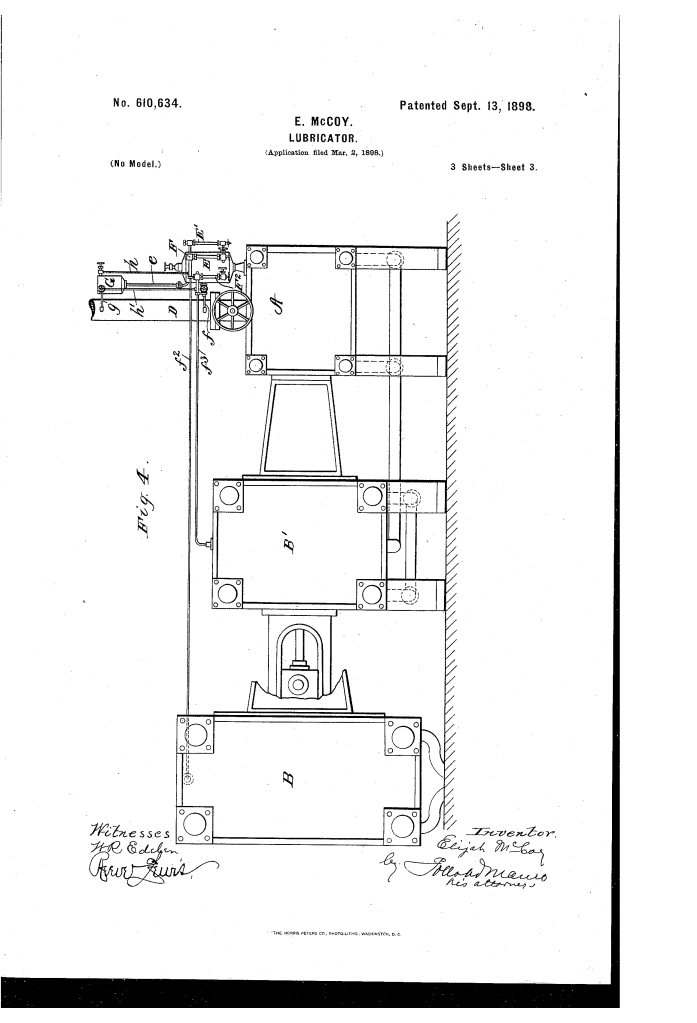
In multi-expansion engines, steam expands successively through high-, intermediate-, and low-pressure cylinders. McCoy’s earlier lubricators successfully fed multiple lines from a central reservoir, but when applied to multi-stage engines, conventional piping configurations utilized branched tubes or shared auxiliary steam passages connected to a single supply pipe.
In practice, this setup suffered from a severe, unexplained defect: instead of dividing proportionally among the cylinders according to the settings on the sight-feed valves, practically all of the steam and atomized lubricant rushed exclusively into the low-pressure cylinder. The intermediate- and high-pressure cylinders were left unlubricated and at risk of burning out, forcing engineers to fall back on manual hand-pumps or install costly standalone lubricators for each expansion stage.
McCoy discovered the root cause: steam simply followed the path of least resistance into the low-pressure cylinder, effectively siphoning lubricant away from the higher-pressure lines. His breakthrough in Patent No. 610,634 was the introduction of dedicated, independent auxiliary steam pipes tapped high above the main feeds to isolate each delivery circuit.
Why Independent Auxiliary Lines?
- Pressure Isolation: By eliminating common manifolds and branched pipes, each oil-delivery line operates independently, preventing the lower-pressure cylinder from siphoning oil away from the higher-pressure lines.
- Anti-Siphoning Elevation: Connecting the auxiliary steam feeds either high into the condenser dome or well above the oil inlet on the main steam pipe ensures atomized oil cannot be drawn upward into the auxiliary lines.
- Proportional Metering: It ensures that the drip rates calibrated by the engineer at individual sight-feeds directly match the volume of oil actually delivered to each cylinder.
Key Mechanical Components
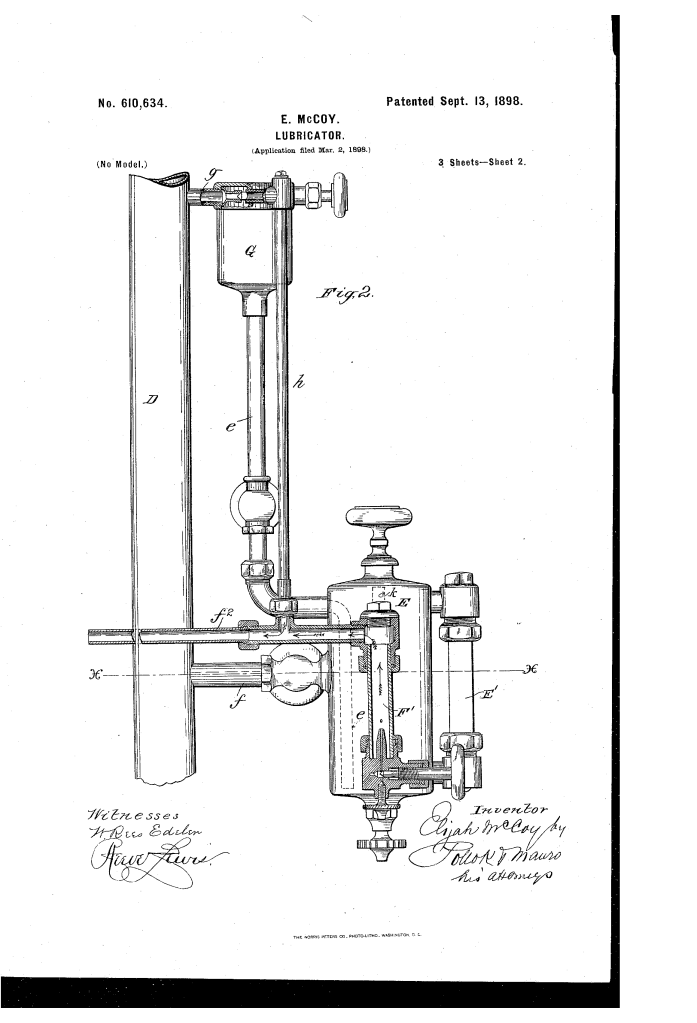
McCoy’s lubricator functions through an integrated assembly of hydrostatic displacement, sight metering, and separate propulsion conduits:
| Component | Function |
| Oil Reservoir (E) | The central vessel storing lubricating oil, operating on condensation displacement. |
| Condenser (G) & Tube (e) | Mounts at the head of the hydrostatic column; condenses boiler steam to supply water that displaces oil upward. |
| Sight-Feeds (F, F1) | Calibrated glass tubes allowing engineers to visually monitor and adjust oil drops feeding toward individual cylinders. |
| High-Pressure Delivery Pipe (f) | Supported by arm f, it feeds oil into main steam pipe D, where natural boiler steam suction carries it into cylinder A. |
| Low-Pressure Delivery Pipe (f1) | Carries atomized oil from sight-feed F1 into low-pressure passage c1 and cylinder B. |
| Auxiliary Steam Pipe (h) | Dedicated vertical conduit that takes dry steam from condenser G and injects a propelling jet directly into low-pressure pipe f1. |
How the Lubricator Functions
The lubrication cycle runs continuously, relying on thermodynamic pressure differentials rather than mechanical pumps:
- Condensation & Displacement: Steam enters condenser G through support arm g. Condensed water flows down tube e into the bottom of reservoir E, lifting the lighter lubricating oil.
- Calibrated Sight-Feeding: Displaced oil passes through regulating valves into sight-feed glasses F and F1, rising as visible droplets through water.
- High-Pressure Draw: Oil from sight-feed F enters pipe f. Velocity suction created by steam rushing down main boiler pipe D draws the atomized oil directly into high-pressure cylinder A.
- Independent Propulsion: Oil from sight-feed F1 enters pipe f1, where it meets a dedicated high-pressure steam jet descending through independent pipe h from the top of condenser G. This jet forcibly drives the lubricant into passage c1 and low-pressure cylinder B, fully overcoming the pressure imbalance.
Industrial and Operational Impact
McCoy’s refinement of his lubricating apparatus delivered vital mechanical and financial benefits to heavy industry:
- Evolution of McCoy’s System: It adapted his world-renowned automatic lubrication technology to modern compound and triple-expansion steam engines, rendering his earlier single-stage and branched lubricator designs fully compatible with multi-pressure systems.
- Elimination of Manual Labor: It removed the dangerous, labor-intensive chore of engine oilers hand-pumping lubricant into hot intermediate- and high-pressure steam chests while machinery was in motion.
- Equipment Savings: Marine and locomotive operators avoided the expense, clutter, and maintenance of mounting separate sight-feed lubricators on every individual engine cylinder.
- Preserved Hydrostatic Lift: Unlike competing retrofit attempts that tapped directly into the water column tube e (which destroyed the head of pressure), McCoy’s design preserved full hydrostatic displacement integrity.
About the Inventor: Elijah McCoy
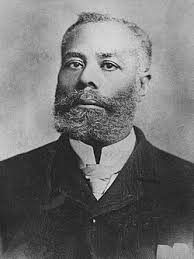
Elijah McCoy (1844–1929) was one of the most prolific and celebrated African American inventors and mechanical engineers in United States history.
- Background: Born in Colchester, Ontario, Canada, to parents who had escaped enslavement via the Underground Railroad, McCoy traveled to Edinburgh, Scotland, as a teenager to serve an apprenticeship and train as a mechanical engineer. Upon moving to the United States after the Civil War, racial prejudice barred him from formal corporate engineering roles, leading him to work as a locomotive fireman and oiler for the Michigan Central Railroad.
- Engineering Legacy: McCoy leveraged his hands-on experience on the rails to invent the revolutionary continuous automatic lubricator in 1872. Over the course of his lifetime, he secured nearly 60 patents—refining lubricators for locomotives, steamships, and industrial machinery, alongside domestic innovations such as an improved ironing board and lawn sprinkler. His lubricators set the global standard for mechanical reliability, widely regarded as the origin of the expression “the real McCoy” to describe genuine, top-quality engineering.
Summary of Claims
The patent explicitly claims:
- The combination of individual sight-feed tubes with independent pipes leading to high- and low-pressure cylinders, paired with a dedicated auxiliary steam pipe supplying the lower-pressure delivery conduit.
- Auxiliary steam supply passages tapped into the upper section of the condensing chamber or high on the main steam pipe, well above the high-pressure oil inlet to prevent atomized oil cross-draw.
- Independent oil-feed passages and propulsion pipes configured across multiple expansion cylinders without shared manifold branches, ensuring proportional lubrication across compound and triple-expansion engines.
