
Locking-Rack for Hats, Coats, Umbrellas, &c. (Lewis H. Latimer, No. 557,076)
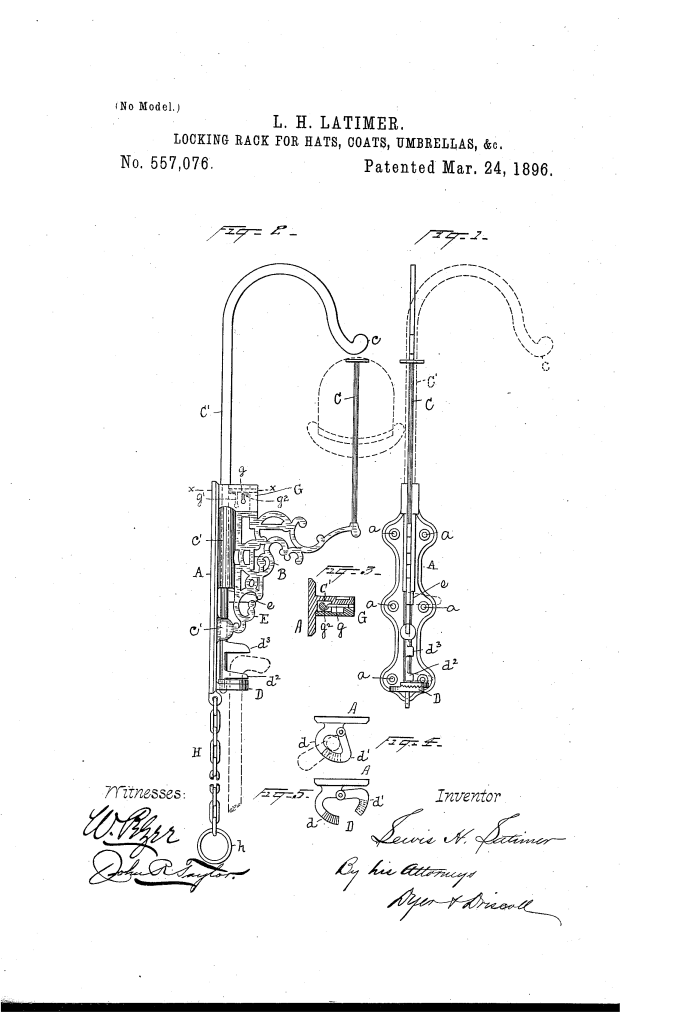
The patent by Lewis H. Latimer of Brooklyn, New York, describes a Locking-Rack for Hats, Coats, Umbrellas, and similar articles (Patent No. 557,076, 1896). The object is to provide a simple, efficient, and inexpensive rack that can securely hold multiple articles so they can only be removed by the person with the key.1
Invention and Mechanism
The device is a single wall-mounted bracket featuring multiple hooks, all secured simultaneously by a single, key-locked rotating bar.
- Support Structure and Articles: The rack provides fixed supports for a hat (C), a coat (E), and a two-part umbrella/cane holder (D) that uses interlocking teeth for grasping.
- The Single-Action Locking Bar (Key Innovation): A single, vertically arranged locking-bar (C) is mounted on the rack and is capable of partial rotation. This bar has integrated locking arms (e.g., the goose-neck
and the finger
) that correspond to each article’s placement.
- Security and Final Lock: When the bar (C) is rotated, these integrated arms simultaneously move into position to block the removal of the hat, coat, and umbrella holder. The bar is then secured by a key-operated lock (G) that engages a lug (
) on the bar, securing all items at once. The optional chain (H) allows the coat to be secured by looping through the sleeve and locking the ring (
) to the hook (E).
Historical Significance and the Inventor
- Security in Public Spaces: The invention directly addressed the problem of petty theft in high-traffic public areas like hotels, restaurants, and public halls, offering a centralized, key-controlled system for personal security.
- The Single-Action Mechanism: The significance lies in the economy of motion. A single turn of one bar locks three or more different types of articles using integrated mechanical stops. This efficiency made the device fast to operate and reliable.
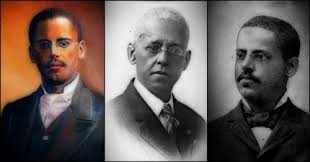
- The Inventor (Lewis H. Latimer): Lewis Howard Latimer (1848–1928) was an exceptionally important African-American inventor and draftsman . This patent demonstrates his wide-ranging ingenuity, applying complex technical thinking to a seemingly simple problem of commercial security and convenience.
Concepts Influenced by This Invention
Latimer’s locking rack influenced the design and engineering of subsequent secure storage and centralized access systems by pioneering an effective single-action multi-point lock for consumer goods.
- Single-Action Centralized Locking Systems: The core principle of a single rotating element simultaneously locking multiple, distributed components influenced the design of:
- Commercial Locker and Cabinet Systems: Where a single key turn engages or throws multiple locking bolts across different doors or access points using a central rotating cam or bar.
- Multi-Point Door Closures: Mechanisms used in high-security doors or cargo containers where a centralized handle activates rods that lock the door at the top, middle, and bottom simultaneously.
- Integrated Interference Locks: The use of the rotating shaft’s fixed arms (fingers
and
) to act as physical barriers or mechanical stops is a robust technique influencing the design of simple, interference-based security mechanisms and selector gates in manual machinery and specialized racks.
- Physical Item Tethering: The strategy of using a chain passed through the item (coat sleeve) and then secured by the main lock influenced the development of modern retail security tethers and anti-theft tagging systems that physically loop through merchandise and anchor it to a fixture.
