

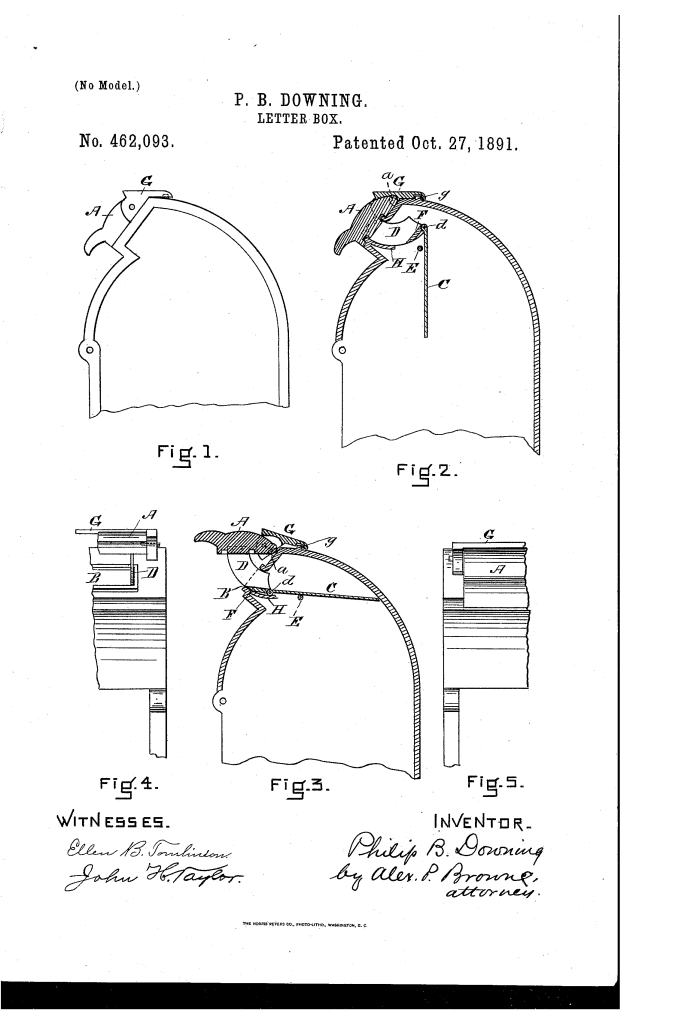
P. B. DOWNING’S letterbox patent (No. 462,093) from October 27, 1891, describes an improved lid for a public mailbox. The invention focused on creating a safer and more secure mailing slot that prevented theft and protected mail from weather. The lid had a hinged cover that, when opened, caused a pivoted guard plate to move into a horizontal position. This created a shelf for the letter to rest on while simultaneously blocking the slot. A subsequent action, such as releasing the lid, would cause the plate to drop, allowing the letter to fall into the box. The design also included a weather strip and storm rib to prevent rain or snow from entering the box.
Societal Impact
Downing’s patent addressed practical problems of the late 19th-century postal service, contributing to the modernization and efficiency of mail delivery.
Security and Protection
The primary purpose of the invention was to prevent mail theft. Before this design, it was possible to retrieve mail from a box using wires or other tools. The internal guard plate effectively blocked access once the lid was open, making it impossible for thieves to steal letters. The weather-proofing feature was also a significant benefit, ensuring that letters were protected from rain and snow.
The Inventor’s Legacy
Philip B. Downing was an African American inventor who made significant contributions to urban infrastructure. This patent, along with his other mailbox invention (No. 462,092) and his street railway switch, highlights his focus on improving public services. His work on the mailbox is considered foundational to the design of the modern public mailbox we see today. Downing’s ingenuity and success in the patent system, despite the racial barriers of his time, underscore the important role that Black innovators played in shaping America’s technological landscape.
