
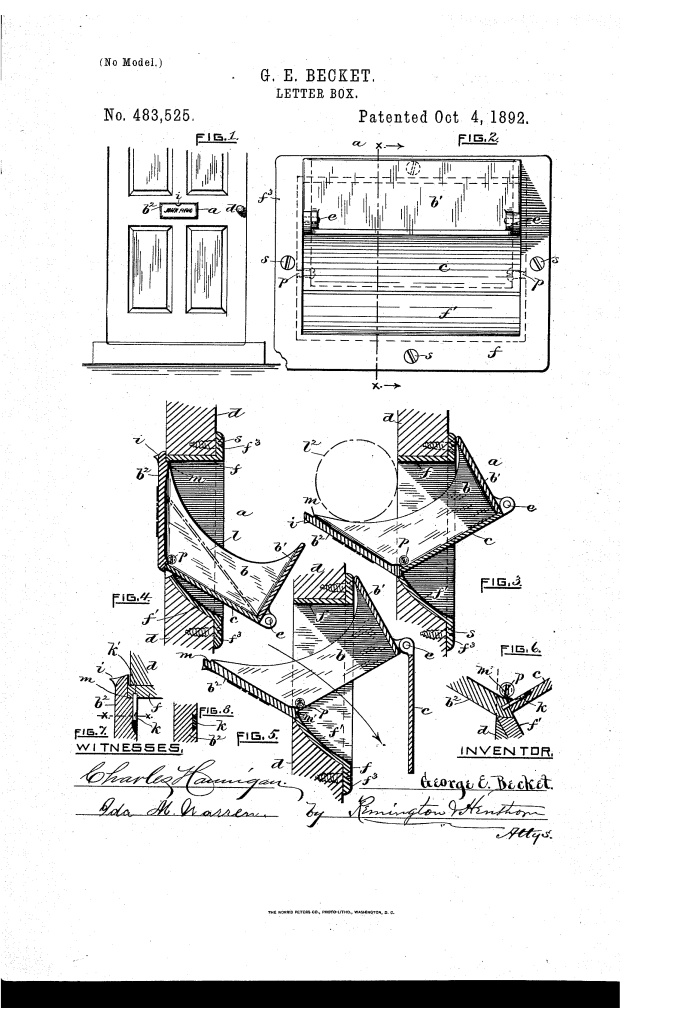
George E. Becket’s patent for a Letter Box, No. 483,525, describes a unique, self-closing mail receptacle for homes. Patented on October 4, 1892, the invention was designed for easy installation in a door.
The device’s main features were:
- Pivoting Box: The box or receptacle was designed to vibrate back and forth within a frame secured to a door. It was counterweighted to automatically return to its normal, upright position after being opened. This self-closing feature was meant to make mail delivery quicker.
- Hinged Bottom: The box had a hinged bottom that could be locked in place. When unlocked, it allowed large mail pieces to pass directly through the box and fall to the floor, preventing them from getting stuck. This feature also allowed a person in the hall to check for mail at a glance.
- Locking Mechanism: A small dovetail bolt could be used to lock the box from the inside, preventing it from being opened from the outside.
Societal Impact and Legacy
Becket’s invention was part of a larger trend in the late 19th century to improve domestic convenience and the efficiency of public services like mail delivery.
- Streamlined Mail Delivery: For mail carriers, the self-closing feature meant they didn’t have to spend extra time ensuring the box was properly closed after delivery. For homeowners, it was a practical improvement on the traditional mail slot, which could leave mail exposed to the elements or to being pushed back out.
- Domestic Convenience: The ability to see if mail had been delivered from inside the house without opening the door was a simple, yet valuable, convenience. It reflects the era’s focus on small-scale innovations that enhanced daily life.
- The Inventor’s Legacy: The patent record for George E. Becket does not contain information about his life beyond his residence in Providence, Rhode Island. However, his invention showcases the kind of practical ingenuity that was applied to improving everyday objects during the Gilded Age, a time of rapid technological and social change.
