
Induction Telegraph System (Granville T. Woods, No. 373,915)
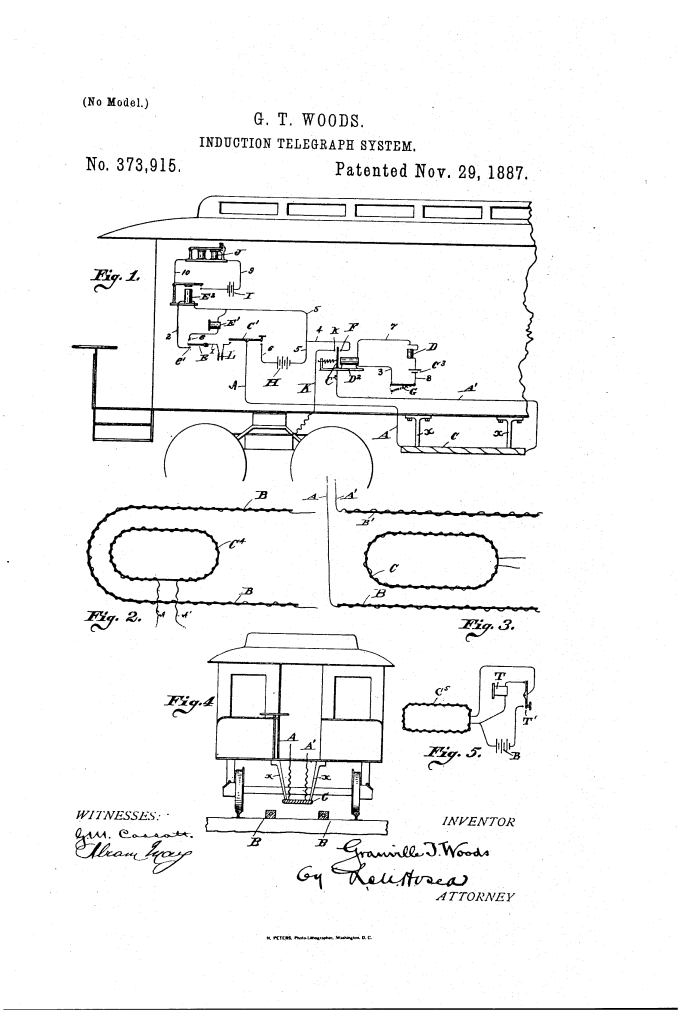
The patent by Granville T. Woods of Cincinnati, Ohio, describes an Induction Telegraph System (Patent No. 373,915, 1887). This invention is a groundbreaking communication system designed to allow moving railway trains to exchange telegraphic or telephonic signals with each other or with fixed stations. At a time when trains were essentially “blind” once they left a station, Woods’s system provided a way to send messages through the air using electromagnetic induction, effectively creating the precursor to wireless communication and mobile telephony.
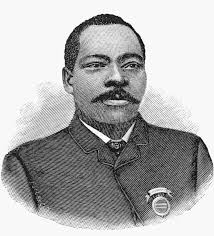
Inventor Background: Granville T. Woods
Granville T. Woods (1856–1910) was a prolific African American inventor whose work earned him the nickname “The Black Edison.” The Induction Telegraph System (often called the Synchronous Multiplex Railway Telegraph) was perhaps his most important contribution to public safety. Before this invention, train collisions were frequent because dispatchers could not communicate with engineers once a train was in motion. Woods’s system saved countless lives by allowing for real-time tracking and messaging, even when a train was traveling at full speed.
Key Mechanical Components & Functions
The system operates on the principle that an electrical current in one wire can “induce” a matching current in a nearby wire without them ever touching.
1. The Line Conductors (B, B’)
- The Track Circuit: Two permanent wires, B and B’, are laid between the rails of the track, parallel to the ties.
- The Helix: These wires are formed into a helix (a long coil) surrounding a magnetic core. This creates a powerful electromagnetic field along the entire length of the track.
2. The Suspended Induction-Helix (C)
- The Car Apparatus: Beneath the railway car, Woods mounted a corresponding oblong helix (C) with an endless soft-iron core.
- Inductive Proximity: This helix is suspended in close proximity to the track wires but does not touch them.
- Function: When a signal is sent from a station through wires B and B’, the magnetic field “jumps” the gap and excites the helix (C) on the moving car, reproducing the signal in the car’s receiving instruments.
3. The Vibrating Relay and Circuit-Breaker (D, D’) (Key Innovation)
Inductive signals are naturally weak. To ensure they were audible and clear, Woods engineered a specialized local circuit.
- The Local Battery (C’): A local battery powers a relay (D).
- Rapid Vibration: A circuit-breaker (D’) causes the relay’s armature to vibrate at high speed.
- Function (Signal Clarity): This rapid “make and break” of the circuit breaks the signals into a series of fast pulses. In a telephone receiver, this produces a continuous audible tone. Instead of faint clicks, the operator hears clear “dots and dashes” made of sound, separated by absolute silence.
4. The Condenser (L)
- Disturbance Filter: Woods placed a condenser (L) between the telegraph key and the rest of the apparatus.
- Function: Telegraph lines in the 1880s were plagued by “static” and interference from neighboring wires. The condenser absorbed these weak, stray currents while allowing the strong, intentional signals to pass through, ensuring the message remained legible.
Comparison of Communication Systems
| Feature | Standard Telegraphy (1880s) | Woods’s Induction Telegraph |
| Connectivity | Required physical wire contact (brushes/sliders). | Wireless; uses electromagnetic induction across a gap. |
| Mobility | Only worked at fixed stations. | Works on moving vehicles at any speed. |
| Signal Type | Single mechanical clicks. | Pulsating audible tones (Clearer for Morse Code). |
| Interference | Subject to heavy static and “leakage.” | Condenser (L) and insulated helices prevent leakage and noise. |
Significance to Engineering and Modern Life
Granville T. Woods’s Induction Telegraph System influenced the development of wireless technology and transportation safety.
- The Birth of Wireless: By proving that data could be transmitted inductively between a moving object and a fixed line, Woods provided a foundational step toward the development of radio and WiFi.
- Railway Traffic Control: This system became the standard for train dispatching, allowing for the modern “block signaling” logic that prevents trains from occupying the same stretch of track.
- Static Clearing: Woods included a ground-contact (K) through the wheels of the car to “clear the line of static effects” after every signal pulse—a concept related to modern signal grounding and shielding.
- Multiplexing Logic: His design allowed multiple messages to be handled on the same line, an early form of multiplexing that is essential to modern cellular and fiber-optic networks.
