

Ice-Cream Mold and Disher (Alfred L. Cralle, No. 576,395)
The patent by Alfred L. Cralle of Pittsburg, Pennsylvania, describes an improved Ice-Cream Mold and Disher (Patent No. 576,395, 1897). The main object is to construct a serving scoop that can be conveniently operated with one hand and is durable, simple, and effective at cleanly loosening and dispensing ice cream or other substances.
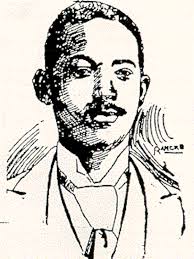
Inventor Background: Alfred L. Cralle
Alfred L. Cralle was an African-American inventor who contributed a highly practical solution to the nascent commercial ice-cream industry and soda fountain trade. His invention addressed the inefficiency and messiness of serving frozen desserts manually with spoons or rigid scoops, which was slow and resulted in uneven portions.
Invention and Mechanism
The disher uses a lever-operated, gear-driven rotating mold that shears the ice cream away from the mold walls.
1. The Mold and Cutters
- Mold (a): The cup that forms the scoop’s portion (shown as cone-shaped, but can be any desired shape).
- Cutters/Blades (): Blades secured to a central shaft (
) at the apex of the mold. These blades engage the inner face of the mold.
- Function: When the mold rotates, the stationary cutters shear the cream away from the mold surface, cleanly loosening the portion.
- Stationary Arm (): One section of the handle (
) has an arm (
) secured to the cutters (
) at the apex shaft (
). This arm is held stationary relative to the rotating mold.
2. One-Handed Gearing and Actuation (Key Innovation)
- Two-Section Handle (): The handle is made of two sections pivotally secured together (like a pair of pliers). The stationary arm (
) is fixed to section
.
- Segmental Rack (): The moving handle section (
) has a segmental rack () (a curved gear sector) on its inner end.
- Toothed Rack (): A toothed rack () is secured on the mold (
) near its mouth, designed to mesh with the segmental rack (
).
- Spring (): A spring is secured between the two portions of the handle.
- Function: The operator grasps the handle and forces the two sections together with one hand. This action causes the segmental rack (
) to engage the rack (
) and rapidly rotate the mold (a) around the stationary cutters (
). The cutters loosen the cream, which is then cleanly ejected. The spring (
) automatically retracts the handle and repositions the cutters when pressure is released.
- Function: The operator grasps the handle and forces the two sections together with one hand. This action causes the segmental rack (
Concepts Influenced by This Invention
Cralle’s disher influenced subsequent designs for serving frozen and viscous foods by establishing a highly effective geared ejection system controlled by a single hand.
- Geared Ejection in Scoops: The core concept of using a lever (handle ) and a gear sector (rack ) to actuate a rotating mechanism (mold ) is the fundamental design for nearly all modern ice cream scoop ejectors . Modern scoops typically use a simpler thumb-trigger mechanism instead of a full handle squeeze, but the underlying mechanical principle of converting linear/angular input into the rotational motion of the scraper/mold is identical.
- Shear-Based Clean Release: The principle of using a stationary cutter/scraper to shear the product away from the mold walls while the mold rotates influenced the design of various industrial food depositors and fillers for viscous products, where clean release from the cavity is essential.
- Ergonomic, Single-Handed Tools: The explicit design objective of creating a tool operable with only one hand influenced the ergonomic standards for professional food service tools, prioritizing speed and ease of use.
