
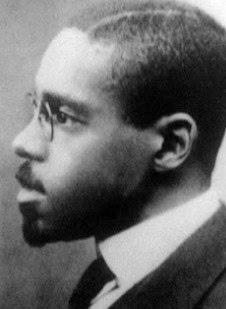
In 1920, Dr. William Harry Barnes introduced the Hypophyscope, a specialized surgical instrument designed to improve visibility during complex brain surgeries, specifically those targeting the pituitary gland (the hypophysis). While this invention was not widely patented as a commercial product, it was a vital contribution to the field of Otolaryngology and Neurosurgery, published and presented to the medical community as a tool for “trans-sphenoidal” surgery.
Inventor Background: Dr. William Harry Barnes
Dr. William Harry Barnes (1887–1945) was a distinguished African American otolaryngologist from Philadelphia. He was the first Black board-certified specialist in his field and eventually became the president of the National Medical Association. Barnes was known for his “surgical dexterity” and his ability to engineer new tools to solve procedural hurdles. His work was focused on the head and neck, and the Hypophyscope remains his most mathematically and optically complex contribution.
The Medical Challenge: The “Hidden” Gland
The pituitary gland is located at the base of the brain, tucked into a bony pocket called the Sella Turcica. In the early 20th century, reaching this gland through the nose (the trans-sphenoidal approach) was extremely difficult because:
- Deep Access: The surgical field was at the end of a long, narrow nasal passage.
- Obstructed Vision: Standard light sources and tools blocked the surgeon’s view of the delicate structures, such as the optic nerves and carotid arteries.
The Innovation: Optical Precision
The Hypophyscope was essentially a refined endoscopic speculum that utilized a series of mirrors or lenses to “bend” light and vision.
1. The Retraction Blade
- Design: The instrument featured a narrow, polished metal blade that could be inserted deep into the nasal cavity.
- Function: It served as a self-retaining retractor, holding the nasal tissues aside to create a stable “tunnel” to the sphenoid sinus.
2. The Integrated Lighting and Magnification
- Optical Path: Barnes engineered the tool to carry light directly to the tip of the blade.
- Function: By integrating the light source into the instrument, he eliminated the shadows caused by external headlamps. This allowed the surgeon to see the exact point of the incision into the Sella Turcica with high clarity.
3. Angle of Vision
- Feature: The Hypophyscope allowed for a slightly offset angle of vision.
- Function: This let the surgeon work with instruments (like tiny curettes or forceps) in the narrow passage without those same instruments completely obstructing the line of sight to the gland.
Significance to Medical Science
Dr. William Harry Barnes’s Hypophyscope influenced the development of minimally invasive neurosurgery and endoscopic techniques.
- Trans-sphenoidal Evolution: His instrument helped prove that surgery on the base of the brain could be performed safely through the nose, a technique that is now the gold standard for treating pituitary tumors.
- Specialized Instrumentation: Barnes was a proponent of the idea that every surgical problem required a specific, engineered tool. This philosophy helped move medicine away from “general” tools toward the highly specialized surgical kits used in modern operating rooms.
- Legacy in Otolaryngology: His techniques for navigating the sinuses to reach the brain are still taught in modern ENT residencies, emphasizing the bridge between ear-nose-throat medicine and neurosurgery.
