
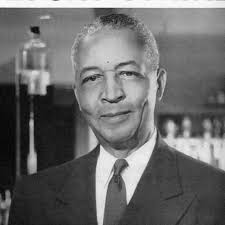
Gelatin-Base Coating for Food, Lloyd A. Hall (1949)
Patented on August 9, 1949, this invention by Lloyd A. Hall (U.S. Patent No. 2,476,055) addressed a major sanitation and preservation crisis in the meat and dairy industries. While gelatin had long been recognized as a potentially great coating for hams and sausages, it had a fatal flaw: gelatin is a perfect “culture medium”—meaning it actually encourages the growth of the very mold, yeast, and bacteria it is supposed to keep out.
Hall, a pioneering African-American chemist and a giant in food science, discovered a specific chemical balance that transformed gelatin from a “bacterial playground” into a sterile, flexible, and edible protective skin.
The “Why”
Before this patent, coating food with gelatin was a nightmare for two reasons:
- Microbial Growth: Dipping hams into a hot gelatin bath contaminated the bath. By the next day, the “leftover” gelatin would be teeming with bacteria.
- Heat Degradation: If you tried to keep the gelatin bath hot overnight to kill the germs, the heat would cause hydrolysis—breaking down the gelatin molecules and turning the thick coating into a thin, watery mess that wouldn’t stick to the meat.
The Solution: Hall found that by adding Propylene Glycol at a precise concentration and carefully buffering the pH level, the gelatin became resistant to both bacteria and heat breakdown.
Inventor Section: Lloyd A. Hall
Lloyd A. Hall’s philosophy was Chemical Synergism. He didn’t just want to add a preservative; he wanted to change the chemical environment of the gelatin itself. Hall was the first to use antioxidants like lecithin and propyl gallate in food, and this patent reflects his expertise in maintaining food stability over long periods. He understood that for a coating to be “successful,” it had to be “huskable” (easy to peel off) while remaining edible and flexible.
Key Systems Section
1. The Propylene Glycol “Inhibition” Zone
Hall discovered a “critical limit” for anti-microbial protection.
- The 15% Rule: He determined that propylene glycol must make up at least 15% by weight of the coating to stop mold and bacteria.
- The Upper Limit: He capped it at 20%. If you add more than that, the coating becomes too soft and “tacky” (sticky), making it useless for transport.
- Edibility: Unlike paraffin wax, which is inedible and cracks easily, Hall’s mixture was entirely safe to consume and stayed elastic even in cold storage.
2. pH Stabilization (Neutrality)
Gelatin is naturally slightly acidic (pH 4.0 to 5.5), but acidity is what causes gelatin to “degrade” or melt into a liquid state when heated repeatedly.
- The Target: Hall adjusted the pH to between 6.5 and 7.0 (near neutral).
- The Agents: He used buffering agents like Triethanolamine or Sodium Bicarbonate.
- The Result: This allowed the gelatin bath to be melted, cooled, and remelted for up to 60 days without losing its thickness (viscosity).
3. Reducing Sugars as Anti-Oxidants
To further prevent the gelatin from breaking down during reheating, Hall added small amounts of Reducing Sugars (Dextrose, Lactose, or Maltose).
- Function: These sugars act as an anti-oxidant, preventing the gelatin from oxidizing into an acid.
- The Limit: He limited sugar to 10%; any more, and the “ham skin” would become a sticky mess that wouldn’t peel off the carton or meat.
Comparison: Wax vs. Hall’s Gelatin Coating
| Feature | Paraffin Wax Coating | Hall’s Gelatin Coating |
| Edibility | Inedible (Dangerous if swallowed) | Completely Edible |
| Durability | Cracks and peels in transit | Elastic and adherent |
| Microbial Resistance | Traps bacteria underneath | Inhibits mold/bacteria growth |
| Application | Messy; requires high heat | Low-heat dipping (140°F – 155°F) |
| Viscosity | Variable | Stable for 60+ days of reheating |
The Hall Formula (Averaged)
| Ingredient | Percentage | Role |
| Edible Gelatin | ~30% | The structural “skin.” |
| Propylene Glycol | 15% – 20% | Plasticizer and Anti-microbial agent. |
| Reducing Sugar | <10% | Anti-oxidant to prevent breakdown. |
| Water | ~40% – 50% | The solvent for the dip. |
| Buffering Agent | Trace | Keeps pH at 6.5–7 for heat stability. |
Significance
Lloyd A. Hall’s patent revolutionized food logistics:
- Global Export: Meats could now be shipped across oceans through varying climates without “unsightly change” or spoilage.
- Sanitation: It provided a “readily huskable” (easy to peel) layer that protected against flies, dirt, and micro-organisms.
- Waste Reduction: Because the gelatin bath could be reused for months without spoiling, it saved companies massive amounts of money and reduced industrial food waste.
Final Insight: Hall’s work on this coating was a masterclass in balancing physical properties (viscosity and elasticity) with chemical protection (pH buffering and microbial inhibition). It proved that a “simple” gelatin skin could be a high-tech barrier in the fight against food spoilage.
