
Flying Landing Platform (1961)
U.S. Patent No. 3,003,717, granted on October 10, 1961, to Peachy Booker, describes an ambitious “rescue aircraft” designed to function as a mid-air landing strip. The primary purpose of this invention was to intercept and safely land disabled aircraft—such as those with failed landing gear or engines—while they were still airborne.
Design and Structure
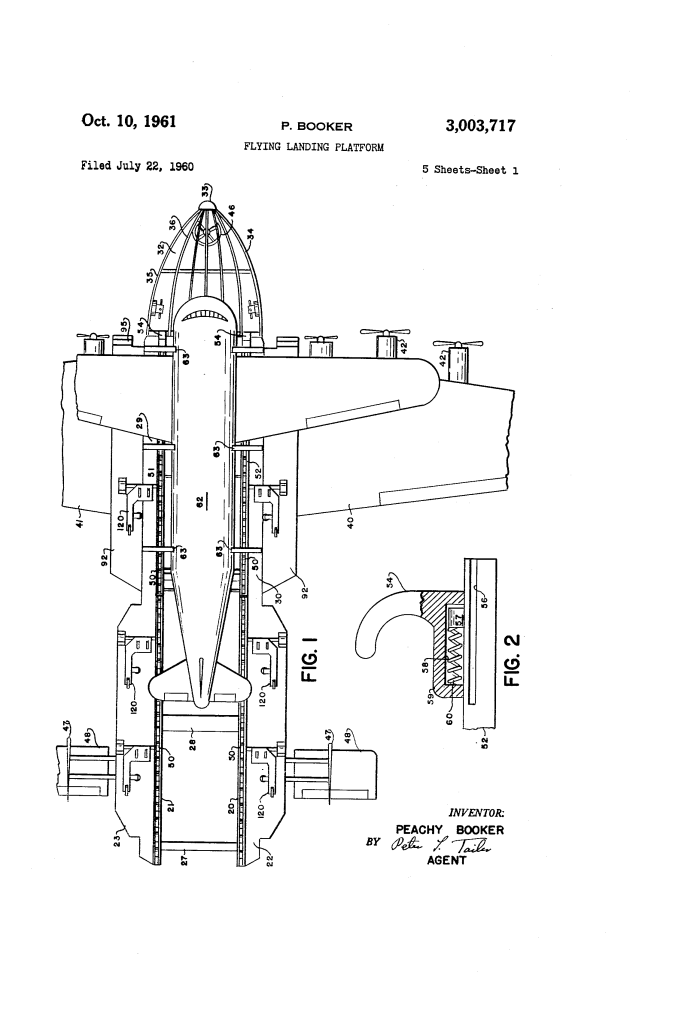
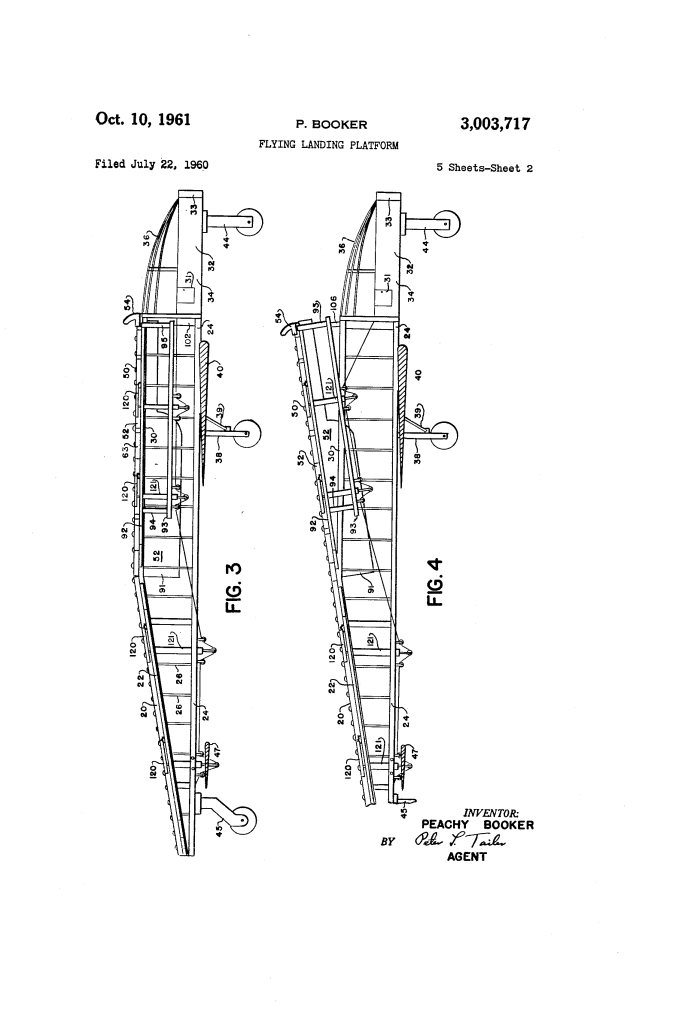
The Booker Flying Landing Platform is a massive, girder-based aircraft characterized by a parallel track system designed to receive a secondary plane.
- Dual Girder Fuselage: The aircraft consists of two parallel girder-type structures joined by cross-braces, creating a wide, stable base.
- Landing Tracks: Two sets of tracks run along the top of the aircraft:
- Rear Tracks (20, 21): Sloped upward to help decelerate the incoming disabled aircraft.
- Forward Tracks (51, 52): Pivotally mounted so they can be raised or lowered to adjust the landing angle.
- Rollers (50): The tracks are lined with small rollers to allow the disabled aircraft to move smoothly along the platform once contact is made.
- Propulsion: The platform is a fully functional aircraft with its own wings, tail surfaces, and multiple engines (propeller or jet-driven).
The Rescue Mission: How it Works
The operation of the flying landing platform involves a complex sequence of aerial maneuvers and mechanical locking.
1. The Interception
Upon reaching a disabled plane, the platform flies directly beneath it at a slightly slower speed. The disabled aircraft approaches from behind and touches down on the sloped rear tracks.
2. Arresting and Securing
To ensure the disabled aircraft doesn’t overshoot the platform:
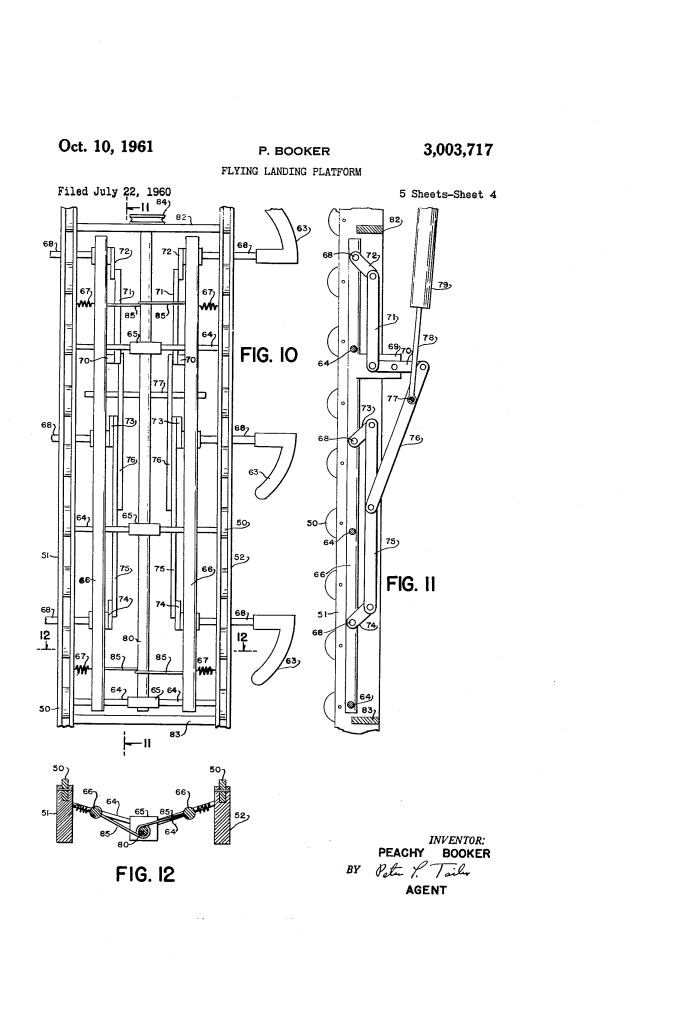
- Arresting Hooks (54): Spring-loaded hooks at the front of the tracks absorb the forward momentum of the landing craft.
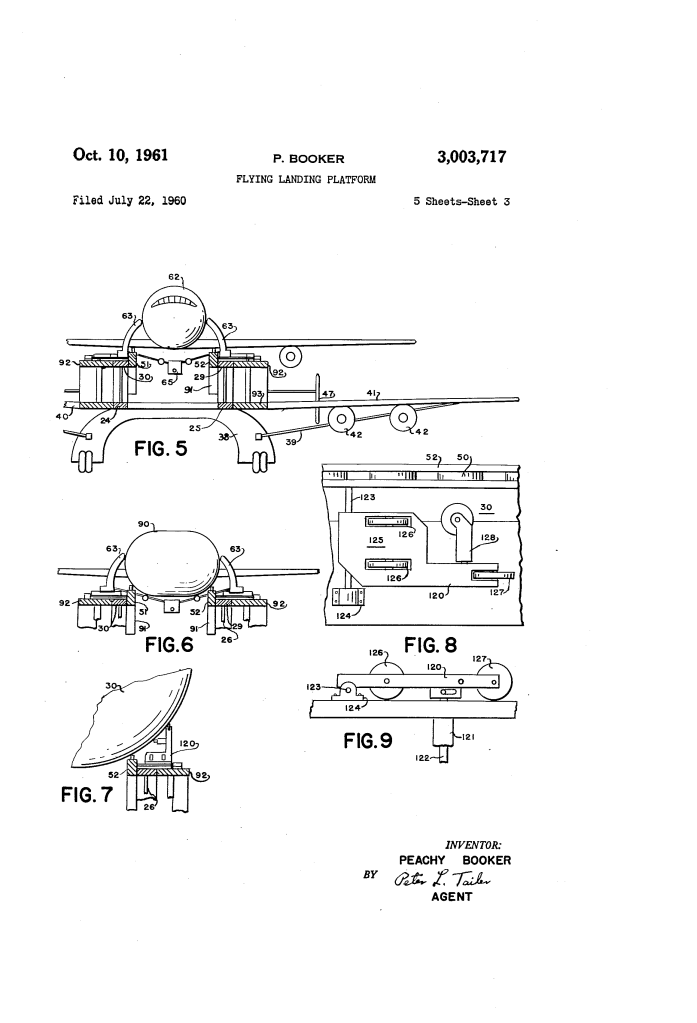
- Fuselage Clamps (63): Once the aircraft comes to a stop, a series of mechanical clamps are raised from the tracks. These clamps move inward to “grip” the fuselage of the disabled plane, locking it securely to the rescue platform.
3. Evacuation or Jettison
Once secured, the platform can transport the disabled craft to a safe landing at an airport. If a fire breaks out on the disabled craft, passengers can be evacuated directly into the rescue platform’s lower compartments. If necessary, the forward tracks can be tilted upward to allow the disabled craft to slide off the back and be “jettisoned” away from the rescue crew.
Space Vehicle Recovery
A secondary application for the patent was the recovery of space vehicles or missiles re-entering the atmosphere.
- Arresting Cable (141): For high-speed recovery, a cable attached to winches at the rear of the tracks would catch an arresting hook on the space vehicle.
- Deceleration: The winches would provide controlled tension, gradually slowing the space vehicle down to the speed of the platform.
Technical Features Summary
| Feature | Function |
| Articulated Platform | Tilts the landing surface to match the flight path or jettison cargo. |
| Small Rollers | Reduces friction during the high-speed landing phase. |
| Control Compartment | Located at the front, housing pilots and passengers evacuated from the disabled craft. |
| Auxiliary Support Arms | Pivotable arms that can provide additional support for oversized or oddly shaped fuselages. |
