
Electrical Hair-Treating Implement (Solomon Harper, No. 1,772,456)
This 1930 patent by Solomon Harper of Syracuse, New York, describes an advanced Electrical Hair-Treating Implement (Patent No. 1,772,456). Designed for drying, straightening, and dressing hair, this invention was a major safety upgrade over the manual “pressing combs” of the era. Harper, a prolific African American inventor, focused on precision temperature control to prevent the common dangers of hair scorching and scalp burns.
1. The Multi-Position Adjustable Comb
One of the primary structural innovations is the ability to adjust the angle of the comb teeth relative to the handle and heating element.
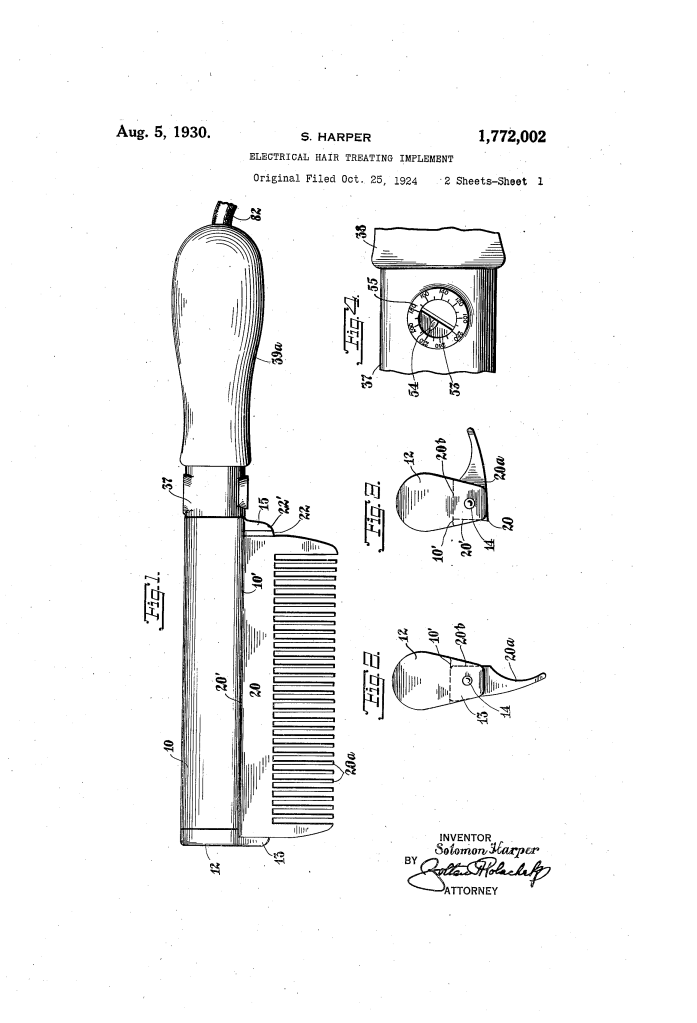
- Comb Shell (10): The main metal casing is cylindrical but features a flat, longitudinal surface (10′).
- Adjustable Mounting: The comb (20) is held between two lugs (13 and 15) by a pintle (14) and a screw (16).
- Variable Angles: By loosening the screw and shifting the comb, the user can rotate it to different positions. This allows the comb teeth (20a) to be angled optimally for either straightening (close to the scalp) or drying (lifting the hair away).
2. Dual-Zone Heat Insulation
Harper recognized that the greatest heat should be directed toward the hair being combed, while the back of the device should be shielded to protect the user’s hand and head.
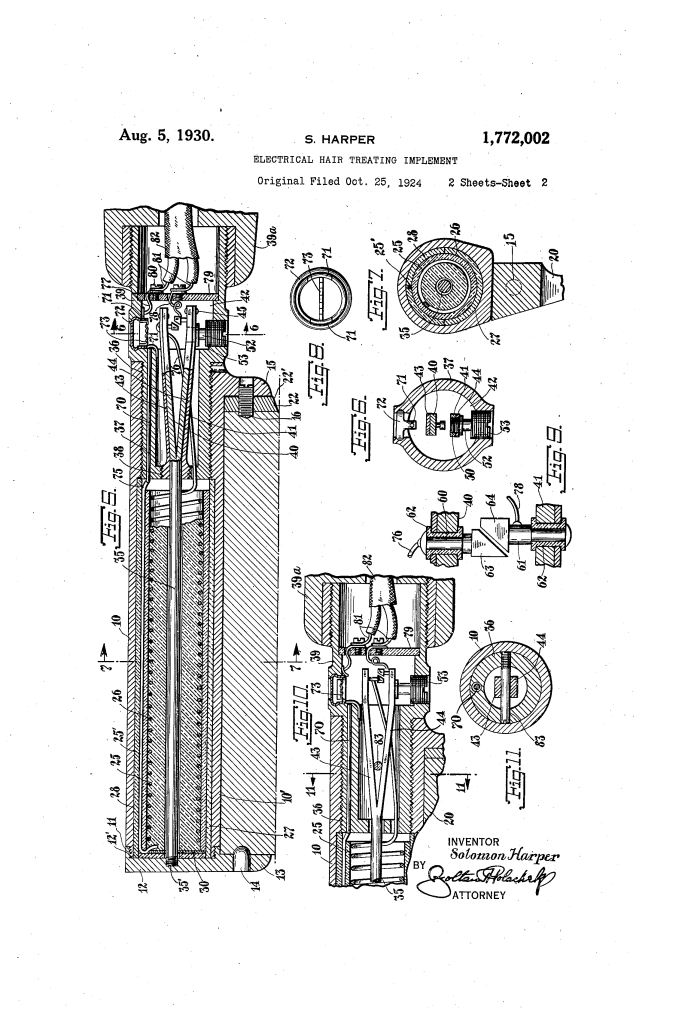
- Asbestos Shield (27): A semi-cylindrical shell made of heat-insulating material (like asbestos, a common insulator in the 1920s) is placed on the side of the heating coil adjacent to the comb.
- Fiber Insulation (28): The opposite side uses standard electrical insulation.
- Directional Heat: This configuration ensures that heat is projected primarily out of the back of the casing, away from the sensitive comb teeth when they are in contact with the hair, preventing sudden temperature spikes.
3. The Thermostatic Control System
The core safety feature of the patent is an automatic switch that cuts off power before the device reaches a dangerous temperature.
- Expansion Rod (35): A metal rod runs through the center of the heating coil (25). Metal expands when heated; this rod is engineered to expand significantly as the device warms up.
- Bifurcated Legs (40, 41): The end of the rod is split into two “legs.” As the rod expands, it is forced against internal straps or a wedge, causing the legs to move away from each other.
- Carbon Contacts (63, 64): Each leg carries an electrical contact. When the legs spread apart due to heat expansion, the contacts separate, breaking the circuit and stopping the heating process.
4. Precision Temperature Adjustment (Fig. 4)
Unlike many early electrical tools that were either “on” or “off,” Harper’s device allowed the user to select a specific temperature.
| Feature | Function |
| Adjustment Screw (53) | A screw on the exterior of the handle that presses against one of the thermostatic legs. |
| Dial and Indicator (54, 55) | Numerical markings representing temperatures (ranging from 100° to 260° Fahrenheit). |
| Selectivity | Turning the screw pre-tensions the legs, meaning they will break the electrical contact sooner or later, effectively setting a “ceiling” for how hot the comb can get. |
5. Secondary Safety Cut-out: The Thermal Fuse
As a redundant safety measure, Harper included a Thermal Fuse (73). If the primary thermostatic switch fails and the temperature continues to rise toward an extreme level, this wire will melt (fuse), permanently breaking the circuit until the fuse is replaced. This provides an absolute safeguard against fire or severe injury.
Engineering Significance
Solomon Harper’s 1930 patent represents a sophisticated application of thermodynamics and material science in personal care technology.
- Precision Engineering: By using the expansion of a central rod to trigger a switch, Harper moved away from “guesswork” hair pressing to a scientifically controlled process.
- Safety First: The combination of an adjustable thermostat, directional heat insulation, and a secondary thermal fuse was revolutionary for home electrical appliances in the early 20th century.
- Ergonomics: The adjustable comb teeth allowed the tool to be used comfortably by both left- and right-handed operators at various angles, a feature that modern hair tools still prioritize.
