
Electric Railway System (1891)
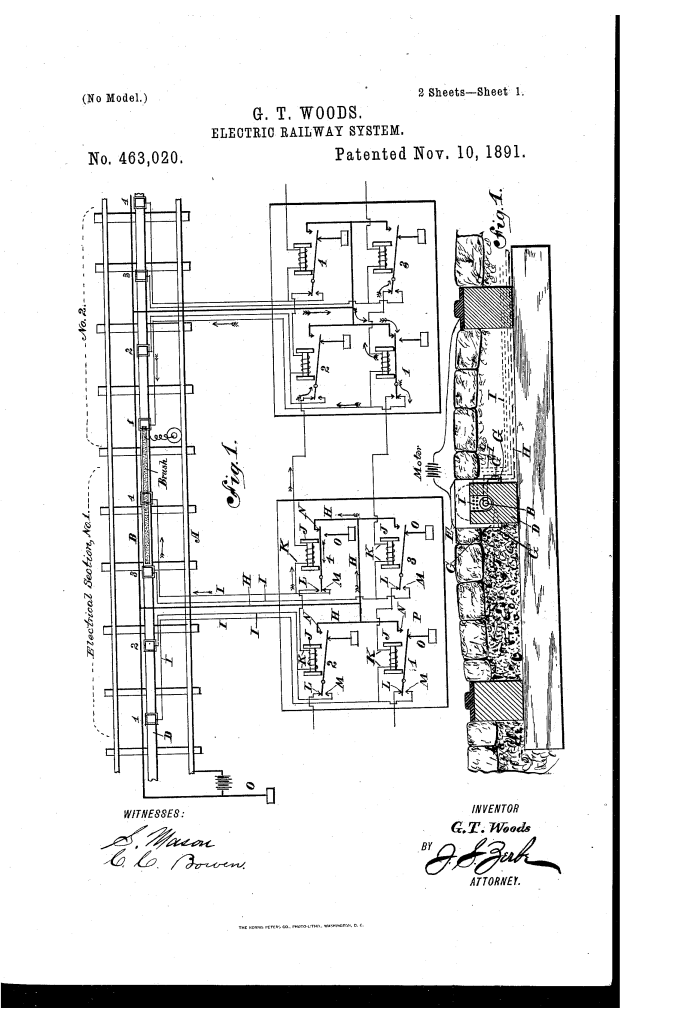
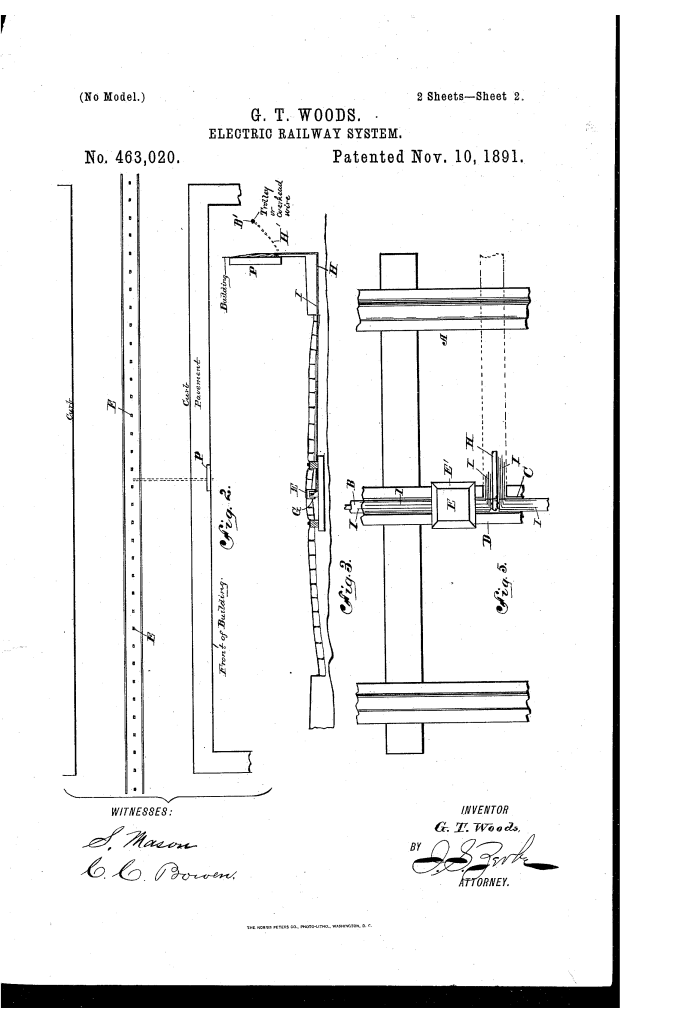
U.S. Patent No. 463,020, granted on November 10, 1891, to Granville T. Woods, revolutionized the safety and efficiency of urban transit. Before Woods’ intervention, electric streetcars relied on dangerous, exposed “third rails” or cumbersome overhead wires that were prone to failure and posed significant electrocution risks to pedestrians and animals.
Woods, often referred to as “The Black Edison,” developed a sophisticated automatic electromagnetic switching system that ensured electricity was only present in the rail directly beneath the moving car.
The Innovation: The “Dead Rail” Safety System
The primary problem with 19th-century electric railways was the “live” track. If a rail carried enough current to power a train, it was deadly to anything that touched it. Woods’ patent solved this by dividing the track into short, isolated sections.
How it works:
- Isolation: The supply line (the source of power) is buried safely underground or insulated away from the tracks.
- Electromagnetic Induction: As the train moves, an electromagnetic device on the car interacts with a series of underground switches (distributors).
- Selective Powering: The switch “wakes up” and energizes only the specific rail section currently under the train.
- Automatic Cut-off: As soon as the car passes, the switch closes, leaving the rail behind it “dead” and safe to touch.
Key Technical Components
The system relied on a complex interplay of magnets and mechanical levers to manage high-voltage currents without manual intervention.
| Component | Function |
| Sectional Rails | Track divided into insulated blocks so power can be localized. |
| Contact-Plugs | Located between the rails; these act as the gateway for electricity to reach the car. |
| Electromagnets | Carried by the locomotive to “trip” the underground switches using magnetic force. |
| Rotary Distributors | Hermetically sealed boxes that house the switching mechanism, protecting them from rain and dirt. |
| The “Brush” | A conductive sweeper under the car that picks up the current from the newly energized rail. |
The “Woods” Difference: Reliability and Economy
Prior to this patent, many electric railway designs failed because the switching mechanisms would “arc” (spark) and weld themselves shut, or they would be destroyed by moisture.
- Hermetic Sealing: Woods designed his switches to be enclosed in moisture-proof boxes, essential for outdoor city use.
- Reduced Resistance: By using a series of magnets to pull the switches shut firmly, he reduced electrical resistance, making the trains more powerful and energy-efficient.
- Infrastructure Savings: The system allowed cities to electrify existing tracks without the massive expense of building overhead wire networks or deep, dangerous trenches.
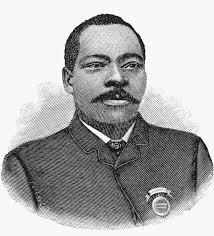
About the Inventor: Granville T. Woods
Granville T. Woods was one of the most prolific inventors of the late 19th century, holding over 50 patents.
- Legal Victories: His genius was so undeniable that he successfully defended his patents against challenges from Thomas Edison himself. After losing in court, Edison famously offered Woods a high-ranking position at the Edison Electric Light Company, which Woods declined to maintain his independence.
- The Synchronous Multiplex Railway Telegraph: Aside from the railway system, Woods is best known for inventing a way for moving trains to communicate with stations via telegraph, drastically reducing train collisions.
- Legacy: Woods’ work laid the foundation for the modern “third rail” systems used in subways today (like those in New York City and London), which utilize similar principles of sectional power distribution.
Summary of Claims
The patent explicitly claims:
- A sectional conductor system for electric railways where the sections are normally disconnected from the main power line.
- The use of electromagnets carried by the vehicle to automatically close the circuit between the supply line and the track.
- A hermetically sealed distribution box to protect switching contacts from environmental degradation.
