
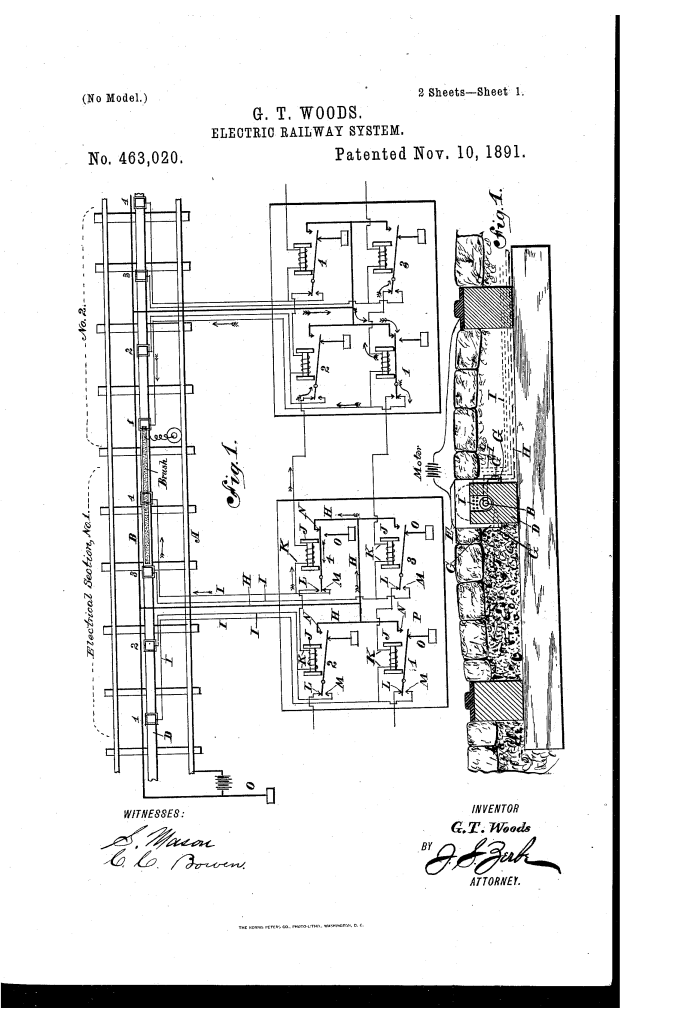
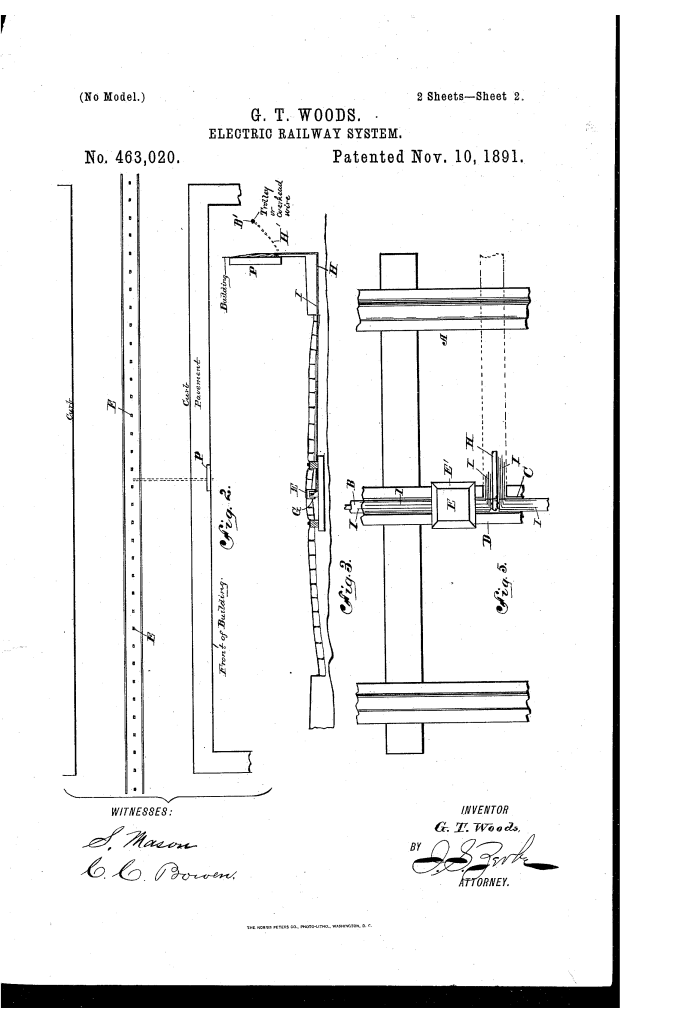
Granville T. Woods’s patent for an “Electric Rail-Way System,” No. 463,020, describes a system for powering streetcars without using dangerous overhead wires or open-trench conductors. Patented on November 10, 1891, the system’s key innovation was its method of providing power to the streetcar from a series of insulated contacts on the ground.
The system worked as follows:
- Insulated Power Line: The main power feeder was placed in a sealed channel or conduit beneath the street, making it inaccessible and safe.
- Terminal Heads: At regular intervals along the track, small, exposed “terminal heads” were placed slightly above the street surface. These heads were not live.
- External Switching Mechanism: Power was only supplied to the terminals when a streetcar was directly above them. This was controlled by a group of electromagnetic switches, which were located in a case or “distributing station” on the side of the road, away from the tracks.
- Sequential Power: As the streetcar moved, a brush on the underside would touch a terminal head, activating the corresponding switch on the side of the road. This would make the terminal live, providing power to the car. Crucially, the system was designed so that the last terminal the car passed over would automatically be “cut out” of the circuit, ensuring that only the terminals directly under the car were live at any given moment.
Societal Impact
Woods’s electric railway system was a major step toward creating safer and more efficient urban transportation.
- Improved Safety: The biggest problem with early electric streetcars was the exposed power source. Overhead wires posed a risk of electrocution, and open-trench systems (with an exposed third rail) were prone to filling with water and causing short circuits. Woods’s system, by keeping the main power source sealed and only activating the exposed terminals for a brief moment, solved these safety and reliability problems.
- Cleaner Urban Landscapes: By eliminating the unsightly and dangerous network of overhead wires, the system improved the aesthetic of city streets. It was an elegant solution to a common urban problem.
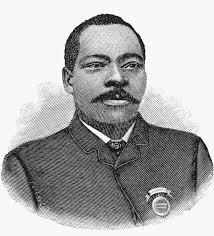
- The Inventor’s Legacy: Granville T. Woods was a brilliant African American inventor who held over 60 patents, primarily in electricity and communication. Known as the “Black Edison,” his inventions were often so groundbreaking that he was forced to defend them against lawsuits from major corporations like Thomas Edison’s. This patent, like many of his others, demonstrates his profound understanding of electrical engineering and his role in laying the groundwork for modern electrical systems. Woods’s work was foundational to technologies we use every day, from the electric railway to the telephone.
