
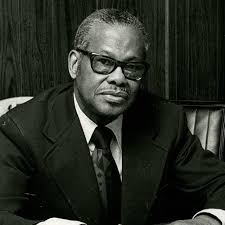
Eder-Palmer Biopsy Gastroscope (1953)
Leonidas H. Berry, M.D., a world-renowned gastroenterologist, introduced a transformative advancement in medical diagnostics in 1953: the Eder-Palmer Biopsy Gastroscope. While earlier gastroscopes allowed doctors to look inside the stomach, Berry’s modification solved a critical diagnostic gap—the ability to safely and accurately remove tissue samples (biopsies) from the stomach lining for examination under a microscope.
Before this innovation, diagnosing stomach cancer or chronic gastritis often required exploratory surgery. Dr. Berry’s tool allowed for a definitive diagnosis through a minimally invasive procedure, fundamentally changing the field of endoscopy.
The Innovation: The “Side-Viewing” Biopsy Channel
Standard gastroscopes of the early 1950s were semi-flexible tubes that used a series of lenses to provide a view of the stomach. However, they were purely observational. Dr. Berry collaborated with the Eder Instrument Company to integrate a controllable biopsy mechanism into the existing Palmer gastroscope design.
- The Suction/Cutter MechanismUnlike modern fiber-optic scopes, this device used a small, cable-activated blade. The physician would locate a suspicious lesion visually, then use the instrument to “snag” a tiny fragment of tissue.
- The Flex-Tip ManeuverabilityThe “Eder-Palmer” version was designed with a flexible distal end, allowing the doctor to navigate the “blind spots” of the stomach, such as the lesser curvature, which were previously difficult to reach and sample.
How the Apparatus Functions
The procedure required a high degree of skill, as the physician had to balance visual orientation with the mechanical operation of the biopsy tool:
| Step | Action | Medical Purpose |
| 1. Insertion | The semi-flexible tube is passed through the esophagus into the stomach. | Minimizes trauma compared to rigid scopes used in the early 20th century. |
| 2. Visualization | Using a lamp at the tip, the doctor identifies areas of inflammation or suspected malignancy. | Ensures the biopsy is taken from the exact site of the disease. |
| 3. Tissue Capture | A small vacuum or mechanical grip pulls the tissue into the cutting zone. | Prevents the sample from being lost or contaminated during withdrawal. |
| 4. Withdrawal | The scope is removed, and the “bit” of tissue is sent to pathology. | Provides a “gold standard” diagnosis of cancer vs. benign ulcers. |
Clinical and Scientific Impact
Dr. Berry’s work with the Eder-Palmer scope was a bridge between the rigid tools of the past and the fiber-optic revolution of the late 1960s.
- Non-Surgical Diagnosis: It provided the first reliable way to distinguish between a “benign” stomach ulcer and “malignant” gastric cancer without opening the patient’s abdomen.
- Study of Gastritis: Dr. Berry used this tool to perform extensive research on the effects of alcoholism and aging on the stomach lining, contributing some of the earliest clinical data on chronic gastritis.
- Standardization of Training: As a pioneer in the field, Berry used this instrument to train a generation of endoscopists, emphasizing that “seeing” was only half the battle—”sampling” was the key to cure.
About the Inventor: Dr. Leonidas H. Berry
Leonidas Harris Berry (1902–1995) was a giant of 20th-century medicine and a relentless advocate for racial equality in healthcare.
- Firsts: He was the first Black gastroenterologist and the first Black physician on staff at Chicago’s Michael Reese Hospital (1946), where he fought for years to break the “color barrier.”
- The “Berry Plan”: Beyond his inventions, he organized the “Flying Black Medics,” a group of doctors who flew into Cairo, Illinois, to provide medical care and health education to impoverished communities.
- Legacy: He served as the president of the National Medical Association (NMA) and wrote the definitive history of Black physicians in the field of gastroenterology (I Could Not Be Denied: The Story of a Black Physician).
Summary of Contribution
While Dr. Berry’s legacy includes many clinical papers rather than a single dominant patent number for this specific iteration (as it was a collaborative modification with Eder Instrument Co.), his 1953 Eder-Palmer modification is credited in medical literature as:
- The first practical “biopsy-taking” gastroscope used widely in clinical settings.
- The primary tool used to establish the Berry Classification of gastric diseases.
- A precursor to the modern endoscope, proving that internal “surgery” could be performed through a diagnostic tube.
