
Dust-Proof Bag for Street-Sweepers (1896)
U.S. Patent No. 560,154, granted on May 12, 1896, to Charles B. Brooks, details an innovative dust-proof collection bag designed specifically for attachment to street-sweeping machines. Charles B. Brooks, an inventor residing in Newark, New Jersey, designed this system to overcome a major public health and sanitation nuisance of late 19th-century urban street cleaning: the thick clouds of dust and debris kicked up when handling and exchanging refuse containers.
This specific invention solved a persistent environmental problem: how to cleanly collect and seal street debris directly from a sweeper’s discharge hopper without allowing dangerous dust or dirt to escape into the surrounding air during removal.
The Innovation: The “Extension-Sleeve” Dual-Closure System
Standard refuse bags and collection receptacles of the era were typically open-topped or difficult to seal quickly while unhooking them from a discharge chute. Brooks’s breakthrough was integrating a flexible, dual-action closure mechanism using an inner tightening strap paired with an elasticized canvas extension sleeve.
When attached to the hopper, the elastic band provided a tight, continuous seal around the mouth of the chute. When full, the system permitted the operator to bind the main bag closed before removing the sleeve from the machine.
Why the Extension Sleeve?
Dust Containment: It acts as a sealed bridge between the elevator hopper and the main collection bag, keeping airborne particles confined.
Clean Disengagement: It allows the main bag to be securely tied shut while still connected to the hopper, preventing dust clouds during changeovers.
Simple Attachment: The integrated elastic ring allows rapid mounting and dismounting without requiring complex mechanical clamps or specialized tools.
Key Components
The design utilizes a simple yet effective arrangement of simple materials:
Component Function
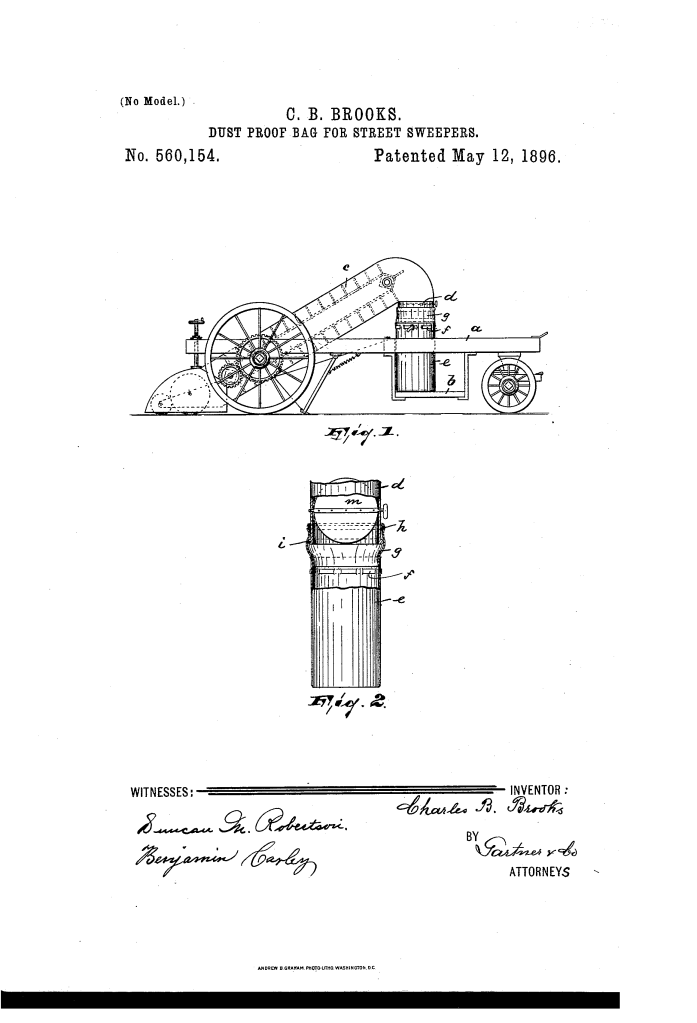
Hopper (d) The downwardly extending discharge spout of the street sweeper’s elevator casing.
Bag (e) The main storage receptacle used to collect swept street debris.
Tightening Strap (f) An interlaced string or leather strap located near the top of the main bag to pull it tightly shut.
Extension-Sleeve (g) A canvas sleeve stitched directly to the mouth of the main collection bag to bridge the gap to the hopper.
Elastic Band (h) An annular band located at the top of the extension sleeve that hugs the outer circumference of the hopper.
Damper (m) A internal valve in the hopper that shuts off the flow of debris while changing bags.
How the System Functions
The collection and removal process follows a strict sequence to ensure dust does not fly into the air:
Step Action Purpose
- Attachment The elastic band (h) of the sleeve (g) is stretched over the flange (2) of the hopper (d). Creates a dust-tight seal around the elevator spout.
- Collection Debris is lifted up the elevator casing (c) and drops into the main bag (e). Safely contains dirt as the street sweeper operates.
- Shut-Off When the bag fills to the strap (f), the operator closes the hopper damper (m). Cuts off the flow of incoming debris during bag replacement.
- Sealing & Removal The strap (f) is cinched tight, and the sleeve (g) is slipped off the hopper. Ensures no dust or dirt escapes into the air during bag handling.
Historical and Technical Impact
Charles B. Brooks’s invention addressed critical sanitation concerns during a period when American cities were rapidly modernizing their public works and municipal cleaning infrastructure.
Public Health Improvement: Late 19th-century municipal sanitation was plagued by street dust carrying pathogens and irritants. Brooks’s dust-proof system protected both street workers and passersby from breathing airborne debris.
Efficiency: The quick-attach elastic band and dual-closure design eliminated downtime, allowing street sweepers to continuously exchange bags along their routes without spilling collected refuse.
Commercial Value: The design was commercially valuable enough that Brooks assigned two-thirds of the patent rights to business partners Plummer S. Page and George M. Halstead of Scranton, Pennsylvania.
About the Inventor: Charles B. Brooks
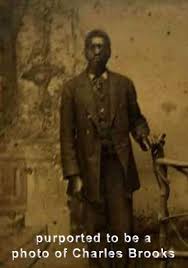
Charles B. Brooks was a notable African American inventor of the late 19th century based in Newark, New Jersey.
Patents: Beyond his dust-proof bag design, Brooks was best known for his overall street-sweeper machine design (U.S. Patent No. 560,153, granted on the exact same day in May 1896), which featured a complex set of revolving brushes and elevator chutes.
Impact: Brooks’s combined patents represented major structural refinements to automated municipal street-cleaning technology, moving cities away from manual push-brooms toward integrated mechanical sweeping and dust containment.
Legacy: His work provided early technological foundations for modern sanitation vehicles and industrial dust-collection systems.
Summary of Claims
The patent explicitly claims:
- A bag featuring a tightening strap near its upper end and an extension sleeve attached to its mouth, equipped with an annular elastic band at its free end.
- The combination of a street sweeper’s downward-extending hopper with a collection bag utilizing a tightening strap, an extension sleeve, and an elastic mounting band adapted to engage the hopper.
