
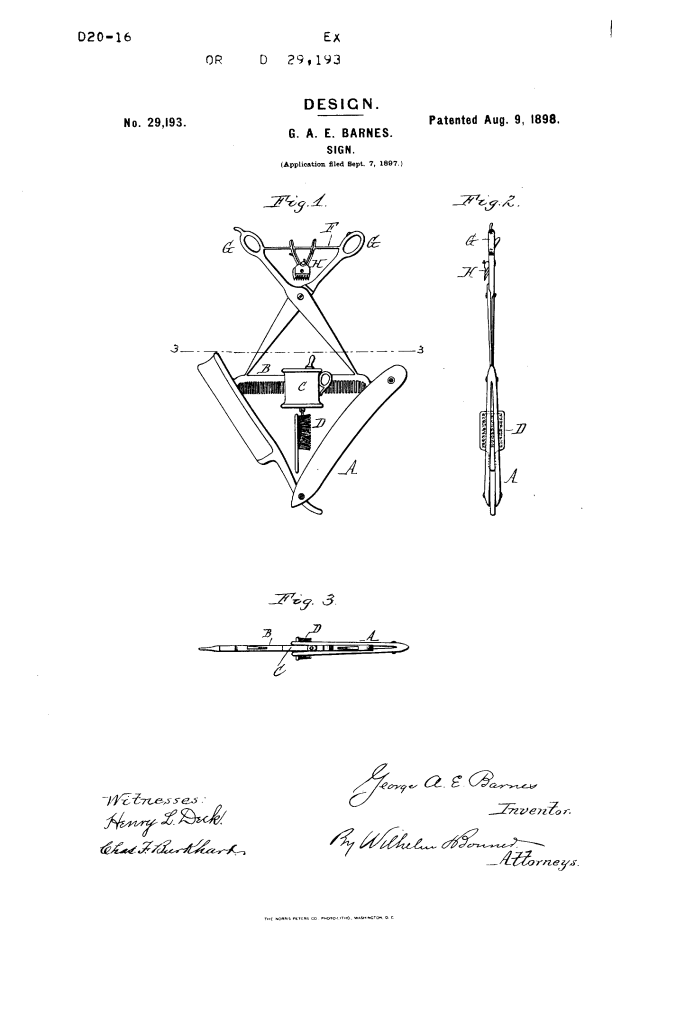
Design for a Sign (George A. E. Barnes, No. 29,193)
The document is a Design Patent (No. 29,193) granted to George A. E. Barnes of Depew, New York, on August 9, 1898. The patent is for a new and original Design for a Sign, specifically configured for the use of barbers. Design patents protect the ornamental configuration of an article.
Inventor Background: George A. E. Barnes
George A. E. Barnes was an inventor residing in Depew, New York. His contribution, a design patent, focused on the specific aesthetic and functional identity of a commercial trade sign. This reflects the 19th-century focus on visual branding and clear identification for specialized services.
Design Description
The leading feature of the design is a symbolic composition created by arranging and connecting various barber accessories.
- Base and Primary Figure: The sign’s lower portion is formed by the figure of an open razor (A), arranged with its hinge downward.
- Horizontal Center: A divided or sectional comb (B) is arranged horizontally between the handle and the blade of the razor.
- Central Figures:
- Shaving-Mug (C): The outline figure of a shaving-mug is interposed between the sections of the comb.
- Hairbrush (D): Located below the mug and represented as suspended from it.
- Upper Figures:
- Scissors (E): The figure of a pair of open scissors is placed above the comb, with its blades resting upon the comb.
- Rod and Clipper (F, H): A rod (F) spans the space between the eyes (G) of the scissors. A hair-clipper (H) is arranged in the triangular space enclosed by the arms of the scissors and is represented as suspended from this rod.
Visual Summary: The overall design forms an elaborate, vertically stacked assemblage of classic barber tools, creating a recognizable and symbolic visual identity for a barbershop.
Concepts Influenced by This Invention
Barnes’s design influenced the commercial use of symbolism and integrated iconography in retail signage and logos.
- Integrated Iconography in Signage: The concept of constructing an entire commercial sign by interlocking symbolic tools of a trade (rather than just drawing them) influenced the design of many later commercial signs and logos, where complex visual information is conveyed using stylized, integrated imagery (e.g., stacked tools for a mechanic, intertwined objects for a print shop).
- Stylized Professional Identity: The design is a precursor to the creation of stylized logos and emblems for specific professions, ensuring immediate visual recognition (like the enduring, though distinct, red-and-white barber pole).
- Early Branding through Silhouette: The reliance on the distinct silhouettes of the tools (razor, scissors, clipper) to form the overall shape influenced the practice of modern graphic design that emphasizes strong, recognizable outlines for branding purposes.
