
Portable Air Conditioning Unit, Frederick M. Jones, Design Patent No. 132,182
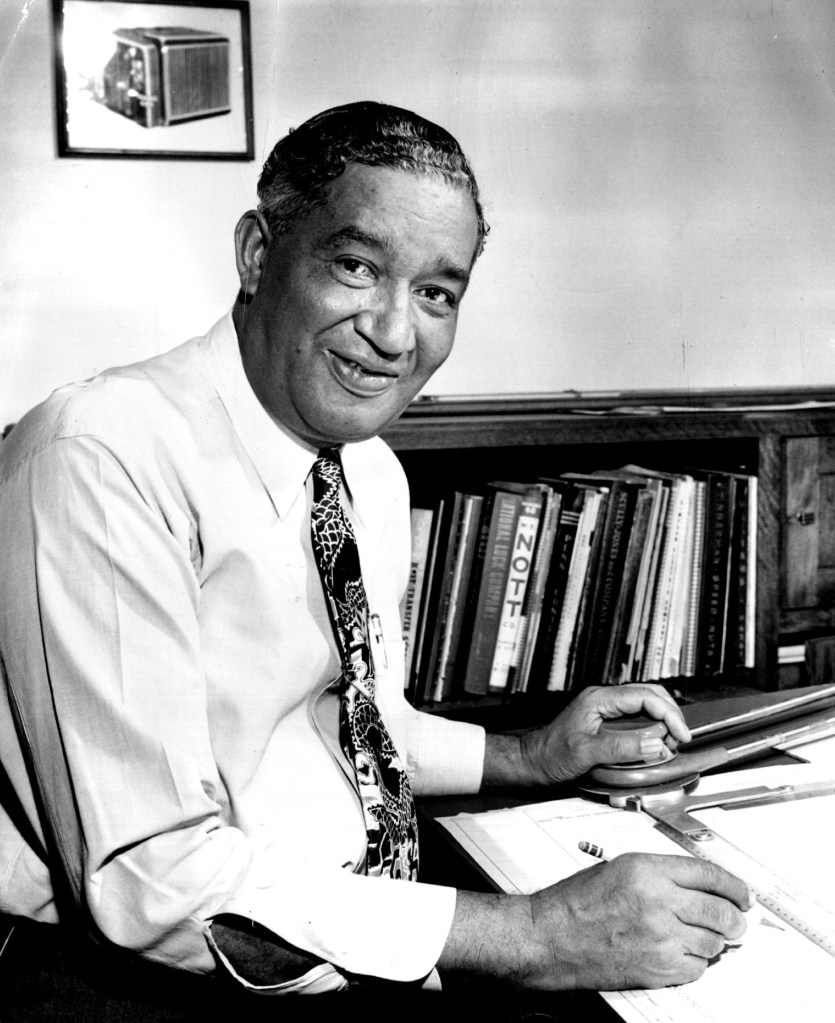
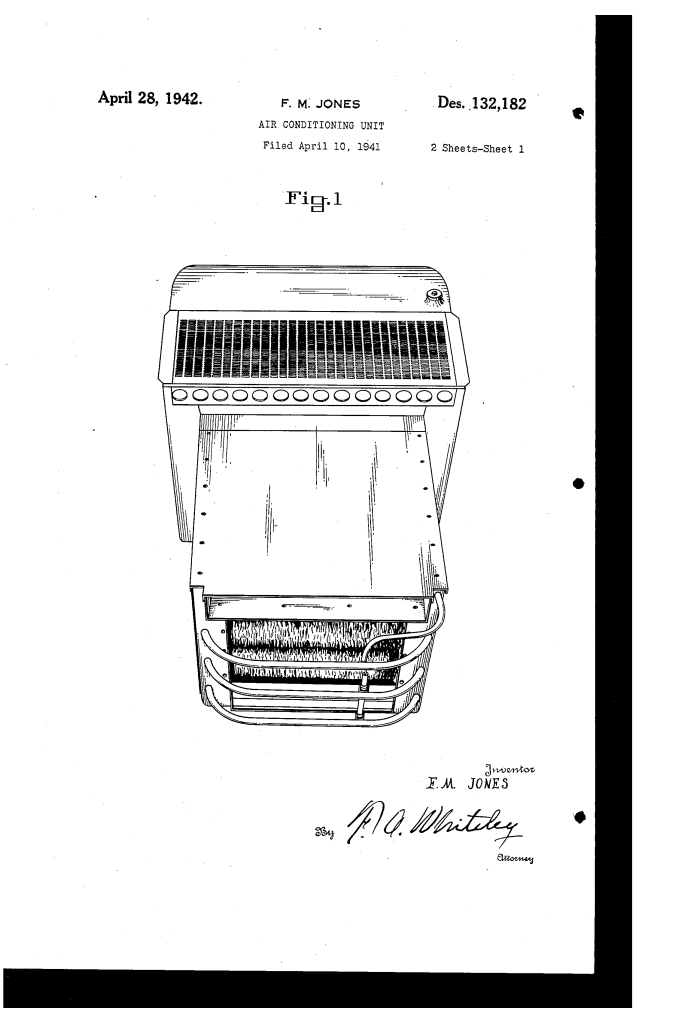
The patent by Frederick M. Jones of Minneapolis, Minnesota, assignor to U.S. Thermo Control Company, describes the Design for an Air Conditioning Unit (Design Patent No. 132,182), filed in 1941 and granted in 1942. This invention is the aesthetic and structural blueprint for the world’s first successful automatic transport refrigeration system. While it is a “Design Patent” focused on the unit’s ornamental appearance, it represents the birth of the “Model A”—the machine that founded the Thermo King corporation and revolutionized the global food supply chain.
The “Why”
Before 1941, shipping perishable food (meat, dairy, produce) over long distances was a logistical nightmare. “Reefer” trucks relied on heavy blocks of ice and salt, which were messy, inconsistent, and often melted before the destination, leading to massive food waste. The pain point was that no one had built a mechanical cooling unit small enough, tough enough to withstand road vibrations, and integrated enough to mount onto a standard trailer. Jones’ design solved the “form factor” problem of mobile cooling.
Inventor Section: Engineering Philosophy
Frederick McKinley Jones was a self-taught mechanical genius and one of history’s most prolific Black inventors. His engineering philosophy was defined by integrated ruggedness. He believed that for a machine to survive the “beating” of the American highway system, every component—the engine, compressor, and coils—had to be housed in a single, aerodynamic, “plug-and-play” shell. This “unibody” approach allowed a unit to be swapped out in minutes if it failed, a concept that is still the industry standard today.
Key Structural Sections
1. The “Nose-Mount” Silhouette
The most striking feature of Jones’ design (shown in Figs. 1 and 3) is its specific “over-cab” profile.
- Mechanical Logic: The unit was designed to be mounted on the front exterior of a truck trailer. This placement used the “ram air” from the truck’s forward motion to help cool the internal condenser coils.
- Design Innovation: The rounded, tiered front casing provided aerodynamic efficiency, reducing wind resistance and preventing the unit from being “ripped off” by high-speed airflow.
2. The Integrated Ventilation Grid
The design features a distinctive perforated wrap-around grill (seen in the perspective views).
- Function: This wasn’t just decorative; it provided 360-degree heat dissipation. Mobile units generate immense internal heat while trying to cool a trailer; the Jones design maximized airflow to the internal combustion engine that powered the compressor.
- Modern Term: This is a high-ventilation cowl, designed to protect internal mechanicals from road debris (rocks, salt) while allowing maximum gas exchange.
3. Compact “Self-Contained” Architecture
Figure 2 shows the rear and side views, highlighting the unit’s “box” efficiency.
- Engineering Insight: Jones managed to fit a gas engine, a starter, a generator, a compressor, and two sets of coils into this compact frame.
- The “Thermo King” Legacy: This specific ornamental shape became so iconic that it identified “Thermo King” trucks on the highway for decades. It allowed for a “one-hole” installation in the trailer wall, simplifying the manufacturing process for truck builders.
Comparison Table: Ice-Cooled Shipping vs. The Jones Unit
| Feature | Pre-1941 Ice Cooling | The Frederick M. Jones Unit |
| Cooling Source | Melting ice and salt brine. | Mechanical Compression (Freon). |
| Weight | Extremely heavy (tons of ice). | Lightweight & compact. |
| Control | None (temp rose as ice melted). | Automatic Thermostat (Constant temp). |
| Range | Short (limited by melt rate). | Unlimited (Long-haul capability). |
| Maintenance | Messy re-icing stations needed. | Self-contained fuel-powered engine. |
Significance
Frederick M. Jones’ Air Conditioning Unit changed the world in ways few inventions have:
- Global Food Diversity: It allowed fresh produce from California and Florida to be shipped to New York and Chicago year-round, ending the “seasonal” diet.
- Military Impact: During WWII, his units were used to transport blood plasma and chilled food to front-line hospitals, saving countless lives.
- Economic Foundation: This design founded Thermo King, a multi-billion dollar company that remains a leader in transport temperature control.
- Hall of Fame Recognition: For this and his 60+ other patents, Jones became the first African American to be awarded the National Medal of Technology (posthumously in 1991).
