
Control Device for Internal Combustion Engine (1958)
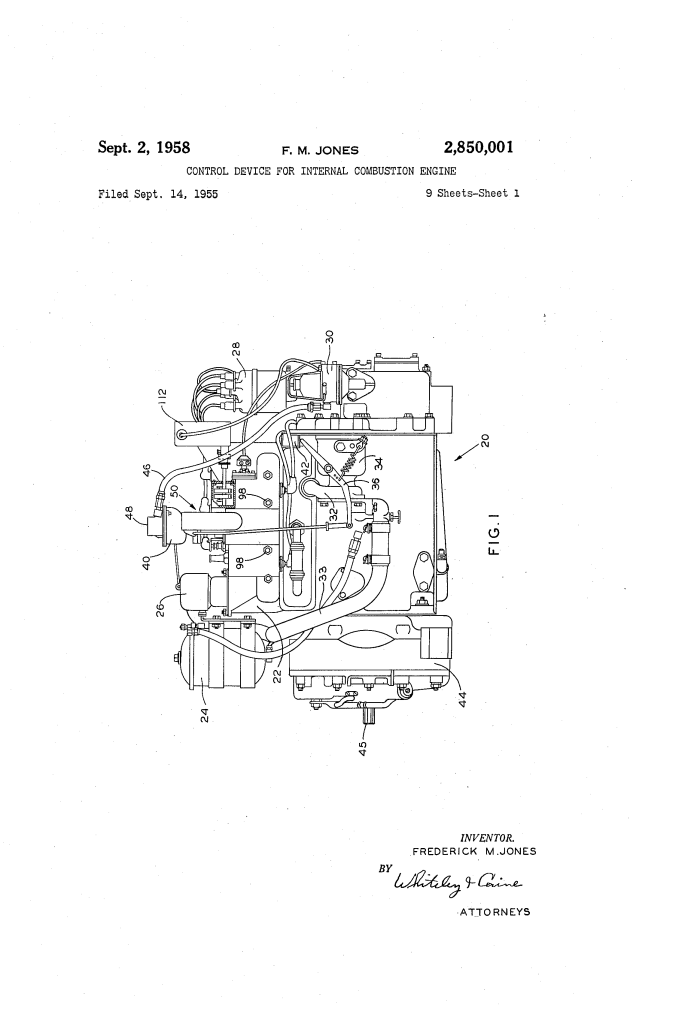
U.S. Patent No. 2,850,001, granted on September 2, 1958, to Frederick M. Jones, describes an advanced thermal control system designed to assist internal combustion engines in starting and operating under extreme cold or when using heavy, low-cost fuels like kerosene or diesel. Frederick Jones, the engineering genius behind Thermo King, developed this system to enhance the reliability of the intermittent engines used in transport refrigeration.
This invention solved a major hurdle in mobile refrigeration: the “cold start” problem. When a refrigeration unit cycles off to save fuel, the engine cools down. If the ambient temperature is freezing, restarting becomes difficult, often leading to battery drain, engine wear, and spoiled cargo. Jones’s device pre-vaporizes the fuel and manages the engine’s electrical load to ensure a “spontaneous” start every time.
The Innovation: The “Vaporization Chamber”
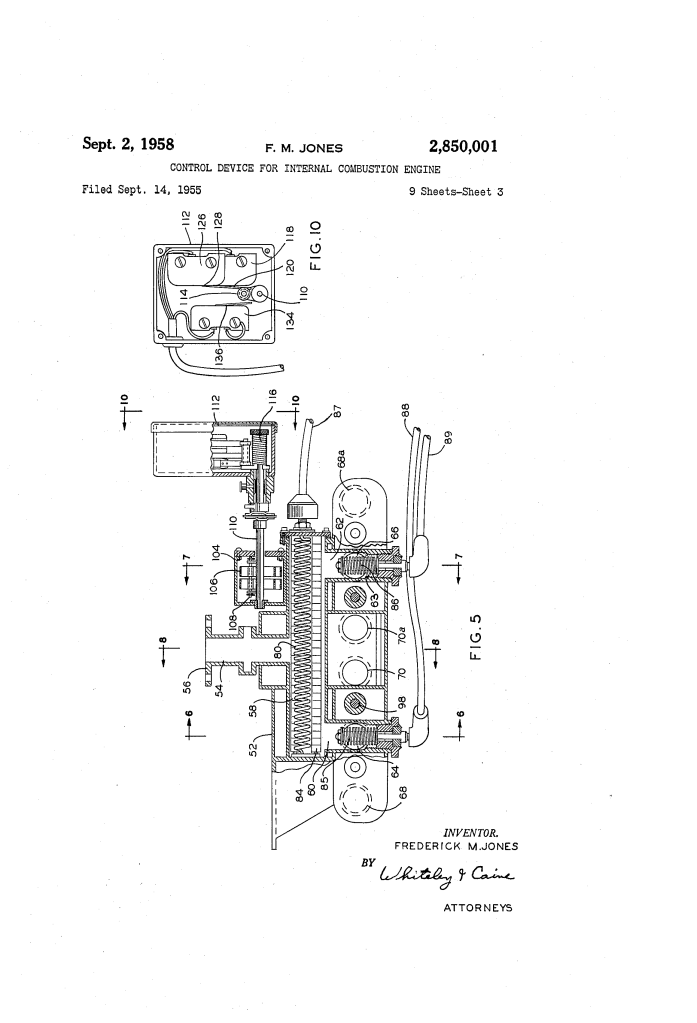
Traditional engines struggle in the cold because liquid fuel does not vaporize well, leading to “choking” and carbon buildup. Jones introduced a casing (52) situated between the carburetor and the engine cylinders that acts as a sophisticated pre-heating laboratory for the fuel-air mixture.
1. The Primary Heater (80)
Inside the horizontal passage of the device is a high-resistance electrical coil. Before the engine even attempts to turn over, this coil uses battery power to heat the air in the intake manifold.
2. The “Cool-Down” Safety Pulse
A unique feature of this patent is a timed delay. Jones realized that the heater coil might become too hot (incandescent), which could cause the fuel to ignite prematurely in the manifold (backfiring). His control system heats the coil, then briefly cuts the power for about 9 to 10 seconds to let the element cool just below the spontaneous ignition temperature (SIT) before the fuel is introduced.
How the Apparatus Functions
The device operates through a highly coordinated sequence of thermal and electrical events:
| Step | Action | Purpose |
| 1. Pre-Heat | The thermostat (164) calls for cooling; the electrical heater (80) energizes. | Warms the metal walls of the intake manifold. |
| 2. Sensing | The Bimetal Thermal Motor (106) expands as it gets hot. | Mechanically moves switches to prepare the engine for the next phase. |
| 3. Delay | Power to the heater is momentarily cut. | Prevents the red-hot coil from causing a manifold explosion when fuel arrives. |
| 4. Start | Ignition and the Starter Generator (44) are energized simultaneously. | Cranks the engine while the fuel is perfectly vaporized by residual heat. |
| 5. Transition | As the engine runs, hot exhaust gases are diverted to the chamber. | Uses “waste heat” to keep the fuel vaporized, allowing the electrical heater to shut off and save battery. |
Technical Components
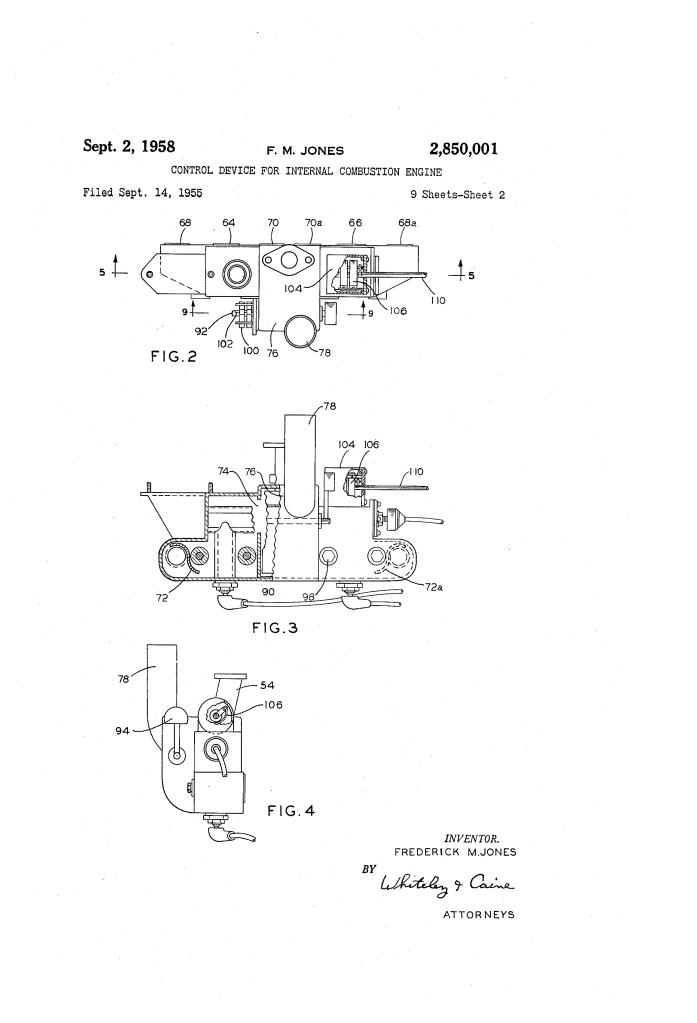
- Plug Heaters (85, 86): Small auxiliary heaters located in entrapment pockets (63). These vaporize any “heavy” fuel droplets that fail to turn into gas in the main chamber.
- Exhaust Damper (90): A weighted flap controlled by a second thermal motor. It regulates how much hot exhaust gas touches the intake manifold, preventing the fuel from overheating once the engine is at full speed.
- Overrun Mechanism (116): A mechanical “clutch” on the switch rod that prevents the thermal motor from breaking the switches if it continues to expand after the engine has already started.
- Starter Generator (44): A dual-purpose unit that acts as a motor to start the engine and then switches to a generator to recharge the battery once the engine is running.
Historical and Scientific Impact
Frederick Jones’s “Control Device” was essential for the expansion of the global cold chain.
- Fuel Versatility: By precisely controlling the temperature of the intake air, Jones allowed standard spark-ignition engines to run on cheaper, heavier fuels like No. 1 Diesel, which was much more accessible to the railroad industry.
- Battery Preservation: By heating the fuel first, the engine requires much less “cranking” time, which is critical because lead-acid batteries lose significant power in sub-zero temperatures.
- Automation: This system allowed refrigeration units to be truly “intermittent”—starting and stopping on their own for weeks at a time on transcontinental train routes without human intervention.
About the Inventor: Frederick M. Jones
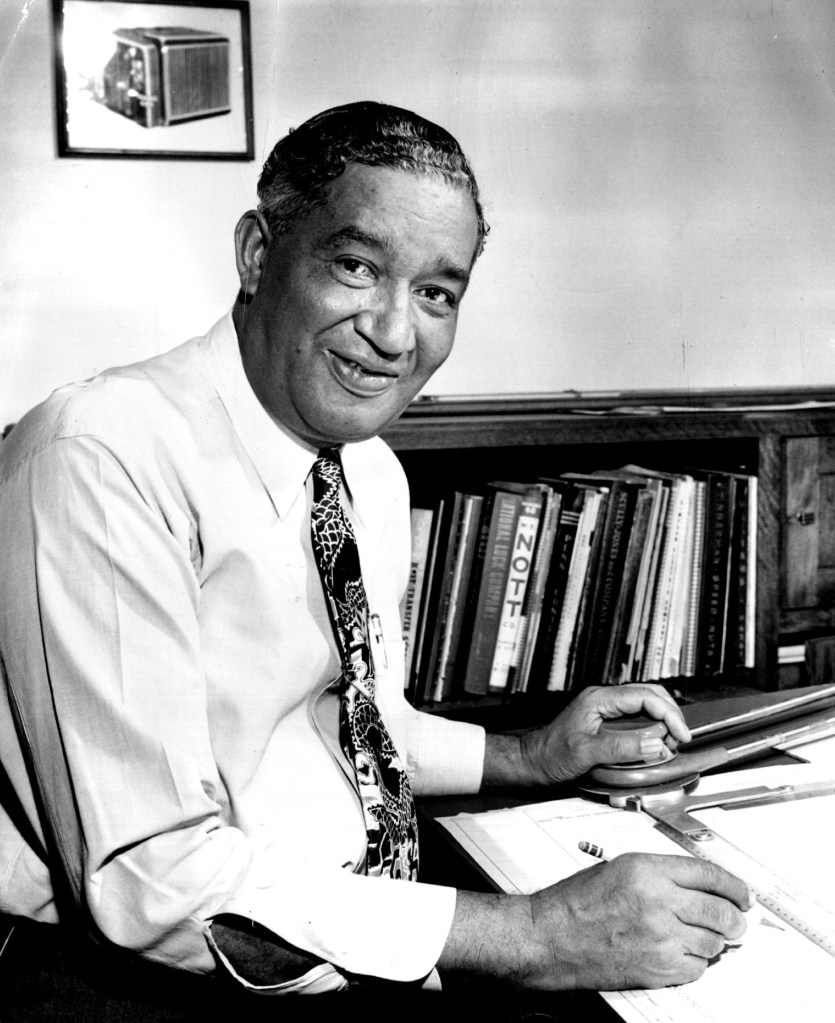
Frederick McKinley Jones was a self-taught mechanical prodigy and one of the most prolific inventors in American history.
- Thermo King: As the co-founder of the company, his inventions literally changed the way the world eats, making it possible to transport fresh produce, meat, and medicine across vast distances.
- Hall of Fame: Jones was the first African American to be awarded the National Medal of Technology (posthumously in 1991) and was inducted into the Inventors Hall of Fame.
- Military Contribution: During WWII, his portable refrigeration units were used to preserve blood plasma and food for soldiers in the field, saving countless lives.
Summary of Claims
The patent explicitly claims:
- A vaporizing chamber for pre-heating a fuel-air mixture prior to cylinder introduction.
- A thermal motor that sequentially controls the electrical heater, ignition system, and starting motor.
- A time-delay mechanism (using a condenser or mechanical switch) to prevent spontaneous ignition of fuel on a red-hot element.
- A dual-heat system that switches from electrical power to exhaust gas heat once the engine is operational.
