
Combined Cot, Hammock, and Stretcher (Charles V. Richey, No. 615,907)
The patent by Charles V. Richey of Washington, D.C., describes a new and useful Combined Cot, Hammock, and Stretcher (Patent No. 615,907, 1898). The object of the invention is to combine these three separate and distinct uses in one simple, foldable device that can be easily transported, specifically noting its potential for being wrapped up in the trooper’s blanket without adding material weight.
Inventor Background: Charles V. Richey
Charles V. Richey was an African-American inventor known for his focus on practical safety and utility mechanisms for railways and general applications (like his Fire-Escape Bracket). This invention specifically targets military and field utility, creating a versatile piece of equipment that is lightweight and highly adaptable, reflecting a focus on robust, minimalist design for rugged use.
Invention and Mechanism
The device is a flexible textile body (hammock) with removable legs and rigid end bars, allowing for quick conversion between its three modes.
1. Core Structure (Body and End Bars)
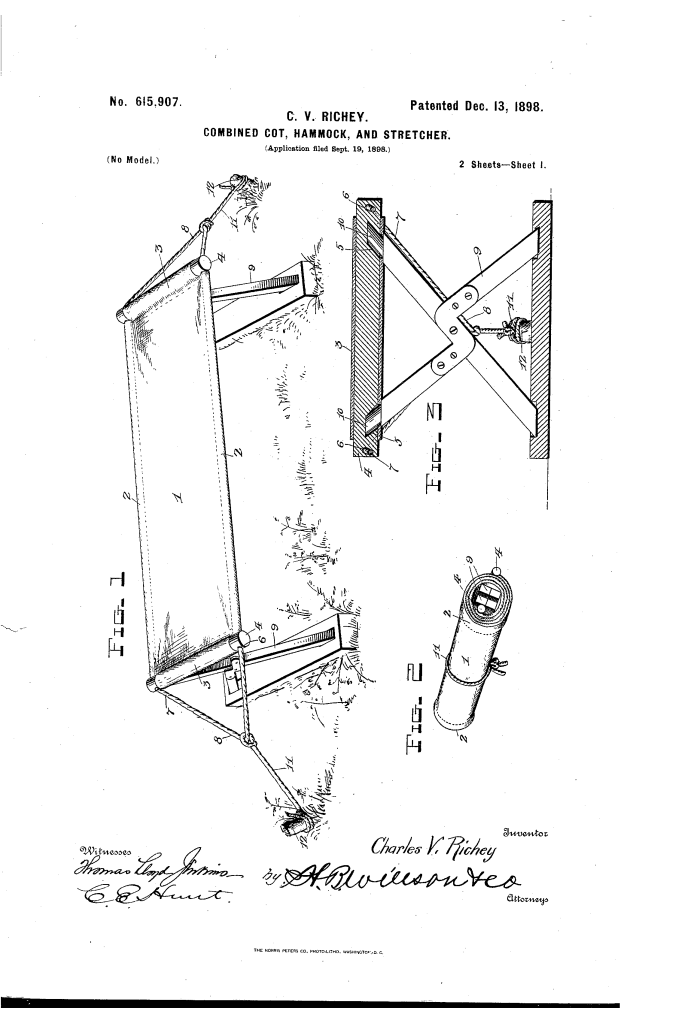
- Body (1): Made of flexible textile material, preferably canvas, with longitudinal side hems (2) and shorter end hems (3).
- Stretcher-Bars (4): Rigid bars inserted through the end hems (3). They are provided with leg-sockets (5) and apertures (6) for the suspending rope.
- Endless Rope/Band (7): An endless rope runs through the longitudinal side hems (2) and projects through the apertures (6) in the bars (4) to form suspending-bails (8).
2. Conversion Modes (Key Innovation)
- Cot Mode (Fig. 1): Removable folding legs (9) are inserted into the sockets (5) of the bars (4).
- Stretching: After the lanyards (11) are drawn taut around ground stakes (12), the legs (9) are forced inward to raise them into an upright position. This action creates an additional stretching of the canvas body, rendering the cot practically rigid.
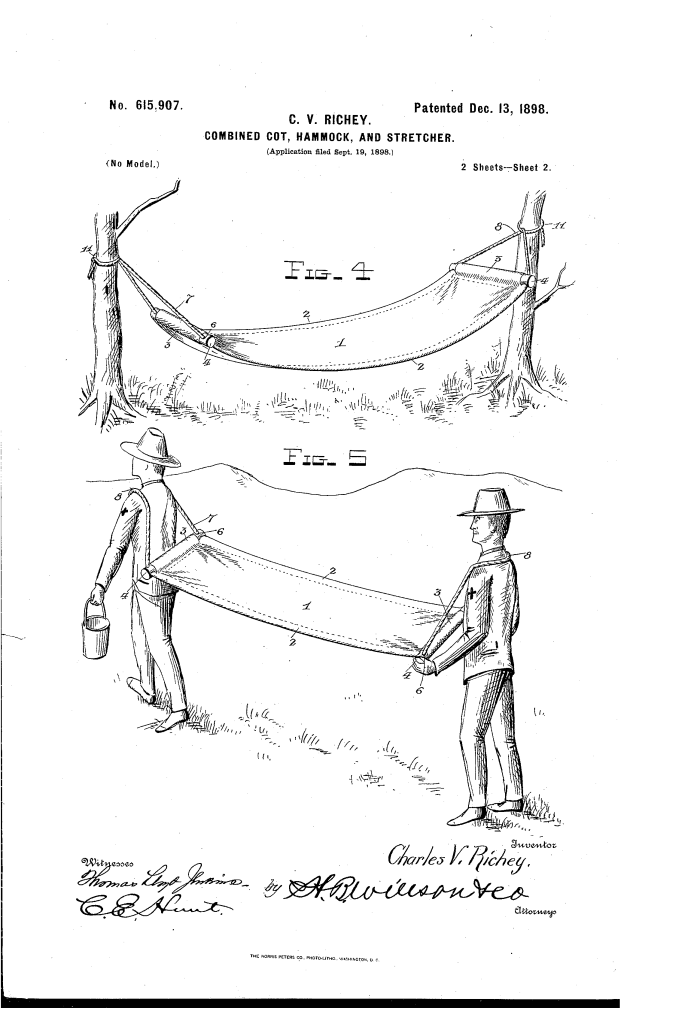
- Hammock Mode (Fig. 4): The legs (9) are removed. The lanyards (11) are fastened to posts or trees, allowing the device a free swinging movement.
- Stretcher Mode (Fig. 5): The legs are removed. The wounded person is placed on the body (1), and the suspending-bails (8) are passed around the shoulders of comrades.
- Function: This allows the bearers to have free use of their hands for assisting the wounded or grasping the stretcher-bars (4), making the transport safer and easier.
3. Portability
The entire device (textile body, bars, and disassembled legs) can be folded up into a small compass for convenient wrapping in a blanket.
Concepts Influenced by This Invention
Richey’s multi-functional design influenced subsequent military, camping, and emergency equipment by prioritizing modular, load-bearing versatility and portability.
- Modular Field Utility: The core concept of combining three different functional structures (bed, swing, transport) into a single set of simple, interchangeable components influenced the design of modern convertible military and camping gear (e.g., backpacks that convert to external frames, multipurpose toolkits).
- Load-Assisted Rigidity (Cot Mode): The unique method of achieving a rigid cot by using the legs and external lanyards to apply additional stretching tension to the canvas body influenced the design of military and heavy-duty cots that rely on engineered tensioning for stability.
- Ergonomics in Medical Transport: The design of the stretcher (passing the support bails 8 around the bearers’ shoulders) influenced subsequent ergonomic stretcher designs by focusing on distributing the load across the shoulders and back, leaving the hands free for better control—a critical feature in emergency rescue equipment.
- Minimalist Transport Design: The requirement that the device be easily wrapped in a trooper’s blanket reinforced the philosophy of extreme minimalism and foldability for military and survival gear.
