
Combination Milk-Bottle Opener and Cover (Richard B. Spikes, No. 1,590,557)
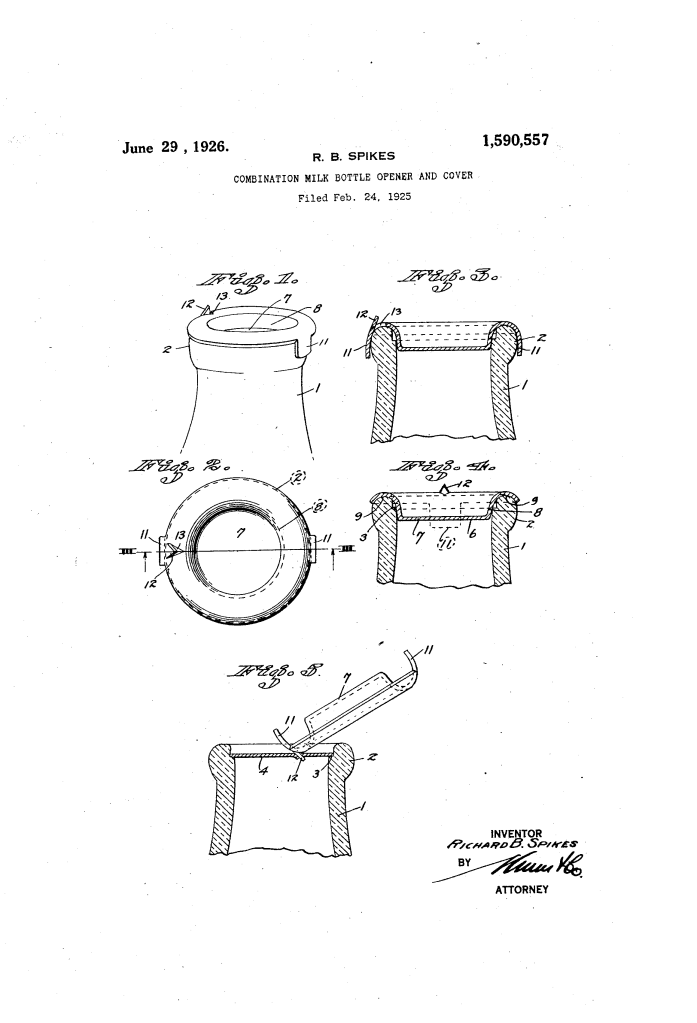
The patent by Richard Bowtie Spikes of San Francisco, California, describes a Combination Milk-Bottle Opener and Cover (Patent No. 1,590,557, 1926). This invention is a dual-purpose kitchen tool designed to solve two common domestic problems of the early 20th century: the difficult removal of cardboard milk bottle caps and the lack of a hygienic resealable cover once that cap was discarded. Spikes’s primary innovation was a cup-shaped operating element that functions as a high-leverage handle for a piercing tooth and, when inverted, becomes a snug-fitting, reusable bottle closure.
Inventor Background: Richard B. Spikes
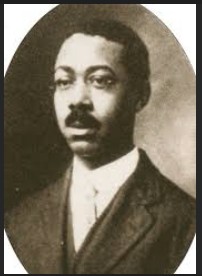
Richard B. Spikes (1878–1963) was a prolific African American inventor whose mechanical genius touched many industries, from automotive (the automatic gear shift) to hospitality (the beer keg tap). Living and working in San Francisco, Spikes was known for creating “user-centric” designs—tools that made everyday tasks safer and more efficient. This 1826 patent is a classic example of his ability to find multiple uses for a single mechanical form. By the time he was losing his vision later in life, he famously invented a drafting machine for the blind, proving his lifelong commitment to accessible engineering.
Key Mechanical & Functional Systems
The device is a single piece of pressed material (likely metal or durable celluloid) shaped to interact with the hand and the bottle neck.
1. The Cup-Shaped Operating Element (6, 7, 8)
- Design: The device consists of a base (7) and an annular flange (8).
- Ergonomics: During the opening process, the cup is designed to be gripped by the forefinger and middle finger.
- Function: The “cup” shape provides a large surface area for the fingers to apply pressure without slipping, acting as a specialized handle that fits the natural contour of a gripping hand.
2. The Piercing Tooth and Ear (11, 12) (Key Innovation)
- The Tooth (12): A sharp tooth is pressed out of the material and slants toward the center line of the cup.
- The Ear (11): A curved projection extends from the flange at a diametrically opposite point.
- Opening Action: To open a bottle, the user places their thumb on the bottle bead (2) and their forefinger around the flange. By squeezing the thumb and finger together, the tooth (12) is forced into the cardboard cover (4).
- The “Scooping” Action: Once the tooth pierces the cardboard, the curved ear (11) and the cup body provide the leverage needed to “scoop” or lift the cap out of its seat.
3. The Reversible Closure System (9, 11)
- Dual Utility: After the cardboard cap is removed, the device is inverted.
- The Flange (9): The flared edge of the flange rests on the upper rim of the bottle.
- The Holding Ears (11): The same ears used for leverage during opening now serve to center and hold the cup securely in the bottle’s neck.
- Function: This creates a reusable, sanitary seal that protects the milk from dust and odors, a significant improvement over leaving a bottle open in early iceboxes.
Improvements Over Standard Milk Bottle Caps
| Feature | Standard Cardboard Caps | Spikes’s Opener and Cover |
| Ease of Removal | Required fingernails or knives; often messy. | High-leverage tooth allows for easy, controlled removal. |
| Resealability | Cardboard was often destroyed upon opening. | Functions as a durable, reusable closure. |
| Hygiene | Open bottles attracted dust/odors. | Provides a tight seal to keep milk fresh. |
| Ergonomics | Difficult for those with limited grip. | Uses a thumb-and-finger squeeze (pincer grasp) for power. |
Significance to Engineering and Household Design
Richard B. Spikes’s milk bottle tool influenced the development of multi-functional kitchen gadgets and ergonomic hand tools.
- Human Factors Engineering: Spikes specifically designed the tool around the “forefinger,” “thumb,” and “knuckle.” This is an early application of biometry—designing tools that conform to the specific dimensions and strengths of the human hand.
- Pressed-Material Manufacturing: The tooth being “pressed out of the material” (13) is an example of efficient die-stamping technology, allowing the tool to be manufactured cheaply in a single step without secondary assembly.
- Modular Versatility: The concept of a tool that changes function based on its orientation (handle vs. cover) is a foundational principle in minimalist industrial design.
- Sanitation Standards: This invention addressed a public health concern of the 1920s regarding the “unsealed” storage of dairy products, contributing to the broader sanitary engineering movement.
